
Housing Policy Innovation
This week in studio our focus shifted primarily to our Greenline segment teams as we prepare for our mid review. We also met with a few different groups to broaden our horizons in studio and in seminar. I’m part of the East segment team, which stretches from Cliff Drive through The Paseo and down to 18th and Vine District. It’s a corridor shaped by history, long-term divestment, and incredible resilience that we as a team are working to honor. Our central argument is that the Greenline should serve as a tool for connection, stitching together areas divided by highways, reconnecting communities and resources and opening the possibilities for fresh opportunities.
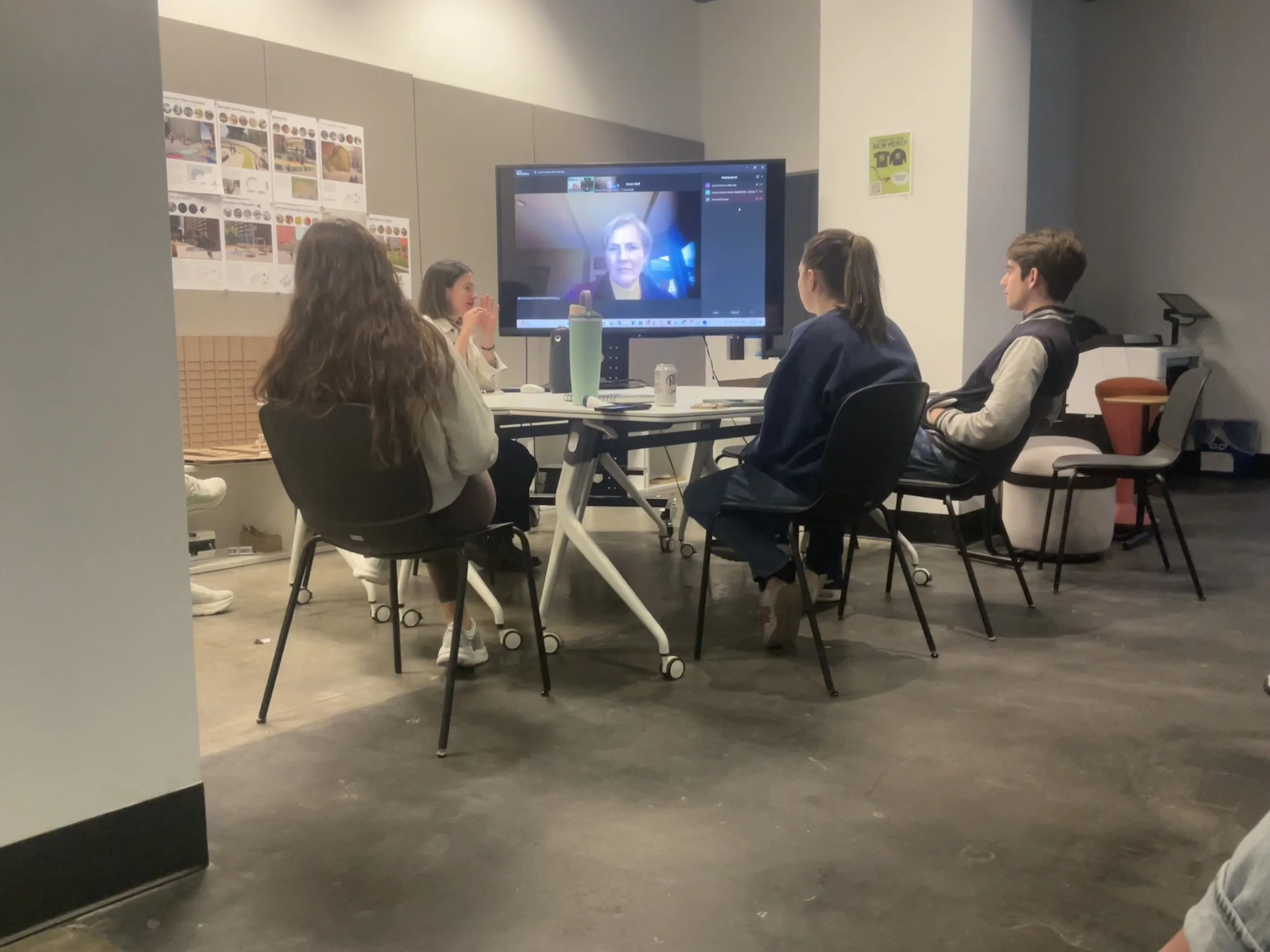
Donna Schneck-Hamlin discussion
On Monday we met virtually with Donna Schneck-Hamlin of Workforce Solar Housing Partnership to discuss community land trusts. At their core, CLTs rethink what it means to own a home. In this model, the home owner purchases the house while the land beneath it is held within a trust and leased at a low cost. This structure keeps the initial purchase price lower while ensuring long term affordability when the home is resold. The homeowner still builds equity, but the property remains accessible to the next buyer which is critical in neighborhoods vulnerable to displacement.
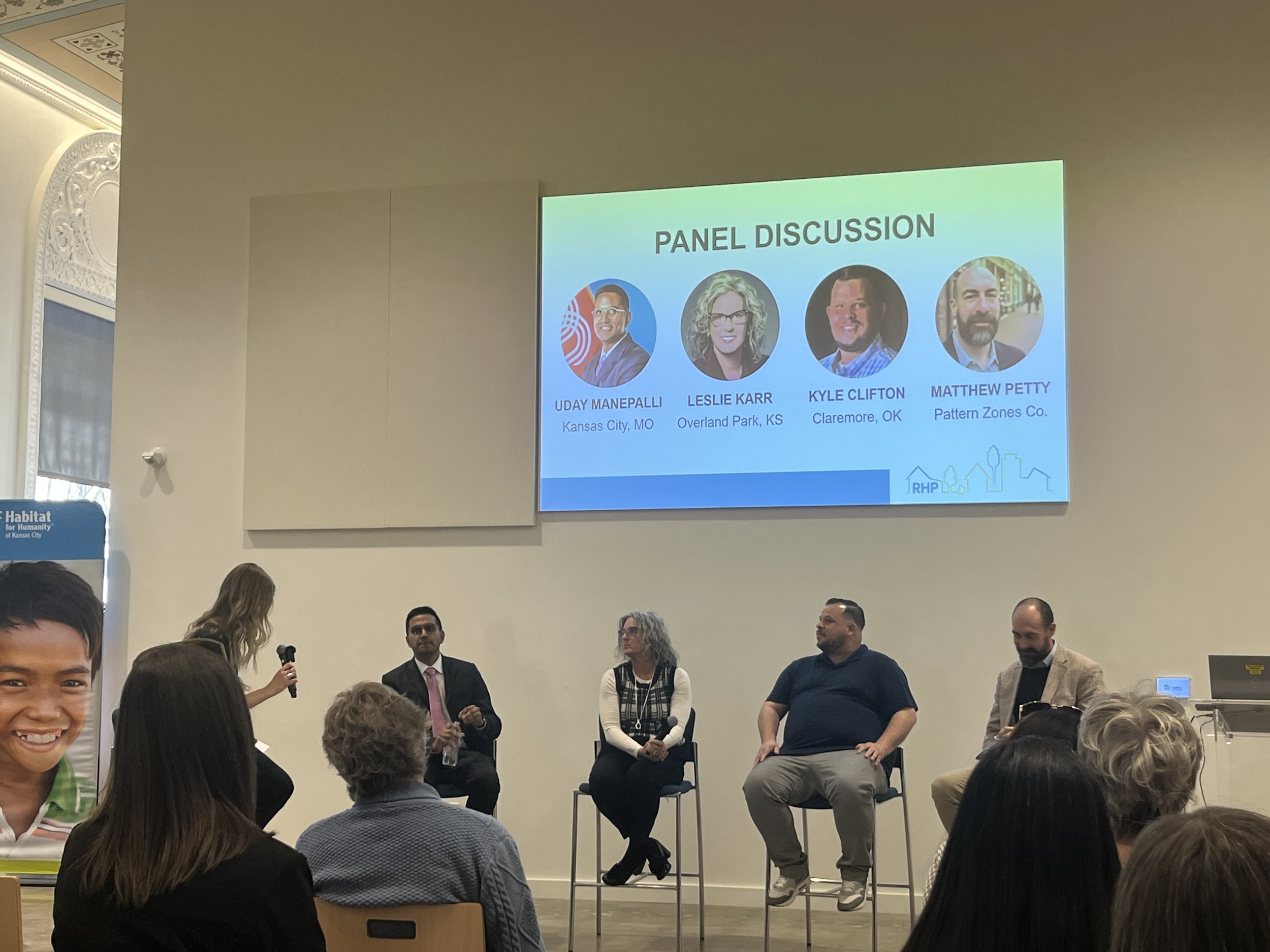
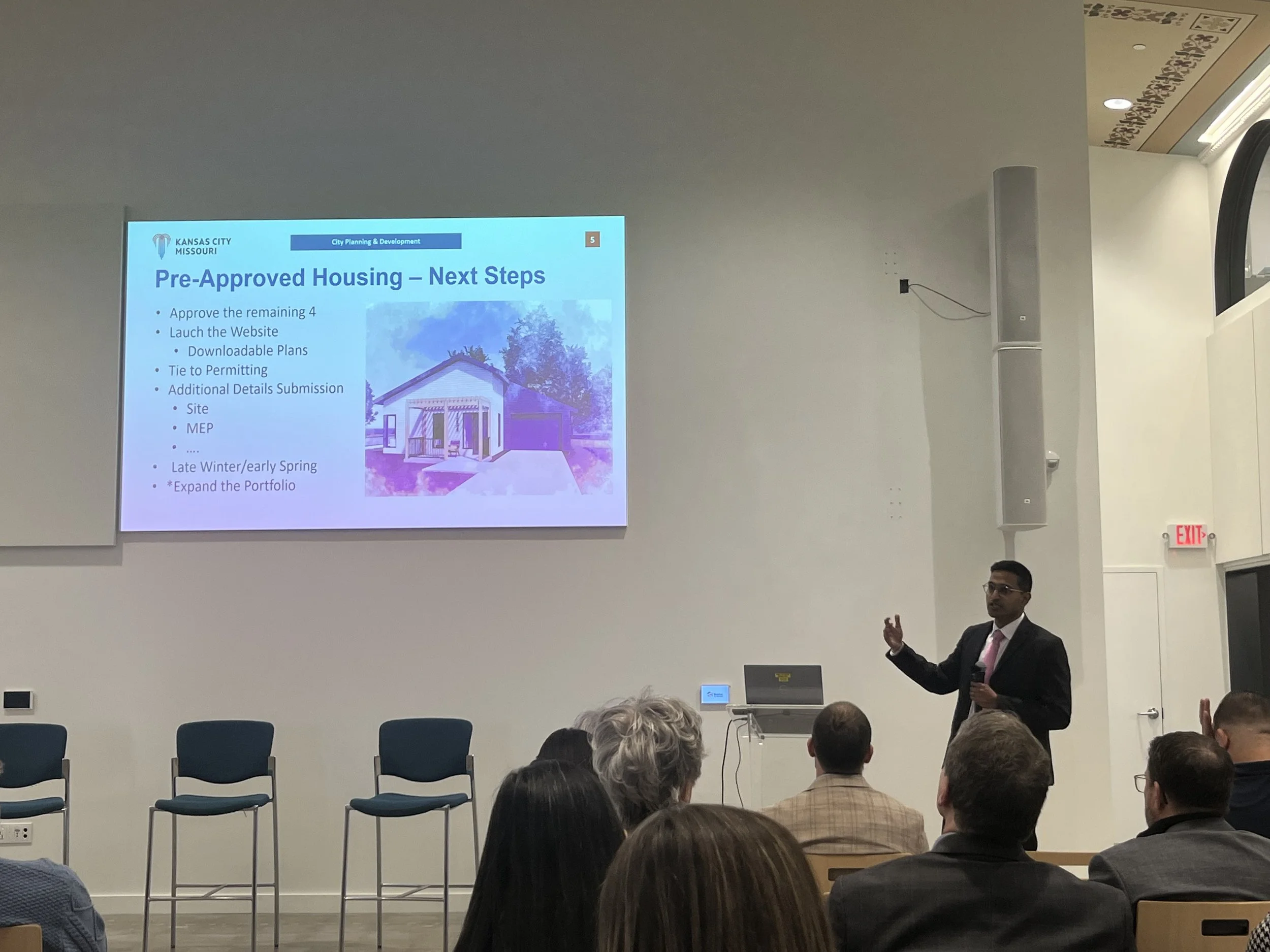
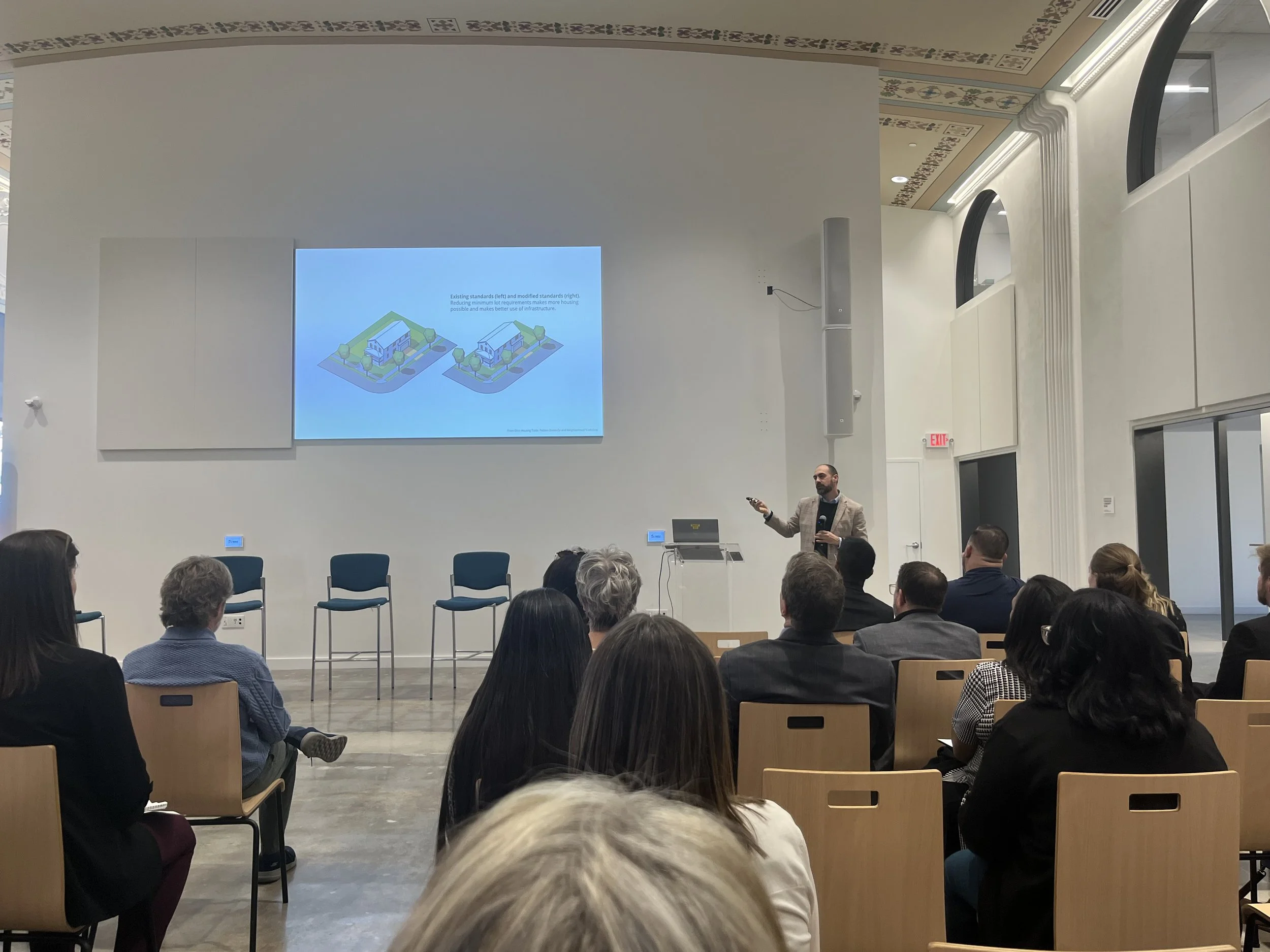
Later in the week we attended the Mid-America Regional Council's Housing Policy Innovation Series at Habitat for Humanity of Kansas City. We heard from Matthew Petty, Kyle Clifton, Leslie Karr, and Uday Manepalli about pre-approved building plans. The idea is straightforward, a developed portfolio of well-designed and code compliant housing plans that are able to move through the approval process more quickly. Claremore, OK, Overland Park, KS, and Kansas City, MO are early adopters of this new strategy in streamlining the construction of missing middle housing. While there is much to learn about the strategy, it holds immense promise for helping address the kinds of housing neighborhoods need.
As we move toward our mid review, our work on the Greenline feels very connected to Kansas City and its problems. We have an opportunity as design students to respond to these problems. If the Greenline can operate as a connective tissue, socially, economically, and create a stronger, more equitable, more connected ecosystem through our city, it moves beyond the diagram into viability.
Written by Jonah Hammel, Architecture Student