
East Segment Spotlight
This week in studio, our focus was on advancing our work as segment teams and continuing to build toward a comprehensive plan for each portion of the Greenline. As part of the East team, we are developing our corridor along The Paseo, working to create a design that reflects both the history of the boulevard and the needs of the surrounding communities.
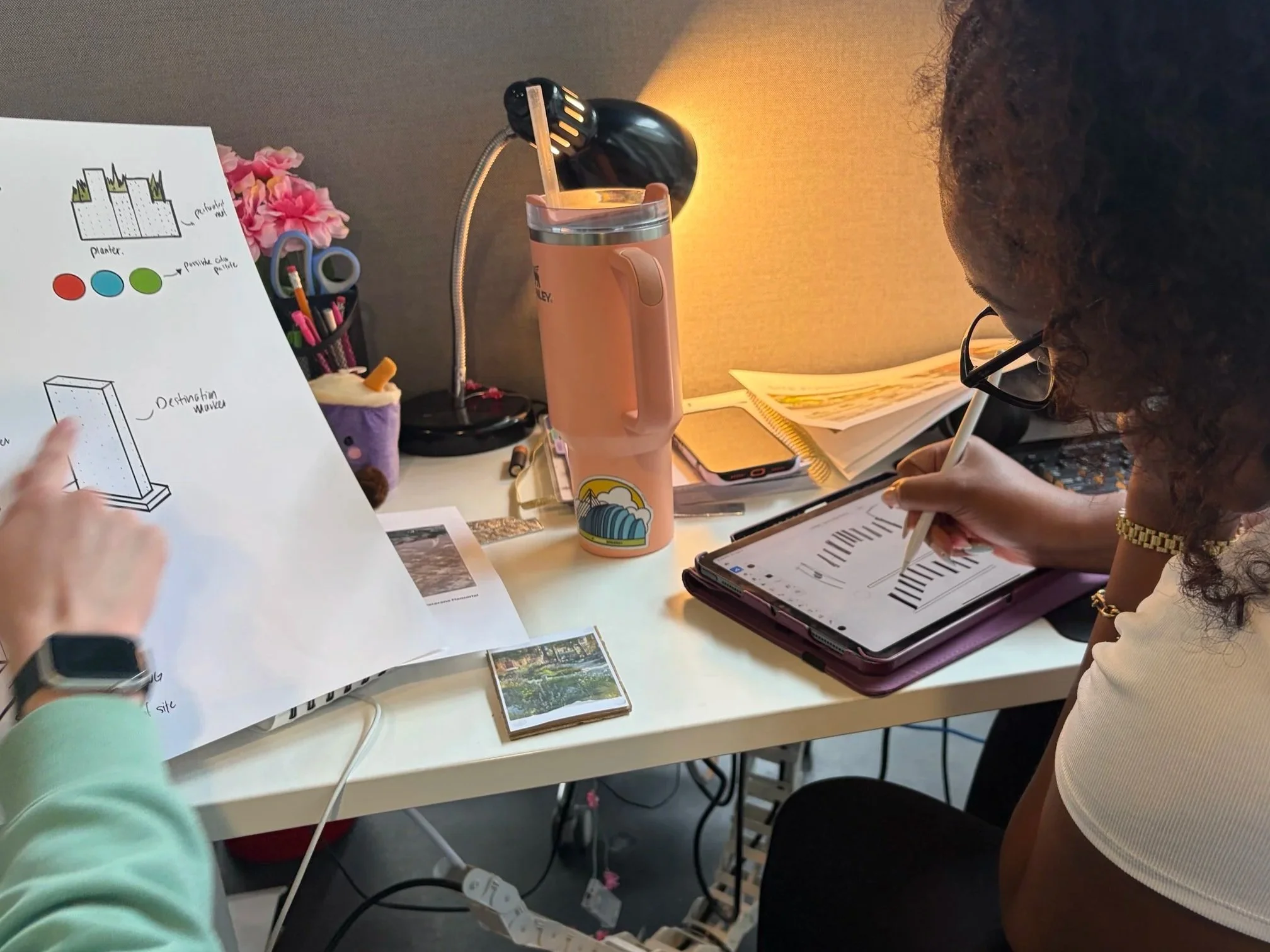
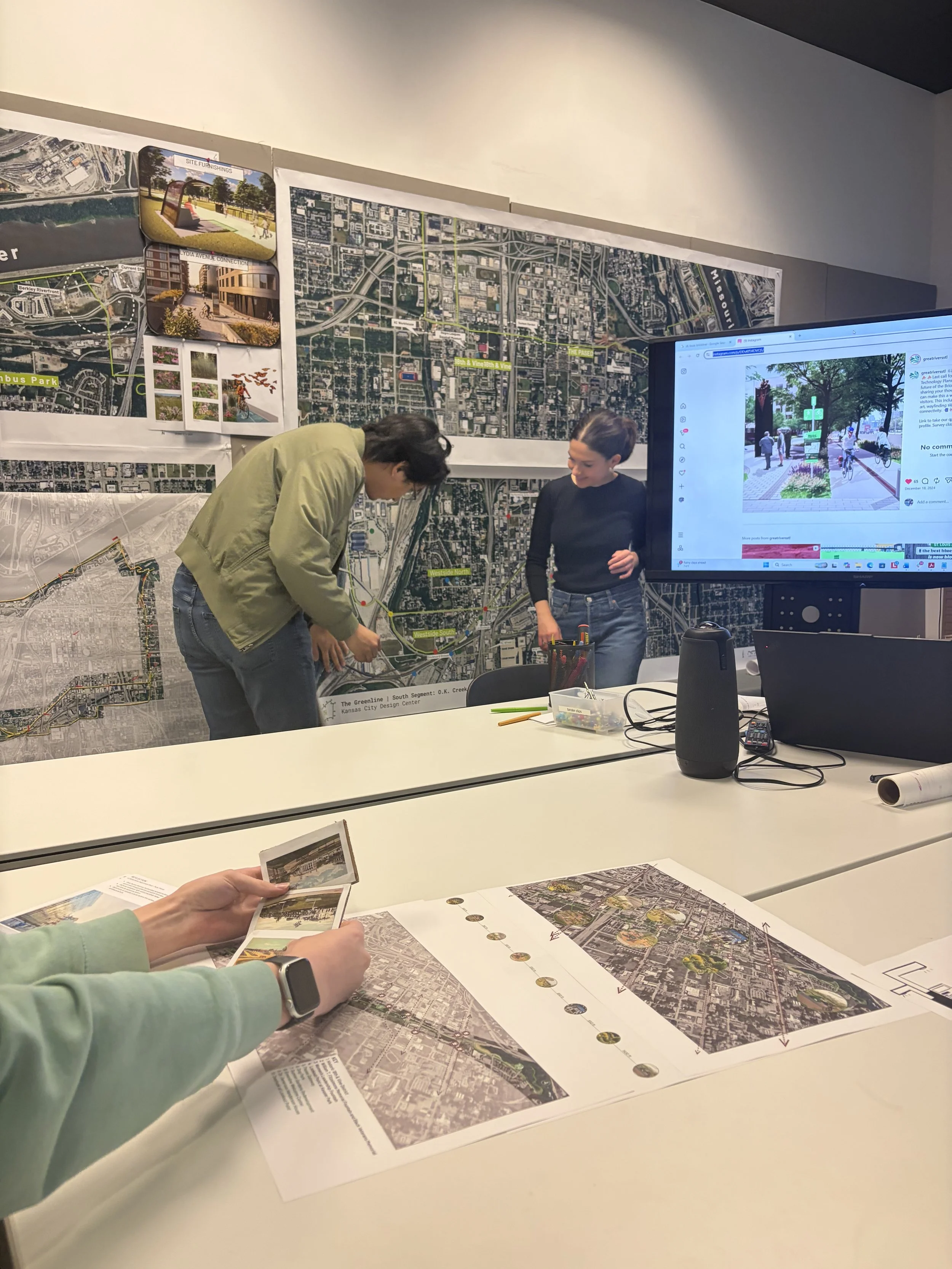
After our community meeting last Friday, we began translating that feedback into more specific design strategies. One of the key ideas we are developing is creating a rhythmic sequence of destinations along The Paseo that respond to both movement and place. We have been analyzing bus routes and surrounding parcels to better understand existing patterns of activity and identify opportunities for stronger connections. Because the pathway runs along the eastern sidewalk, we are also considering how people safely cross and move between destinations. This has led us to focus on protected crossings, buffers from traffic, and clearer relationships between parcels and adjacent spaces. At the same time, we are evaluating how underutilized parcels can support amenities that reflect community needs without competing with existing resources.
A major takeaway from our program discussions was the strong interest in community gardens and spaces for play. This pushed us to think about how the corridor can support both ecological systems and everyday activity in a way that feels connected rather than separate. The Paseo has historically functioned as part of Kansas City’s boulevard and park system, and it already contains some of the most significant green space within our segment. Because of this, we are leaning into ecological strategies such as pollinator gardens and native planting areas that support biodiversity and reinforce the identity of the corridor as a green spine. In addition, we are proposing a centralized community garden that acts as a shared resource for residents, offering space for growing food, learning, and gathering.
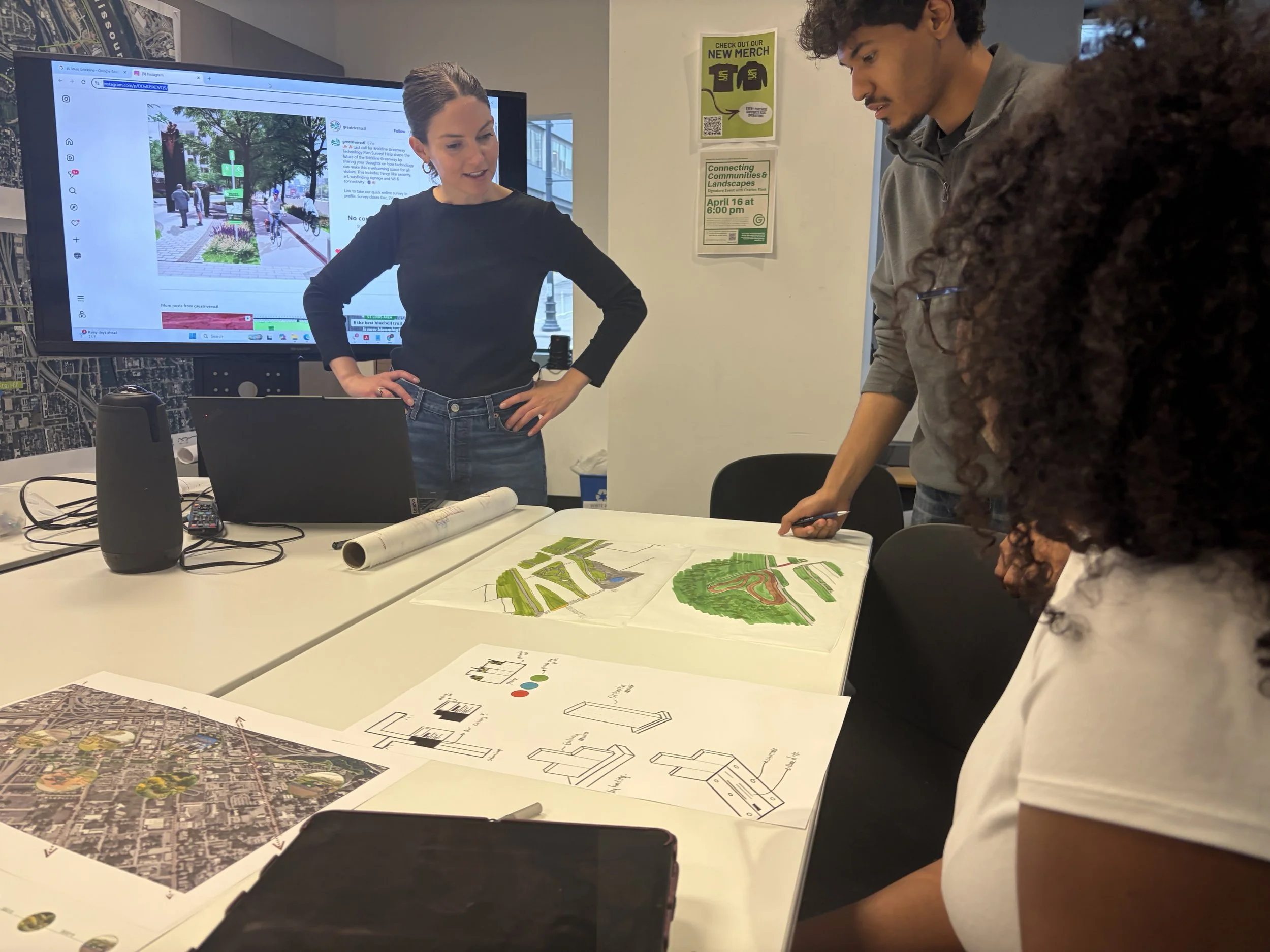
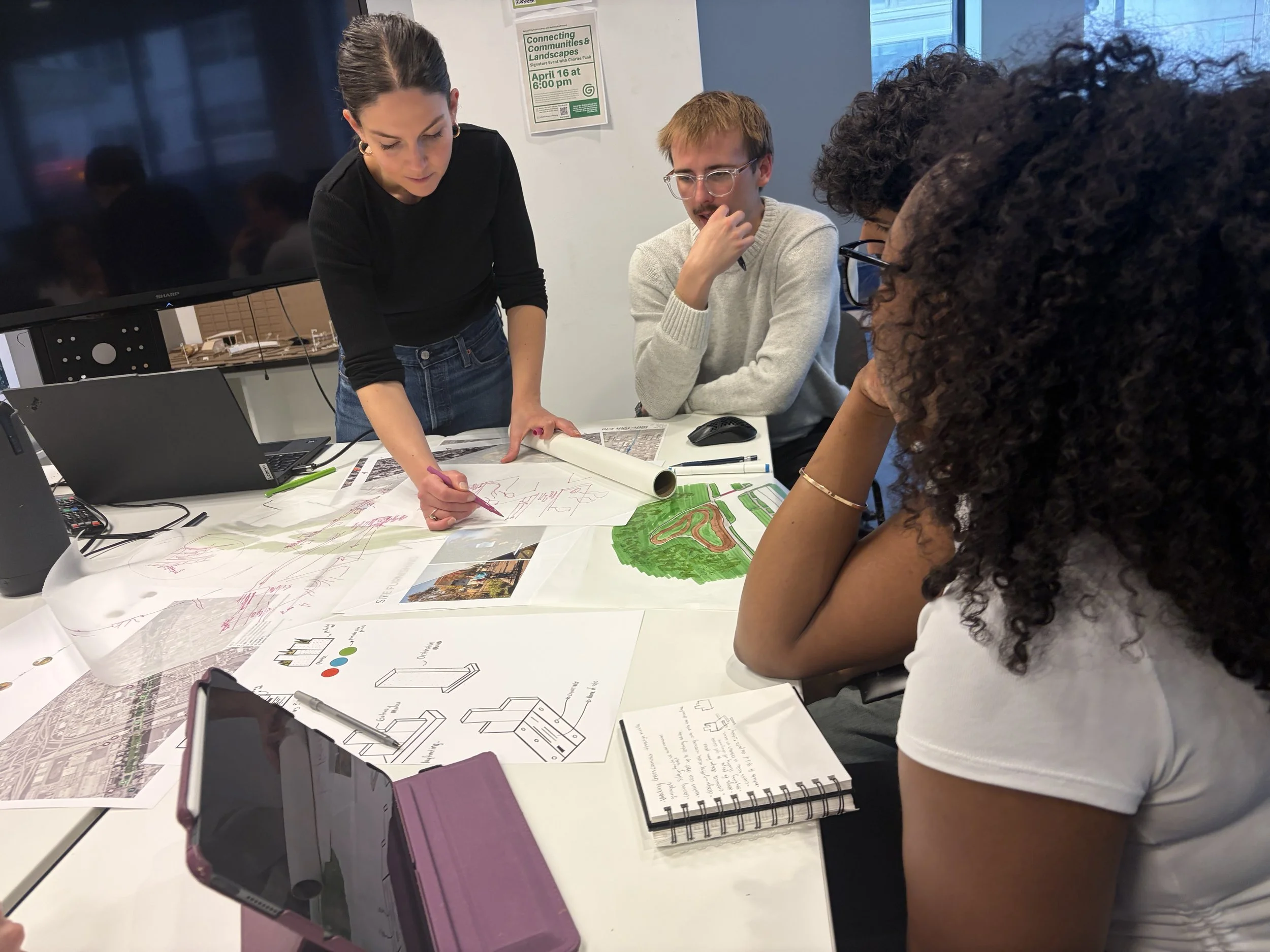
Alongside these ecological systems, play remains a key driver in our design. We are exploring different forms of play that go beyond traditional playgrounds to include physical, cognitive, and interactive experiences. Destinations such as a playground, pump track, fitness zone, and dog park create a range of activities that invite different users into the space. These areas are designed to shift in intensity, allowing the corridor to move between moments of energy and moments of rest. This creates a more dynamic experience along The Paseo, where people can engage with the space in different ways depending on their needs.
These strategies also connect back to the cultural and historical significance of the 18th and Vine District. Our goal is to strengthen this connection not only through movement, but through visible and experiential elements along the corridor. We are exploring opportunities for art and storytelling through murals, especially along the I-70 bridge, as well as through site furniture, crosswalk design, and signage. These elements help carry the identity of 18th and Vine beyond its boundaries, creating a continuous cultural thread that links the Greenline back to one of Kansas City’s most important historic districts.
As we move forward, we are beginning to integrate these ideas into our final design proposals. The feedback from the community meeting continues to guide our decisions, helping us refine a corridor that is not only connected and functional, but also reflective of the people, history, and identity of the East side.
Written by Jasmine Batres, Fourth Year Interior Architecture Student