
Exhibit Preparation
After Final Reviews, our focus shifted toward preparing and assembling our final exhibit installation at the Kansas City Design Center. As the semester comes to a close, the exhibit became an opportunity not only to present our work, but also to communicate the larger vision behind the Greenline and the collective effort that shaped it throughout the semester. Much of our time was spent translating drawings, diagrams, renderings, and research into a physical experience that could clearly tell the story of each segment while still feeling connected as one unified project.
One of the biggest challenges during the setup process was balancing clarity with density of information. Because the Greenline addresses issues ranging from ecology and transportation to housing, connectivity, and public space, we had to think carefully about how people would move through the exhibit and understand the progression of ideas. This led to conversations about hierarchy, pacing, and how graphics could work together to create moments of focus without overwhelming viewers. We experimented with placement, spacing, and sequencing in order to create a more immersive and readable experience.
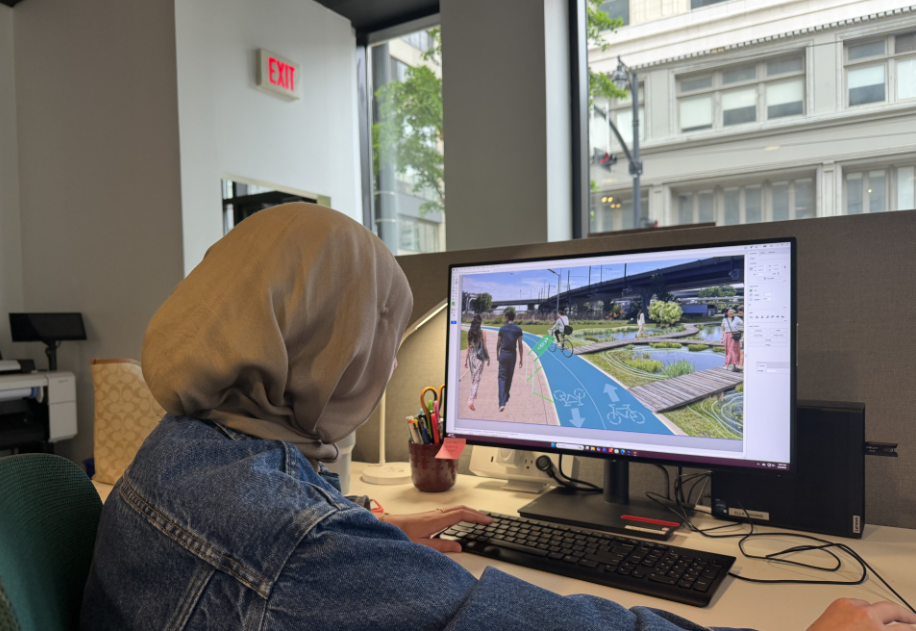
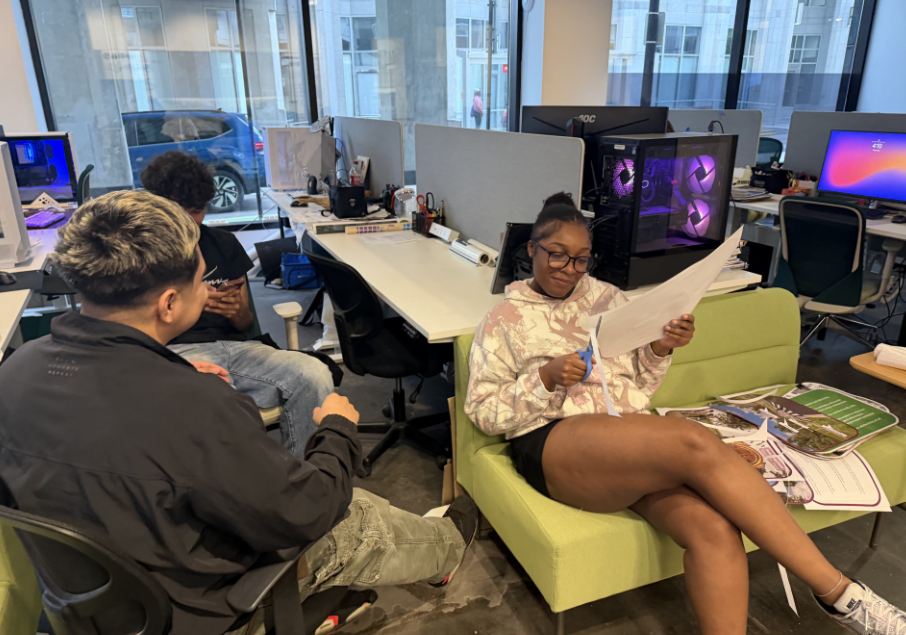
As a studio, we also spent time refining the physical atmosphere of the exhibit itself. Beyond simply pinning work on walls, we considered how lighting, models, materiality, and presentation techniques could reinforce the identity of the Greenline. Seeing all of the segments assembled together highlighted the continuity of the project and revealed how individual interventions contribute to a larger network across Kansas City. The exhibit began to function less as a collection of separate proposals and more as a shared vision for connectivity, ecology, and public life within the city.
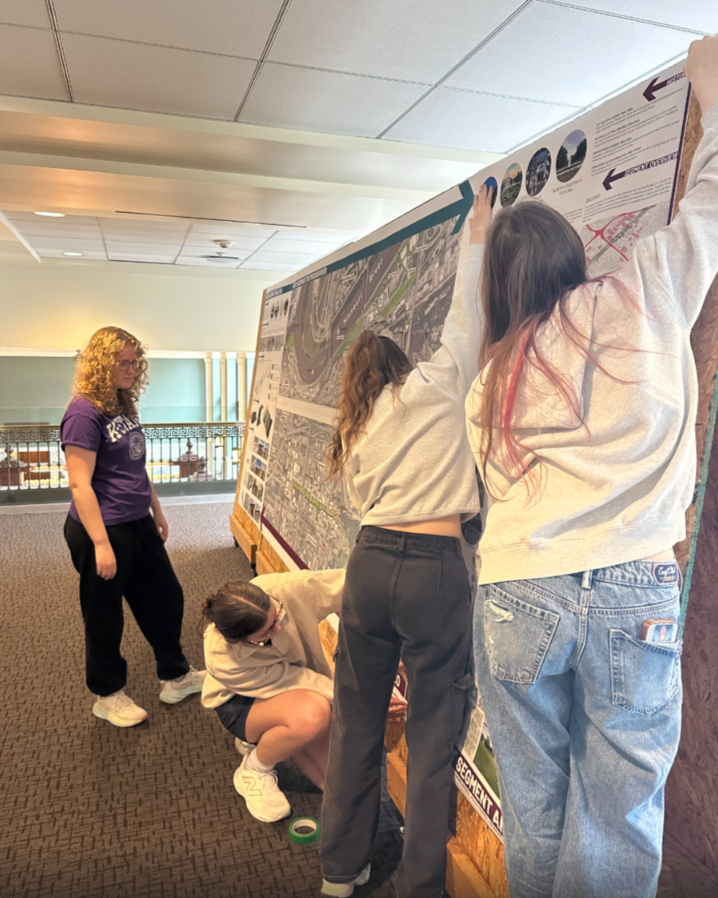
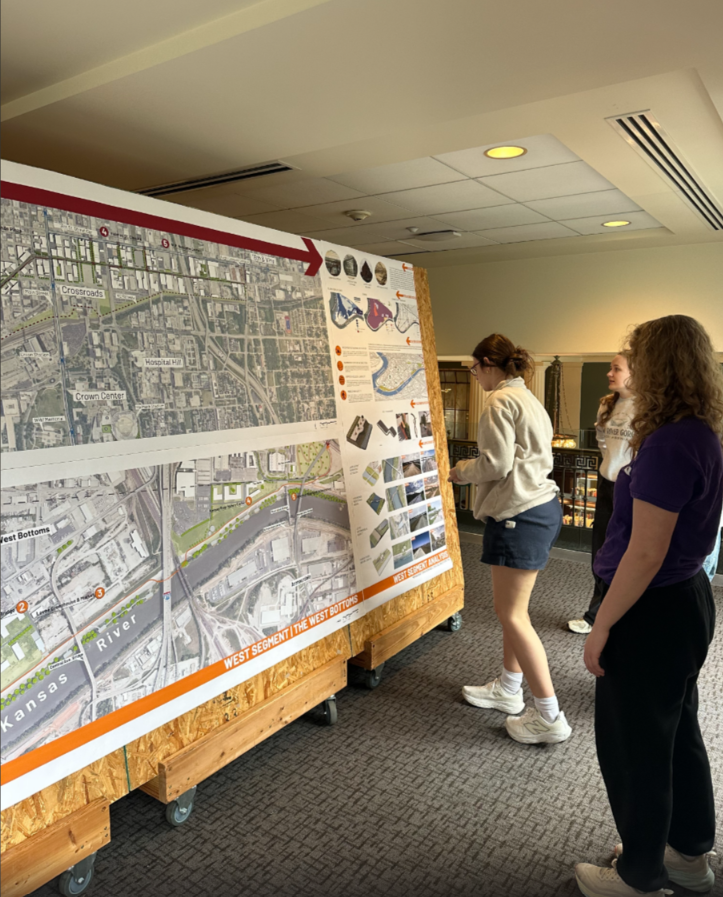
The setup process also became a moment of reflection on the semester as a whole. Many of the ideas that began as diagrams, sketches, and conversations earlier in the term are now represented through final drawings and spatial proposals. Walking through the exhibit made it possible to see how research, community feedback, and iterative design decisions evolved into more resolved interventions. It also emphasized the collaborative nature of the studio, where each team contributed a unique perspective while still working toward a common framework.
Written by Bailey Stretton, Fourth Year Interior Architecture Student