
Production Week
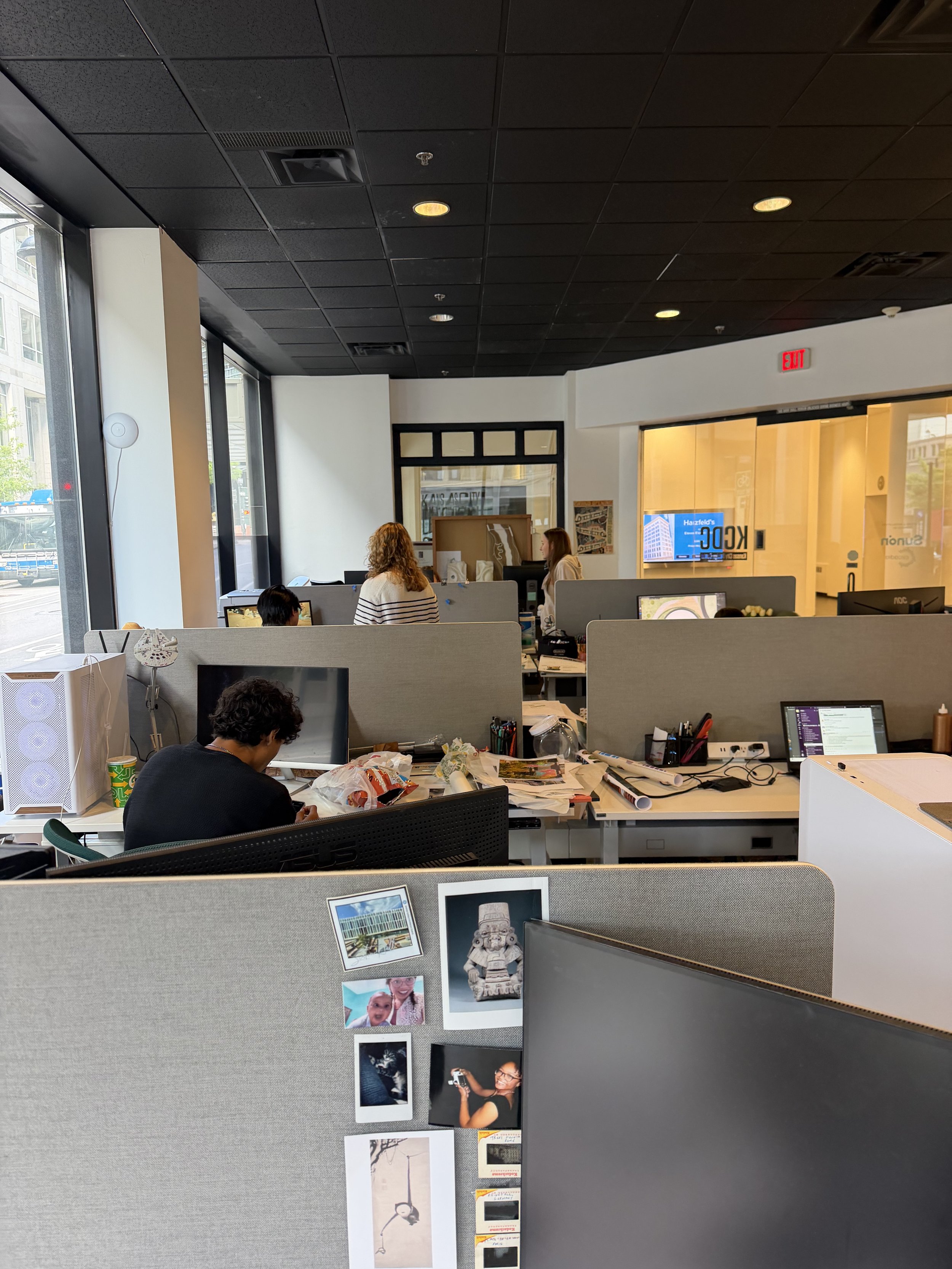
This week in studio, our focus has shifted toward final production as we prepare for presentations and the exhibit at the Kansas City Public Library. All of the segment teams have been refining their proposals and translating the months of work into clear, communicative posters. As the East Segment team, we are prioritizing how our ideas are read by an audience, making sure our narrative is concise, visually engaging, and grounded in a strong sense of purpose. Using Miro as a collaborative tool, we have been aligning our layouts and content so that each poster can effectively tell the Greenline story.
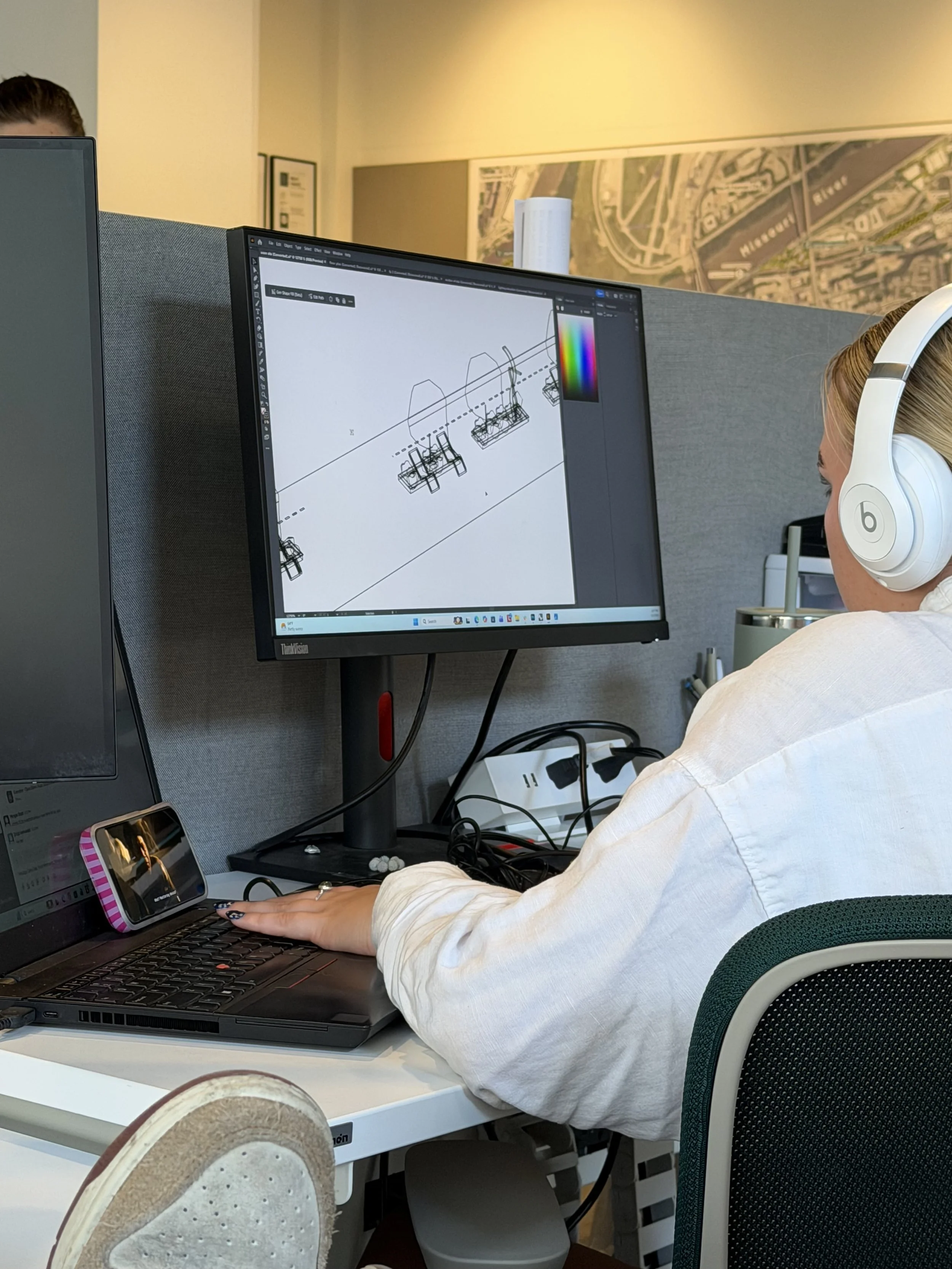
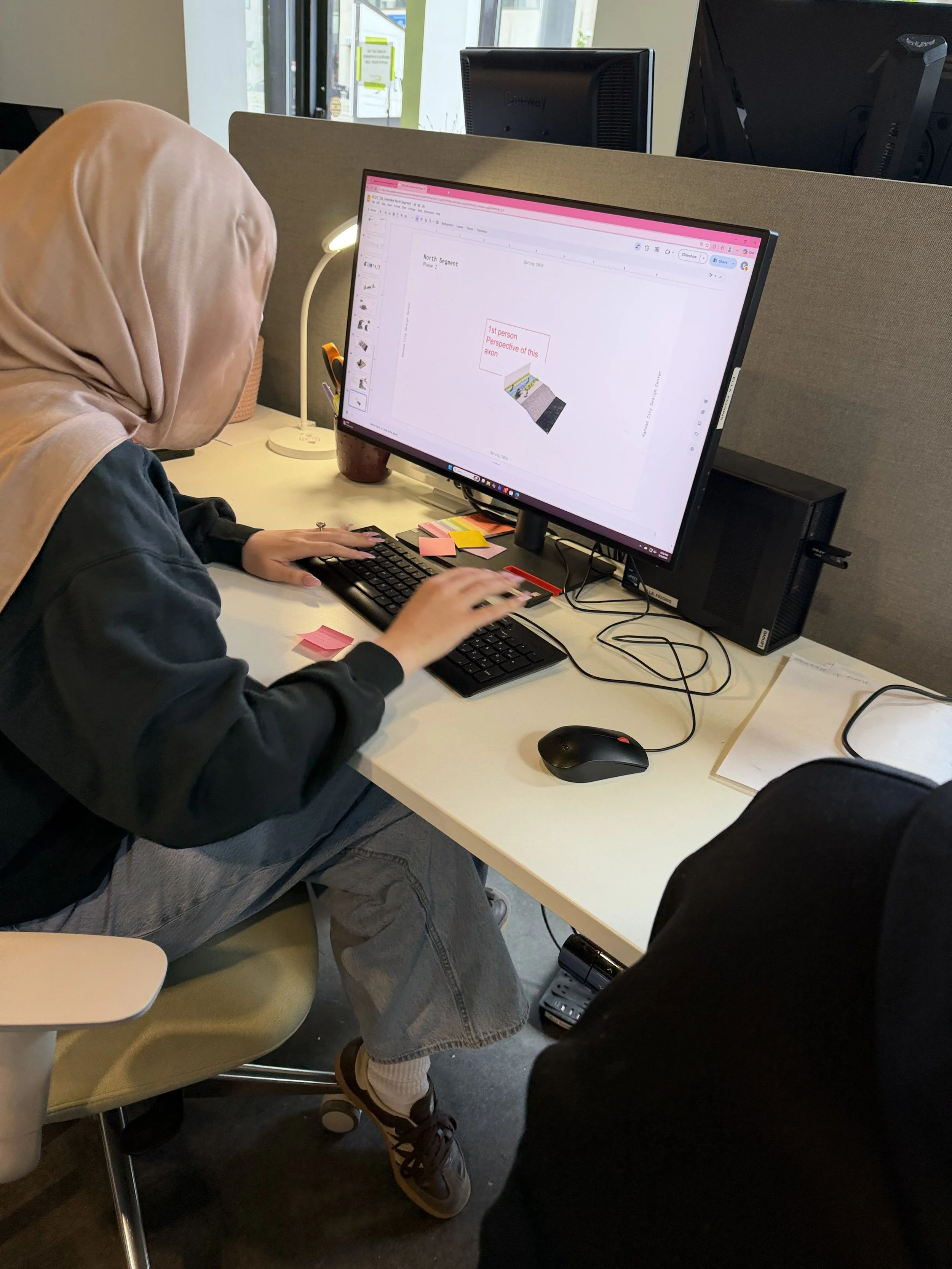
As we move through these final edits, we are focusing on clarity and intention. With limited space, every diagram and render needs to work efficiently in telling the story. A central theme in our work has been implementation, specifically how our design can be introduced through a series of phases rather than all at once. By illustrating before and after conditions, we are able to communicate change over time, helping viewers understand both the immediate and long-term potential of the corridor. On The Paseo Boulevard, we have identified that for the Greenline to be most impactful, a road diet is necessary, reducing the street from three lanes to two, with the third lane becoming on-street parking. This shift not only calms traffic but also opens opportunities for safer pedestrian crossings and stronger connections to the central greenspace, which is currently underutilized. By reclaiming this space, we begin to reframe the corridor that prioritizes the people rather than the vehicle, making the push for a more walkable city.
A key moment within our segment is the gateway condition. Our proposal introduces a welcome center that acts as both an entry point and a cultural marker; it’s something that reflects the identity of the surrounding community while inviting users onto the Greenline. We have been exploring adjustments to the intersection where the gateway meets the entry point of the Paseo. By shifting both directions of traffic to one side of the street, we can expand the eastern side into a more generous greenspace along the trail, strengthening the presence of the Greenline and creating a safer, more intuitive experience for pedestrians and cyclists.
Writtten by Evion Ruff, Fourth Year Interior Architecture Student