
Material Lessons: How Precast Shapes Resilient Design

Due to the nature of the Resilience Hub project, our architecture students are challenged with incorporating real-world construction methods into their buildings while in the design phase. Dirk McClure visited us at KCDC to present an overview of what is possible with modern precast building facades. In order to better inform them in their design process, our studio was privileged with being able to tour the local Enterprise Precast Concrete plant, getting first-hand experience of how this construction method is used to balance budget and design. Our studio got insight into multiple parts of the production process of precast concrete, gaining a better understanding of their options when using this method of construction in their current projects and beyond. Precast construction allows for cheaper solutions when designing a reusable framework for resilience hubs, and it can help to reduce the amount of coordination required during the construction processes. Students are challenged to take advantage of these benefits while incorporating them into conceptual designs.
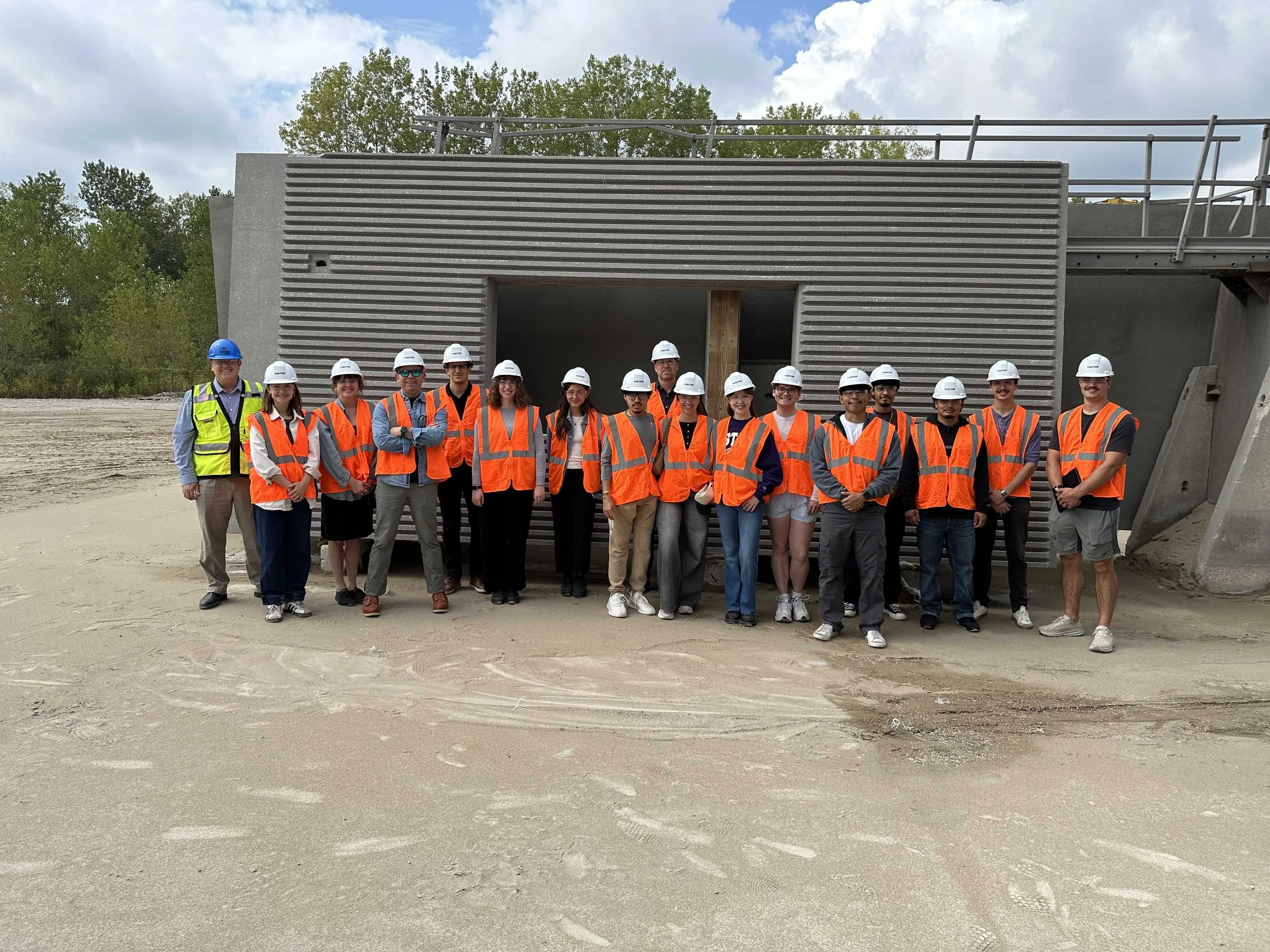
As we look forward to the next few weeks, our studio is preparing to begin production for the work that will be presented during our mid-semester reviews at Dimensional Innovations. As the industrial design students move closer to the mid-reviews, they are working on how to correctly tell the story of their concepts, making sure to concisely but clearly convey their problems and solutions. On the architecture side, students are finalizing their initial building designs in preparation for the initial design review, creating a two-sentence program statement outlining the goals of their proposed buildings.

Student Concepts for Dunbar's Future

From big ideas to reality, the Industrial Design and Architecture students are embracing the ideation phase of their projects. The Architecture students are tasked with designing a resilience hub for the Dunbar community, while the Industrial Design students are creating products and systems that will support the hub and strengthen community pride and culture. A resilience hub is a safe, accessible space that serves both everyday needs and critical demands during times of crisis. These hubs provide power, shelter, emergency resources, and food. They also foster community connection, build social resilience, and promote autonomy for neighborhoods and residents. Students are exploring a wide range of ideas for the hub, including community composting, improved bus stops, a chicken coop system, and modular dividers that adapt for emergency use and other functions.

The initial concepts are being rapidly tested and refined by thinking through sketching. For both disciplines, the process of quickly putting ideas onto paper (or digital canvas) is crucial for translating abstract concepts into tangible forms. This loose, dynamic approach allows students to communicate complex structural and product ideas instantly to their peers and mentors, receiving fast feedback that drives iteration. Whether illustrating the placement of a new system or detailing the joints of a divider, sketching is not about creating a final image, it’s about visual problem-solving, ensuring their designs are practical, culturally resonant, and truly meet the resilience needs of the Dunbar community.

On the architecture side, our studio has shifted gears from research into design development, moving from broad concepts to testing real spatial strategies. Students are organizing their programs and sharpening ideas rooted in the history and identity of the Dunbar community. Last week, we had critiques at Focal studio, which gave us the push we needed to refine and challenge our design moves as we prepare for mid reviews. The projects are branching out in exciting directions, with some tackling food access, others reimagining spaces for gathering and cultural exchange. The energy in the studio is high, and we're all looking forward to sharing our progress and seeing what we can collectively bring to life.

Studio Update

This week, architecture students presented their Dunbar site findings and initial massing studies, while industrial design students dedicated their workday to advancing big idea research. In the evening, our seminar featured the first round of project case study presentations. 

On Wednesday, the industrial design students pitched their big ideas in small groups, presenting concepts ranging from information kiosks to food systems and modular privacy screens. As they wrap up their research this week, they’ll hit the ground running with ideation next week. In the seminar, we met with Ann Holliday, Vice President of Strategic Initiatives for the Downtown Council. Ann spoke about the future Roy Blunt Luminary Park. She also presented about the issues shaping the future of Downtown, such as the arts, housing, improving the urban environment, supporting new businesses, and attracting talented young people to Kansas City.

To wrap up the week, both disciplines took advantage of Friday as a work day to move forward their designs as well as heard from Dirk McClure from Enterprise Precast Concrete. Dirk visited the studio and gave an educational look into the realm of precast concrete and its manufacturing. He left students feeling inspired for the opportunity of implementing precast concrete within their own designs.