Mid Review and Moving Forward

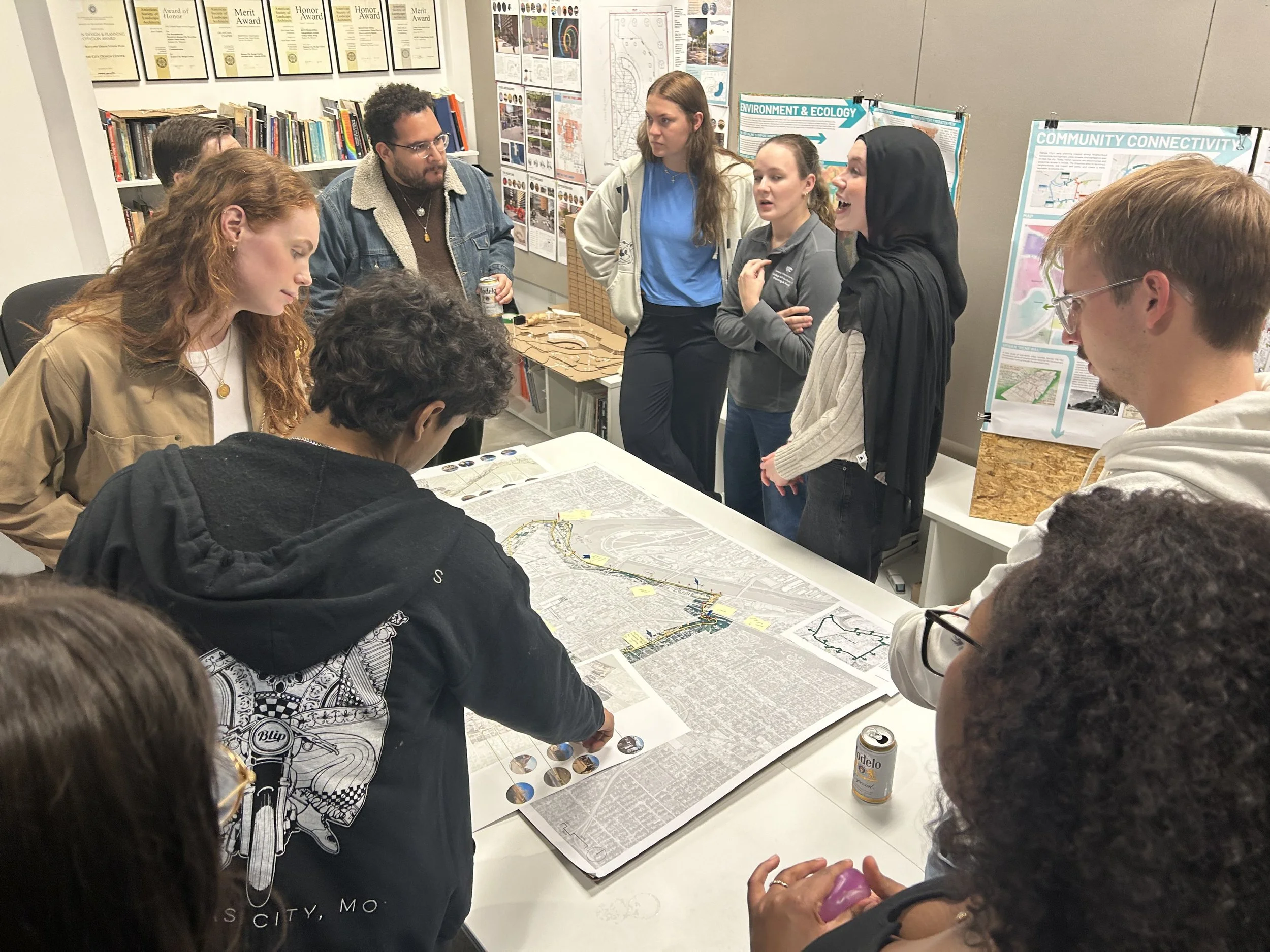
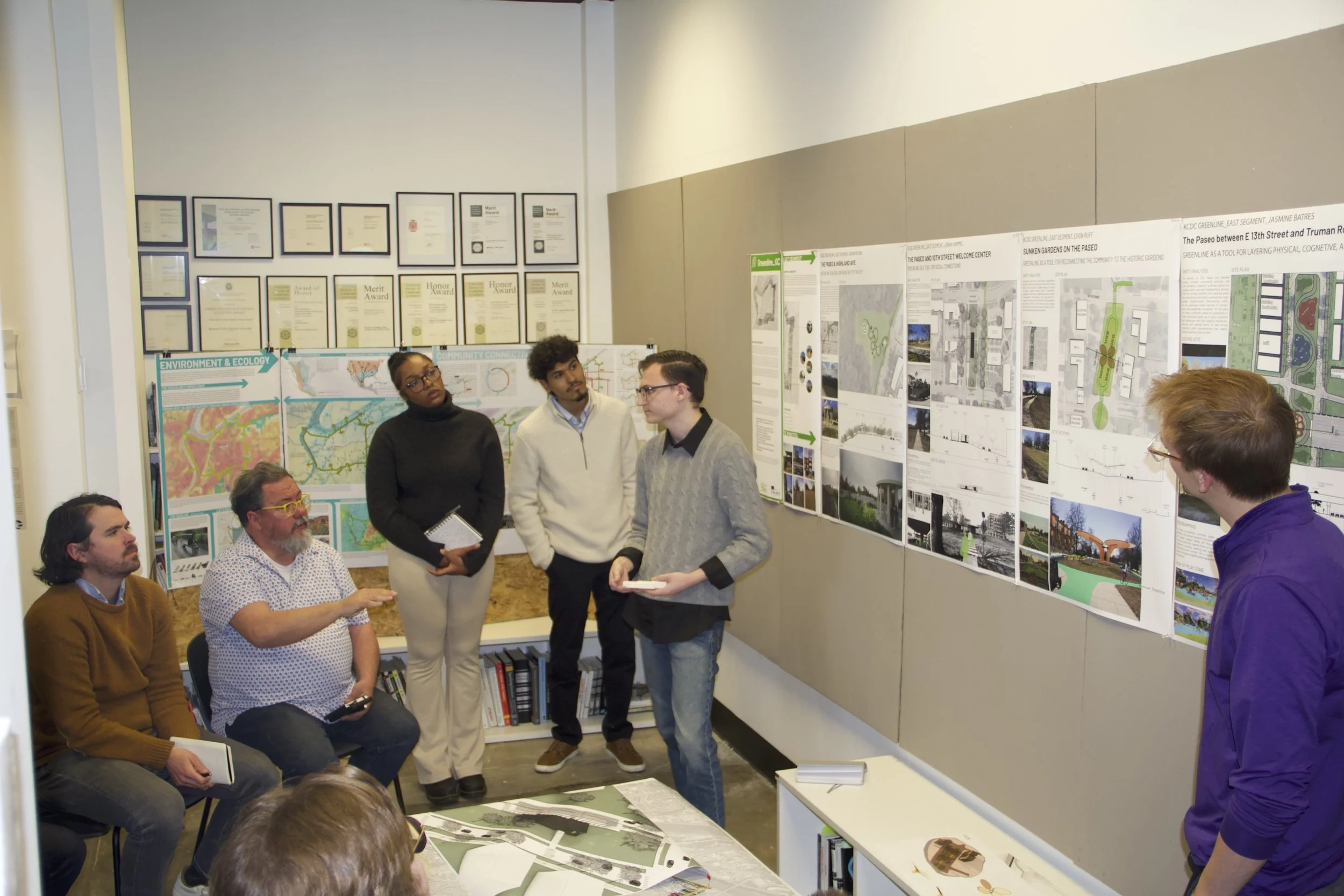
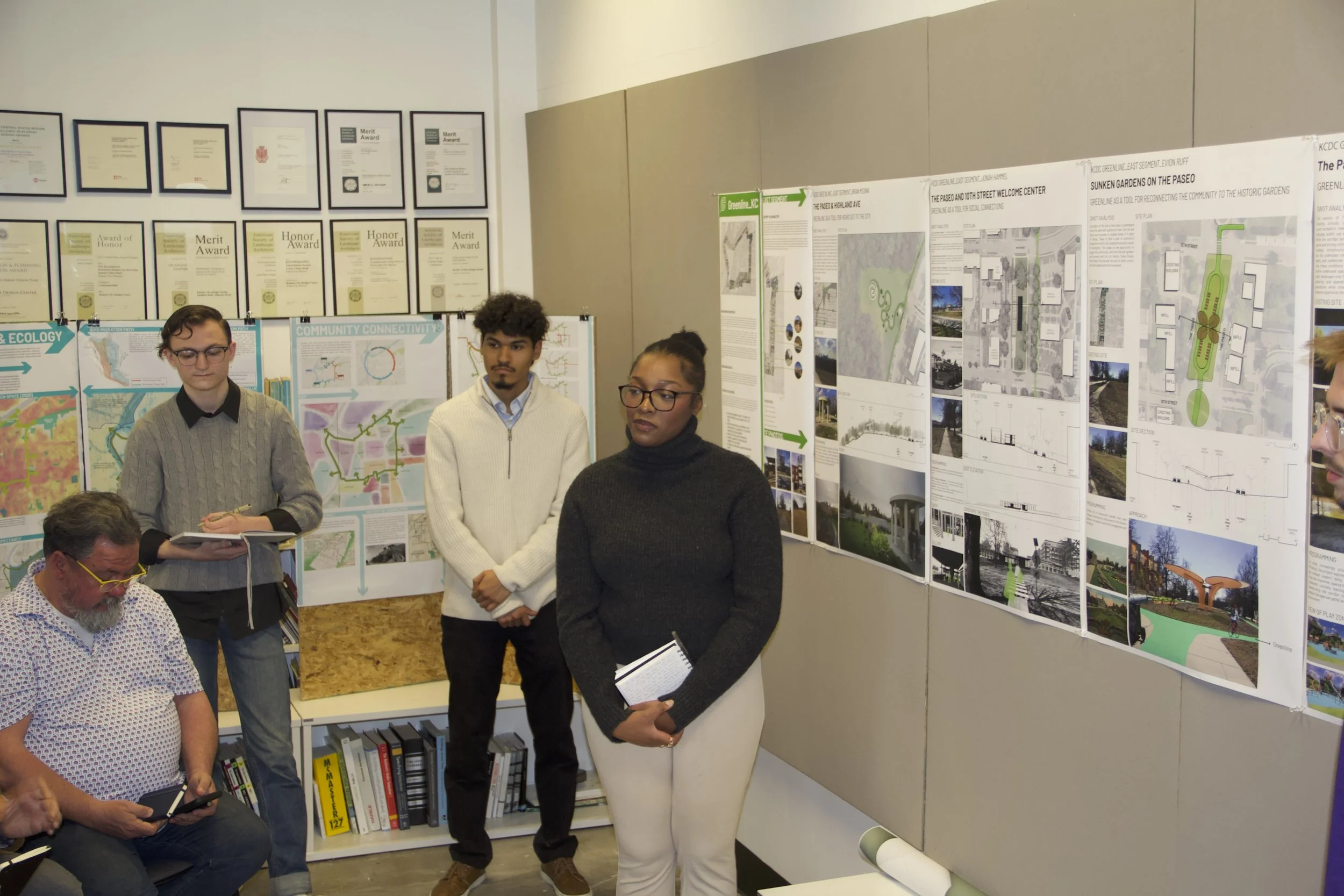
This week, the KCDC Greenline Studio had mid-reviews, which brought eight professionals and critics from a range of backgrounds who provided valuable feedback and design strategies to the Greenline proposals. Through these discussions, students identified new site challenges, particularly related to connectivity, infrastructure barriers, ecology, and the complexity of working within existing urban systems. These critiques encouraged teams to rethink certain assumptions and begin strategizing new ways to address these issues moving forward. As the semester progresses, students will continue refining proposals that strengthen neighborhood connections, improve safety, and activate underutilized spaces along the Greenline.
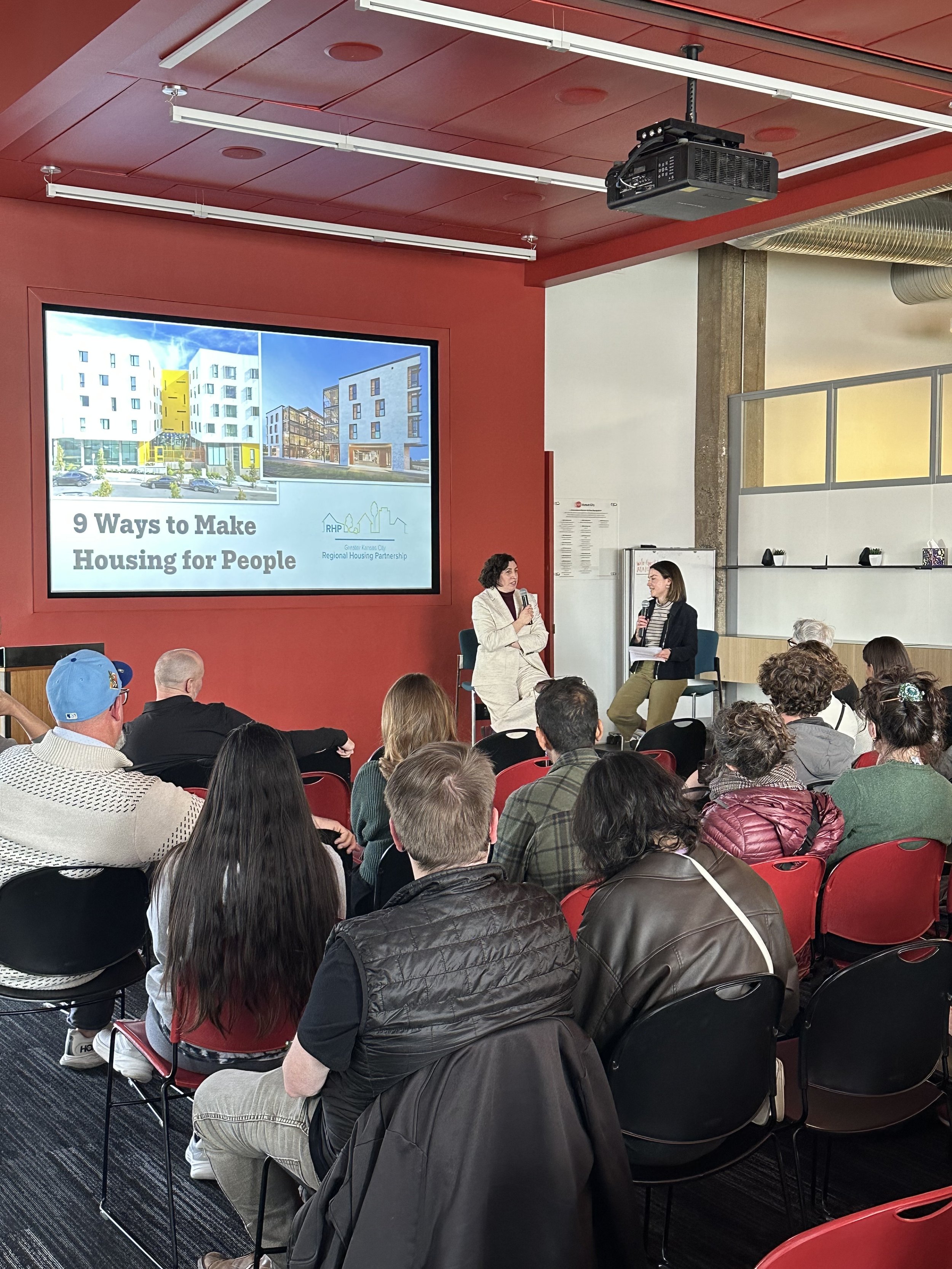
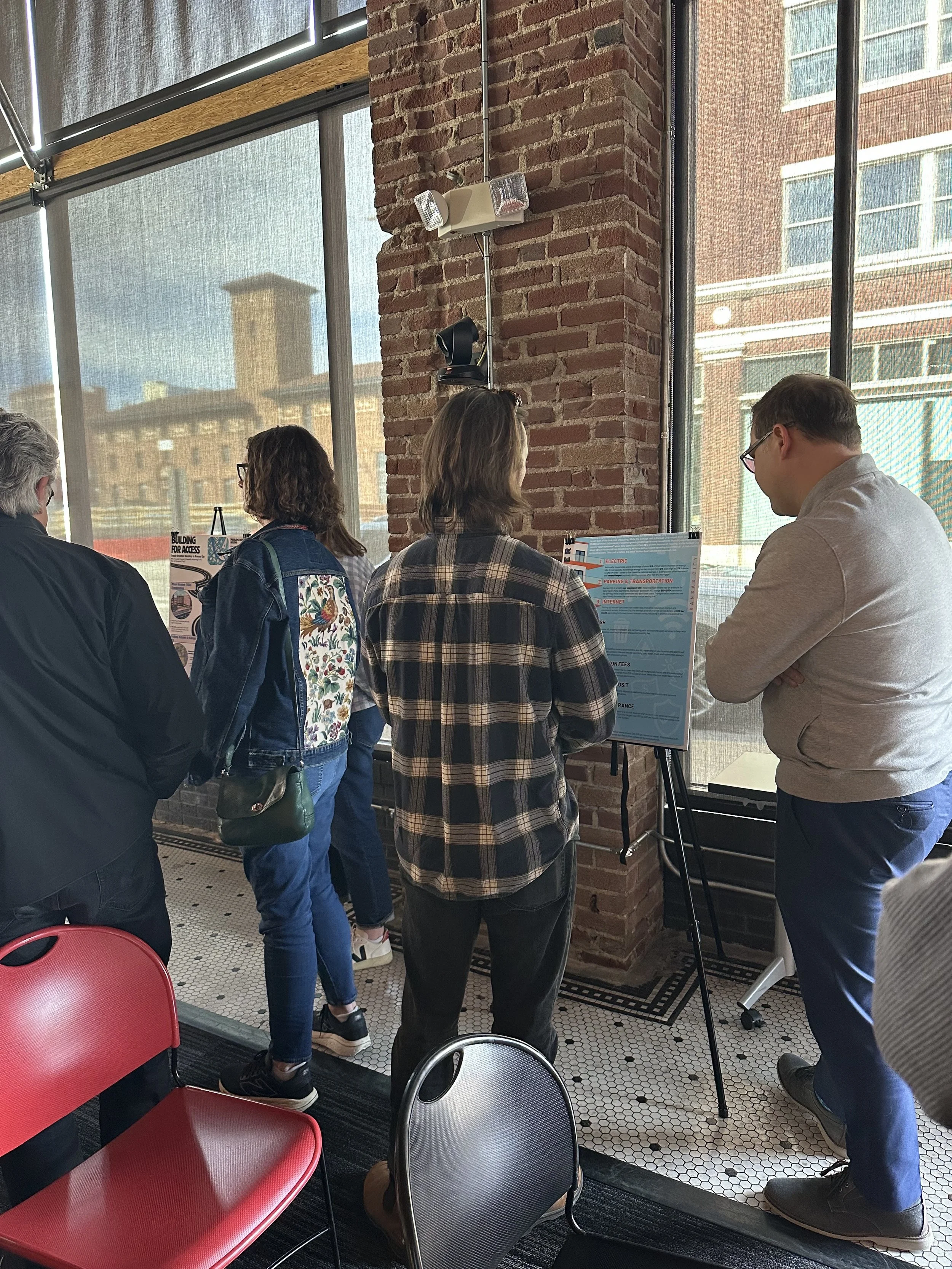
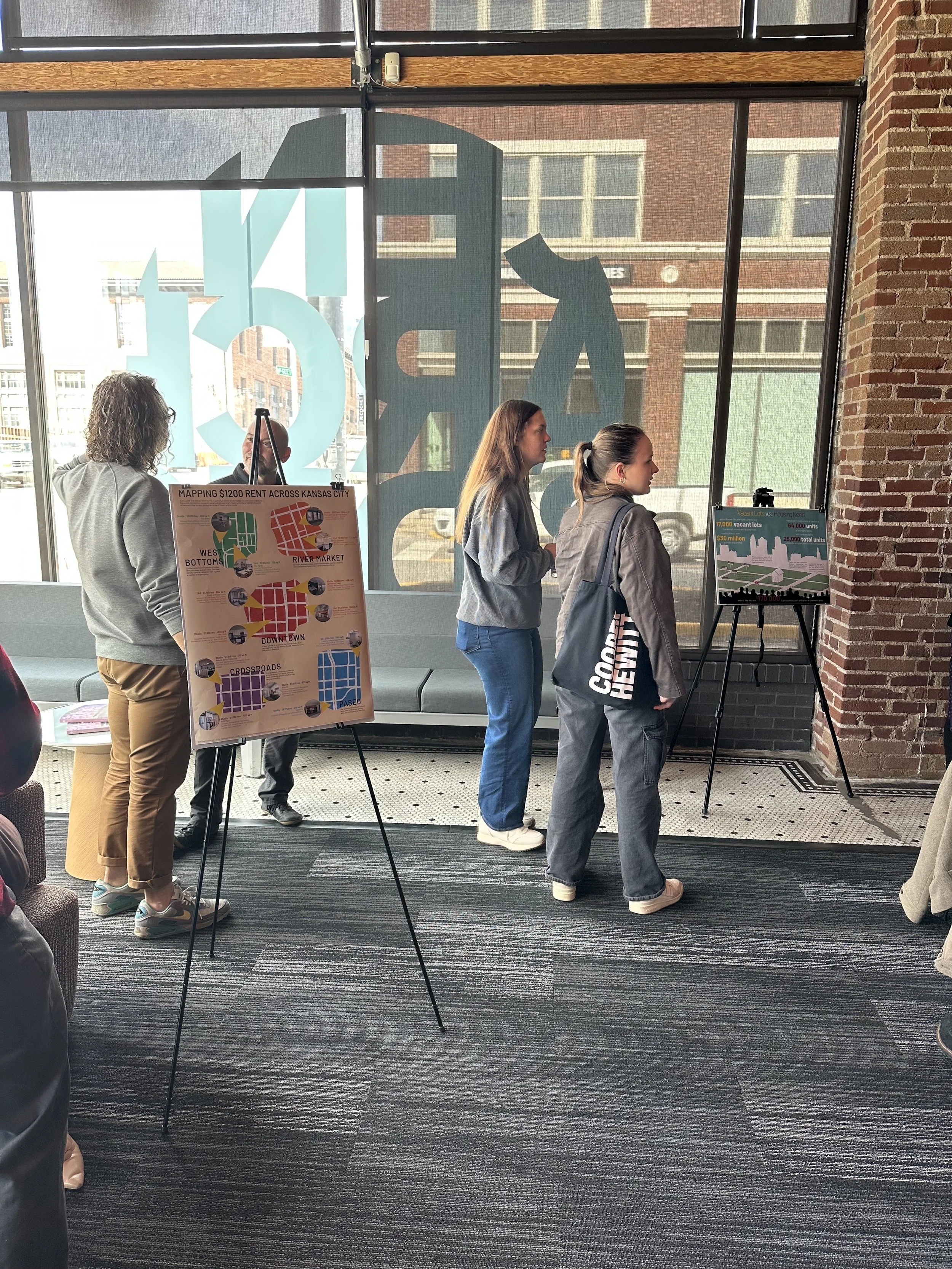
On Thursday, the studio attended an event titled “9 Ways to Make Housing for People,” led by Caroline Souza from David Baker Architects. Following the lecture, KCDC Studio Director Lauren Harness led a discussion with the public about housing strategies and how these ideas relate to current challenges in Kansas City. As part of the event, six KCDC students had research posters selected for public display, where members of the public could view and engage with the work. The posters explored topics such as affordable housing and rent burdens, vacant lots, mapping affordability, transportation access, and the relationship between housing and health.
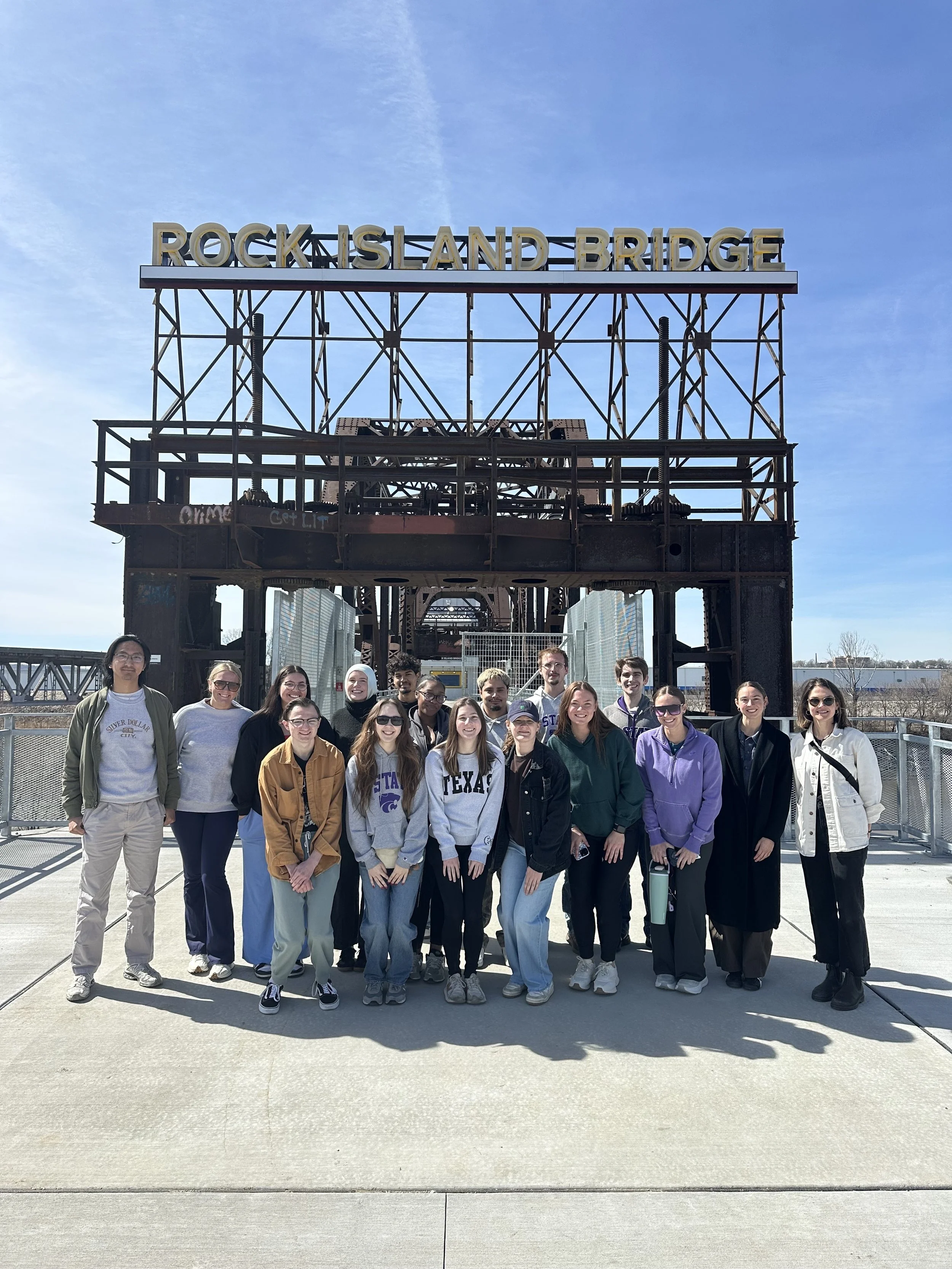
Friday, the studio toured the Rock Island Bridge to explore another example of infrastructure being reimagined as public space. After the tour, the studio regrouped to discuss roles for the second half of the semester and began preparing for the upcoming community meeting as the Greenline proposals continue to evolve.
Written by Shaye Butler, Fourth Year Architecture Student
Studio Momentum, Mid-Review Prep, and Collective Vision

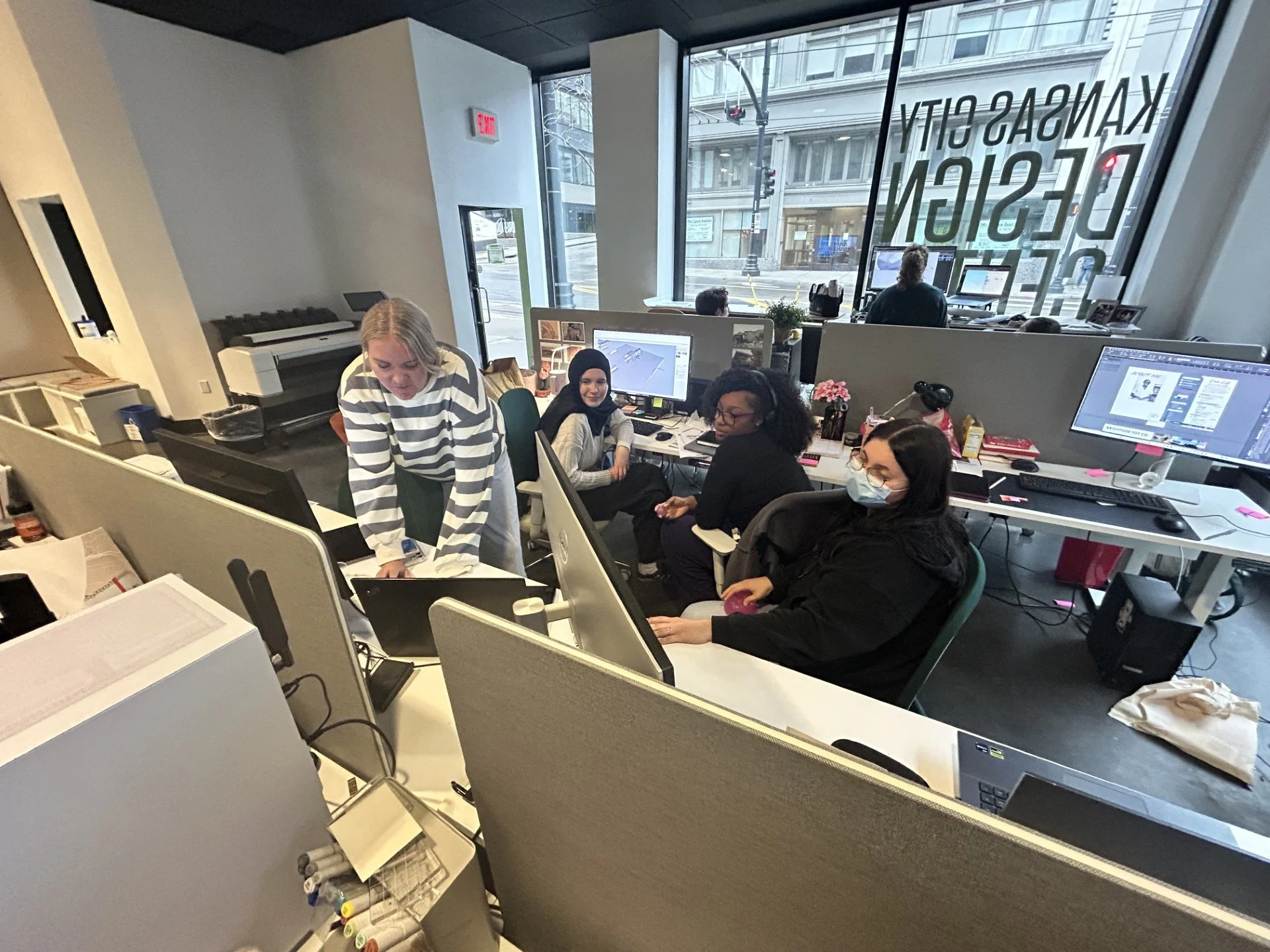
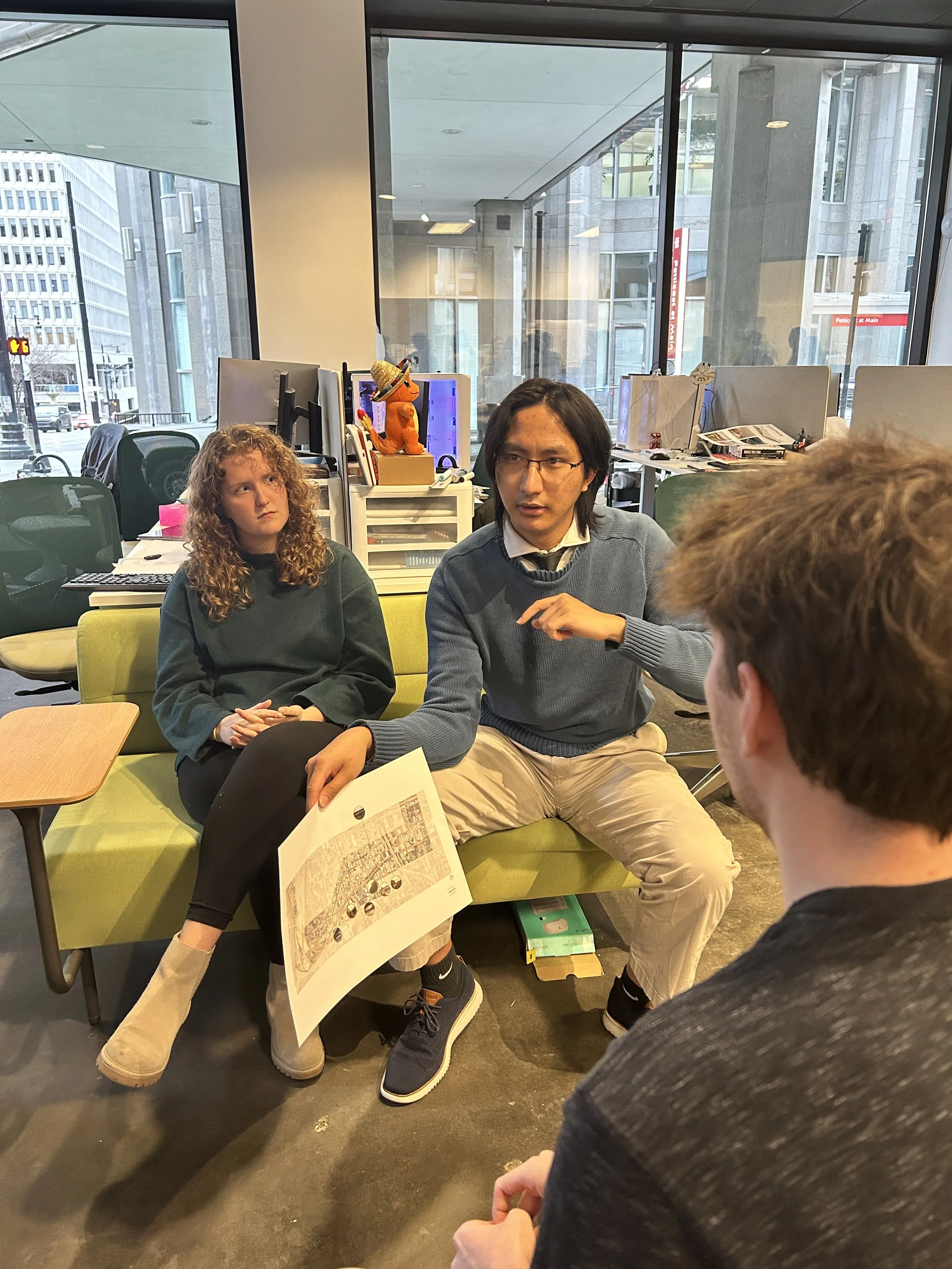
With mid-review quickly approaching, everyone in the studio has been deep in their individual projects, refining ideas and preparing the deliverables that will communicate our design intentions. Draft plans, diagrams, and models have been taking shape across the desks as we continue to test ideas. While we are all working toward the same broader goal (strengthening the future of the Greenline) each of us is focusing on a different site and set of opportunities along the corridor. Each student has been analyzing their specific site conditions and thinking critically about how design can support the trail while improving the surrounding neighborhood. Some proposals focus on public gathering spaces, while others explore how landscape, circulation, and small-scale development can activate underutilized areas. It has been exciting to see how everyone’s individual vision contributes to a larger urban story unfolding along the corridor.

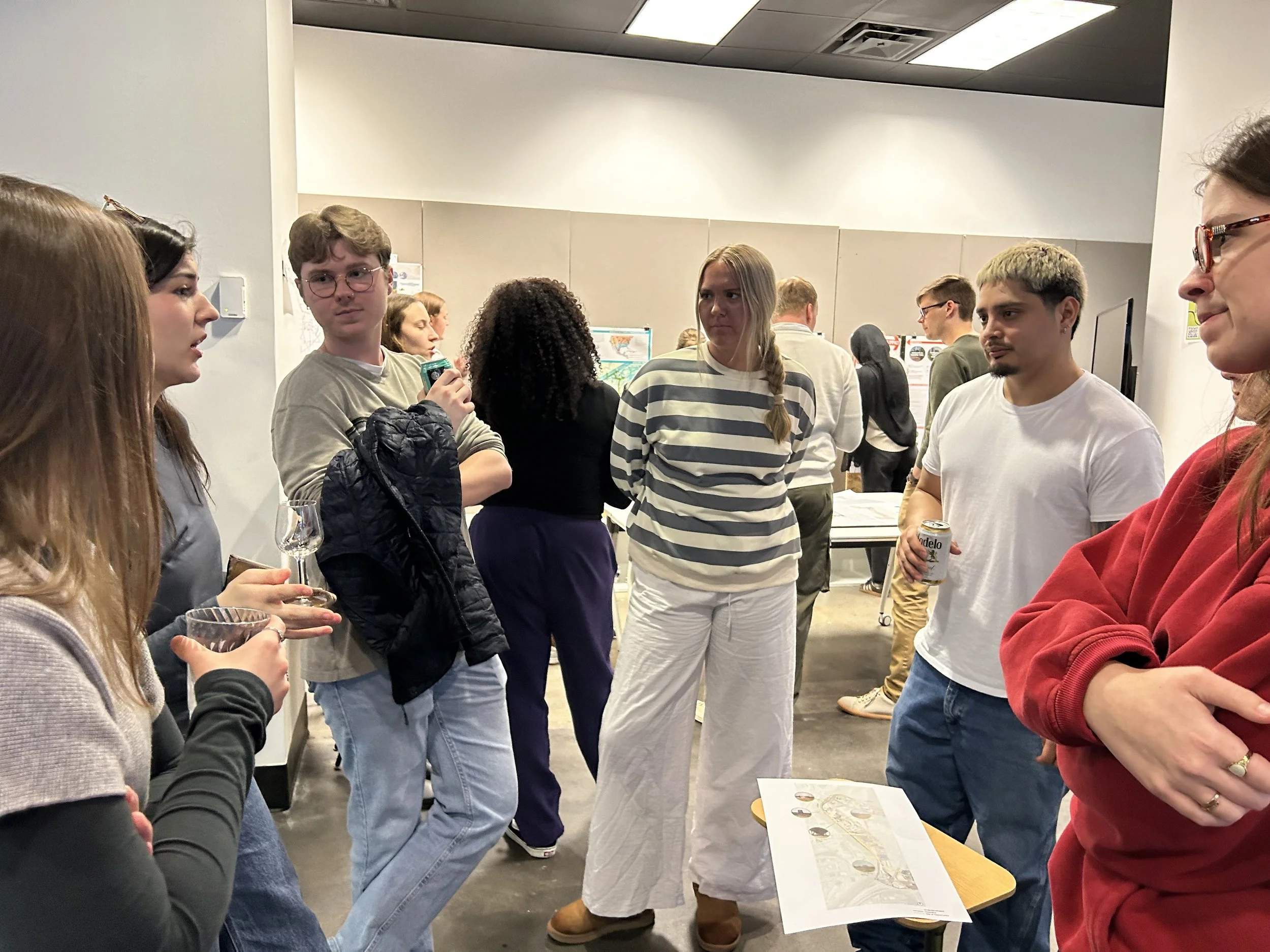
While the week has been full of focused studio time, we also had the chance to step away from our desks for a bit and connect with fellow design students. Later in the week, the studio hosted a happy hour with students from the University of Kansas School of Architecture & Design. It was a great opportunity to meet other students working in architecture and urban design and to hear about the projects they have been exploring in their own studios. Conversations ranged from studio life and design ideas to the realities of long nights and looming reviews. It was great to connect with peers who understand the rhythm of design school and the challenges that come with it. Moments like this remind us that while studio work can be intense, the design community across the region is collaborative and supportive.

The coming days will be filled with refining drawings and preparing to share our work. If this week was any indication, the projects along the Greenline are shaping up to be explorations of how design can enhance movement, community, and public space in Kansas City.

Written by Delani Leary, Architecture Student

Housing Policy Innovation

This week in studio our focus shifted primarily to our Greenline segment teams as we prepare for our mid review. We also met with a few different groups to broaden our horizons in studio and in seminar. I’m part of the East segment team, which stretches from Cliff Drive through The Paseo and down to 18th and Vine District. It’s a corridor shaped by history, long-term divestment, and incredible resilience that we as a team are working to honor. Our central argument is that the Greenline should serve as a tool for connection, stitching together areas divided by highways, reconnecting communities and resources and opening the possibilities for fresh opportunities.

Donna Schneck-Hamlin discussion

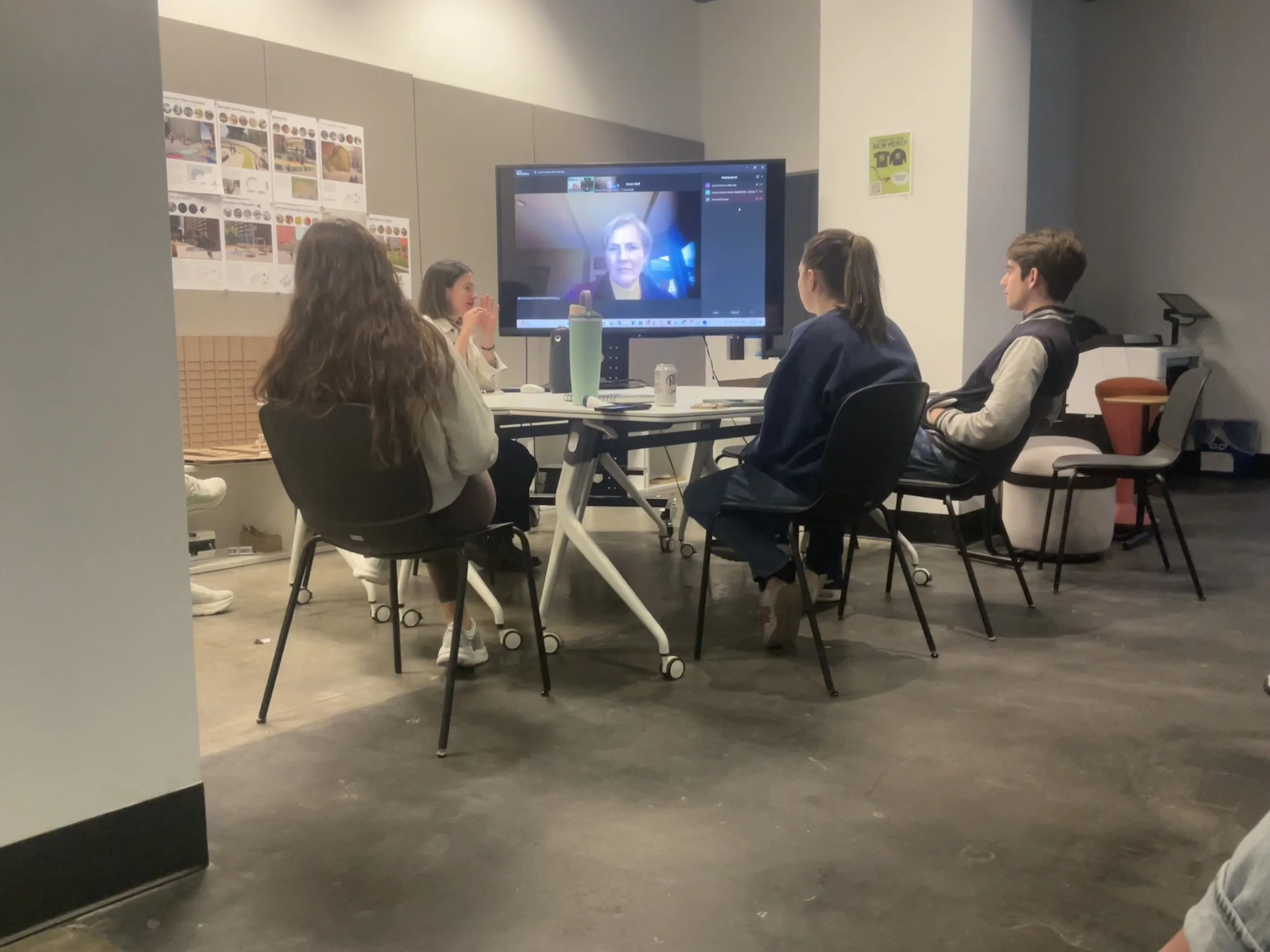
On Monday we met virtually with Donna Schneck-Hamlin of Workforce Solar Housing Partnership to discuss community land trusts. At their core, CLTs rethink what it means to own a home. In this model, the home owner purchases the house while the land beneath it is held within a trust and leased at a low cost. This structure keeps the initial purchase price lower while ensuring long term affordability when the home is resold. The homeowner still builds equity, but the property remains accessible to the next buyer which is critical in neighborhoods vulnerable to displacement. 

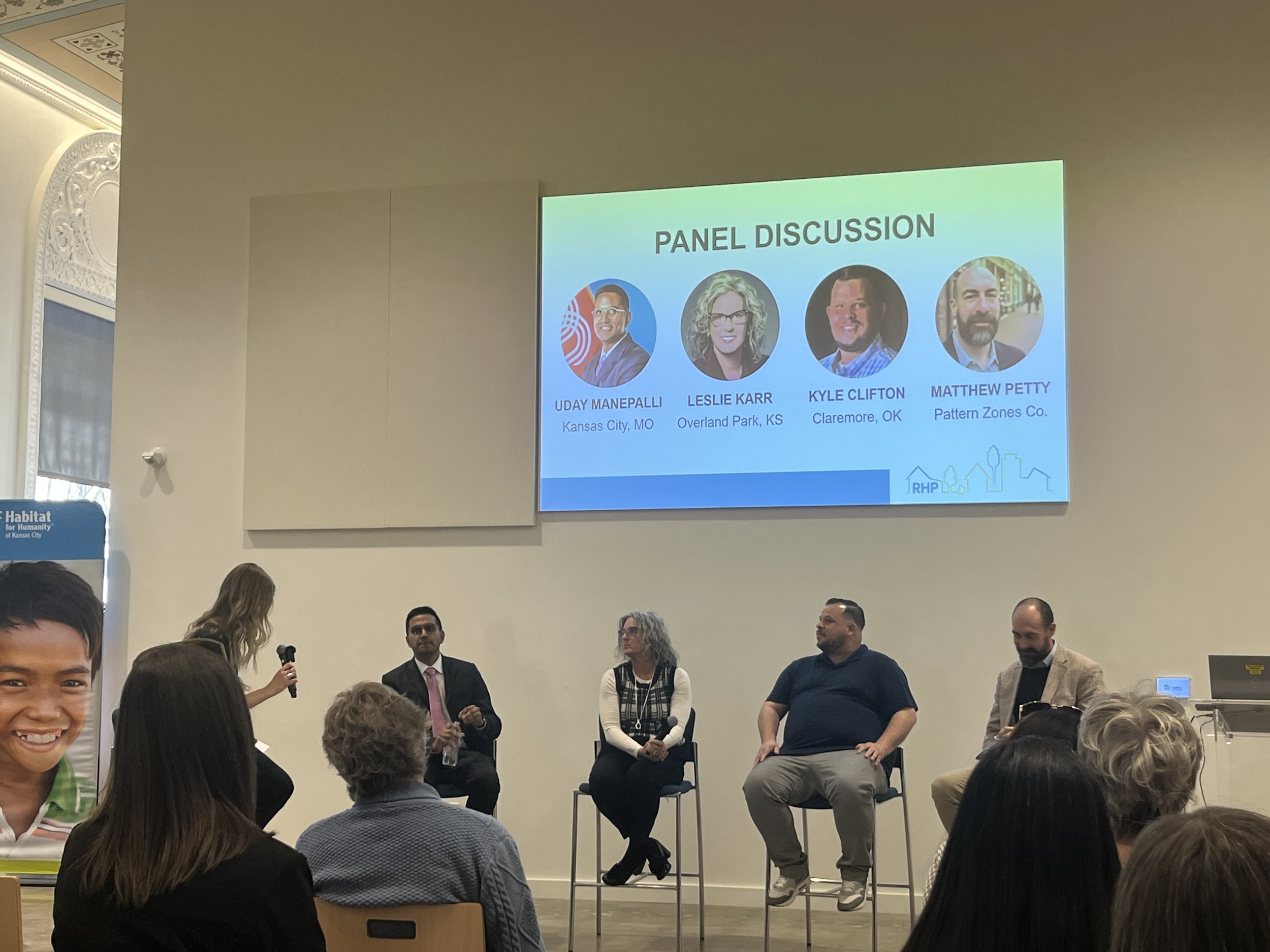
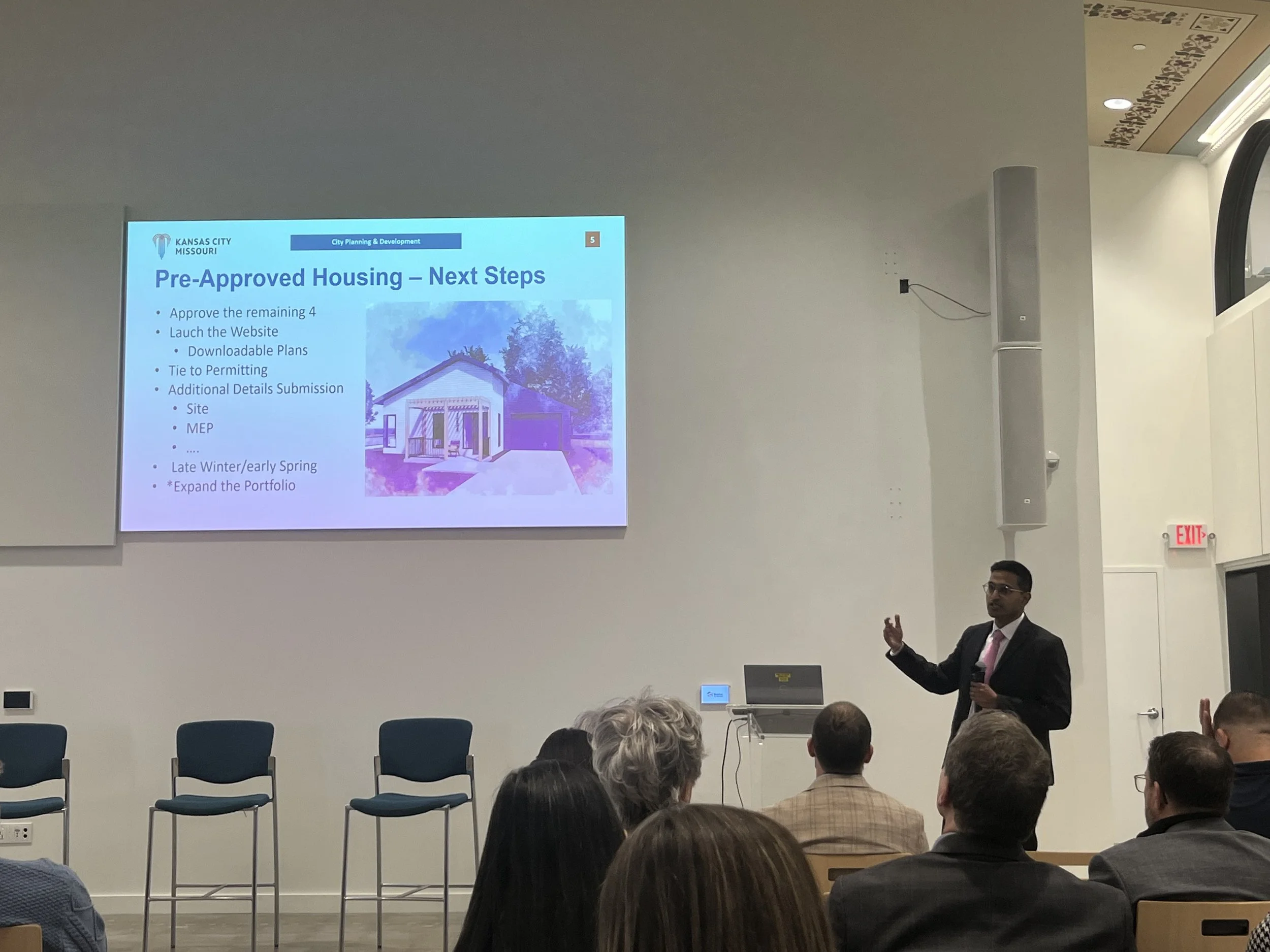
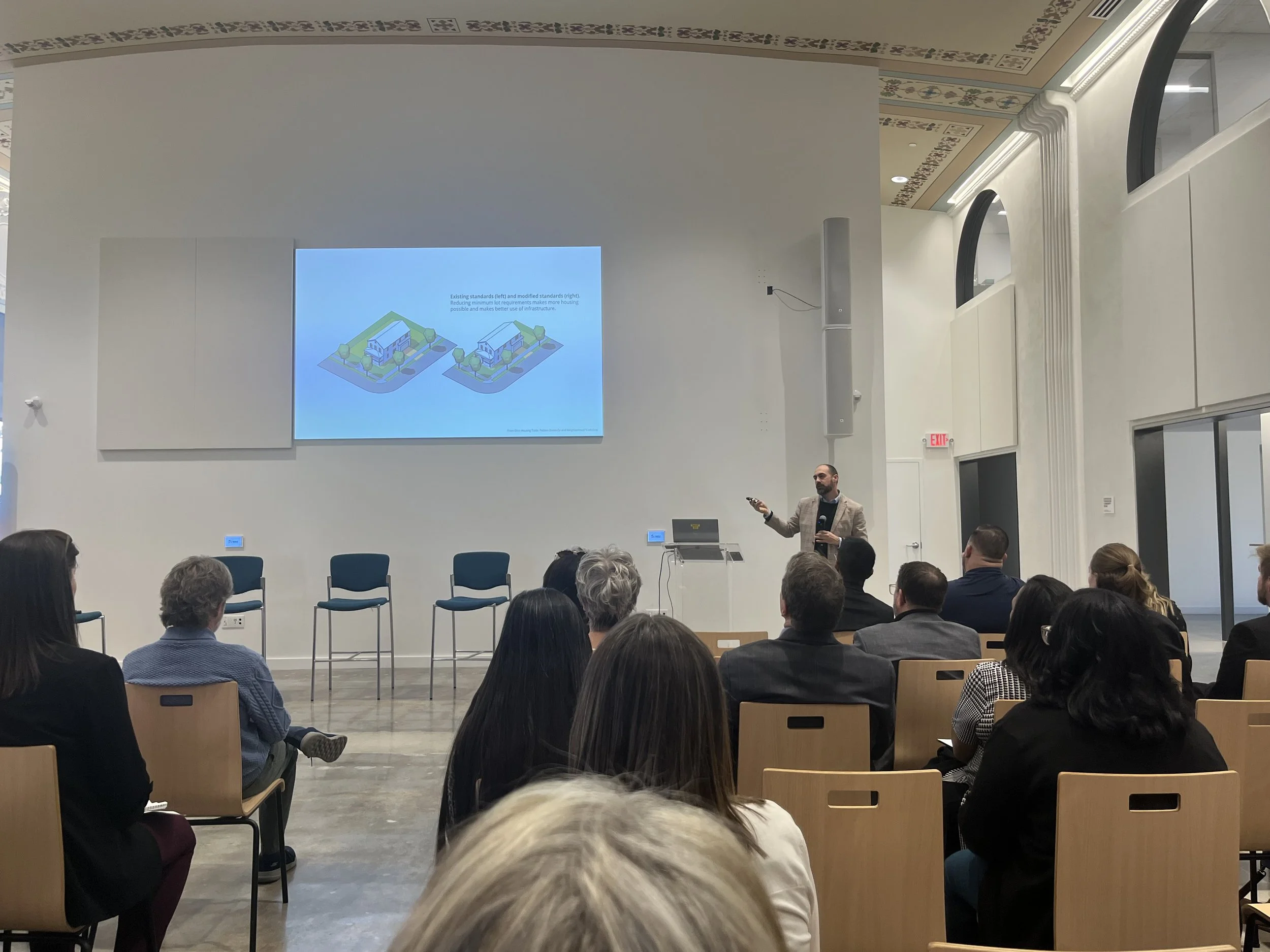
Later in the week we attended the Mid-America Regional Council's Housing Policy Innovation Series at Habitat for Humanity of Kansas City. We heard from Matthew Petty, Kyle Clifton, Leslie Karr, and Uday Manepalli about pre-approved building plans. The idea is straightforward, a developed portfolio of well-designed and code compliant housing plans that are able to move through the approval process more quickly. Claremore, OK, Overland Park, KS, and Kansas City, MO are early adopters of this new strategy in streamlining the construction of missing middle housing. While there is much to learn about the strategy, it holds immense promise for helping address the kinds of housing neighborhoods need.

As we move toward our mid review, our work on the Greenline feels very connected to Kansas City and its problems. We have an opportunity as design students to respond to these problems. If the Greenline can operate as a connective tissue, socially, economically, and create a stronger, more equitable, more connected ecosystem through our city, it moves beyond the diagram into viability. 

Written by Jonah Hammel, Architecture Student