Production Week

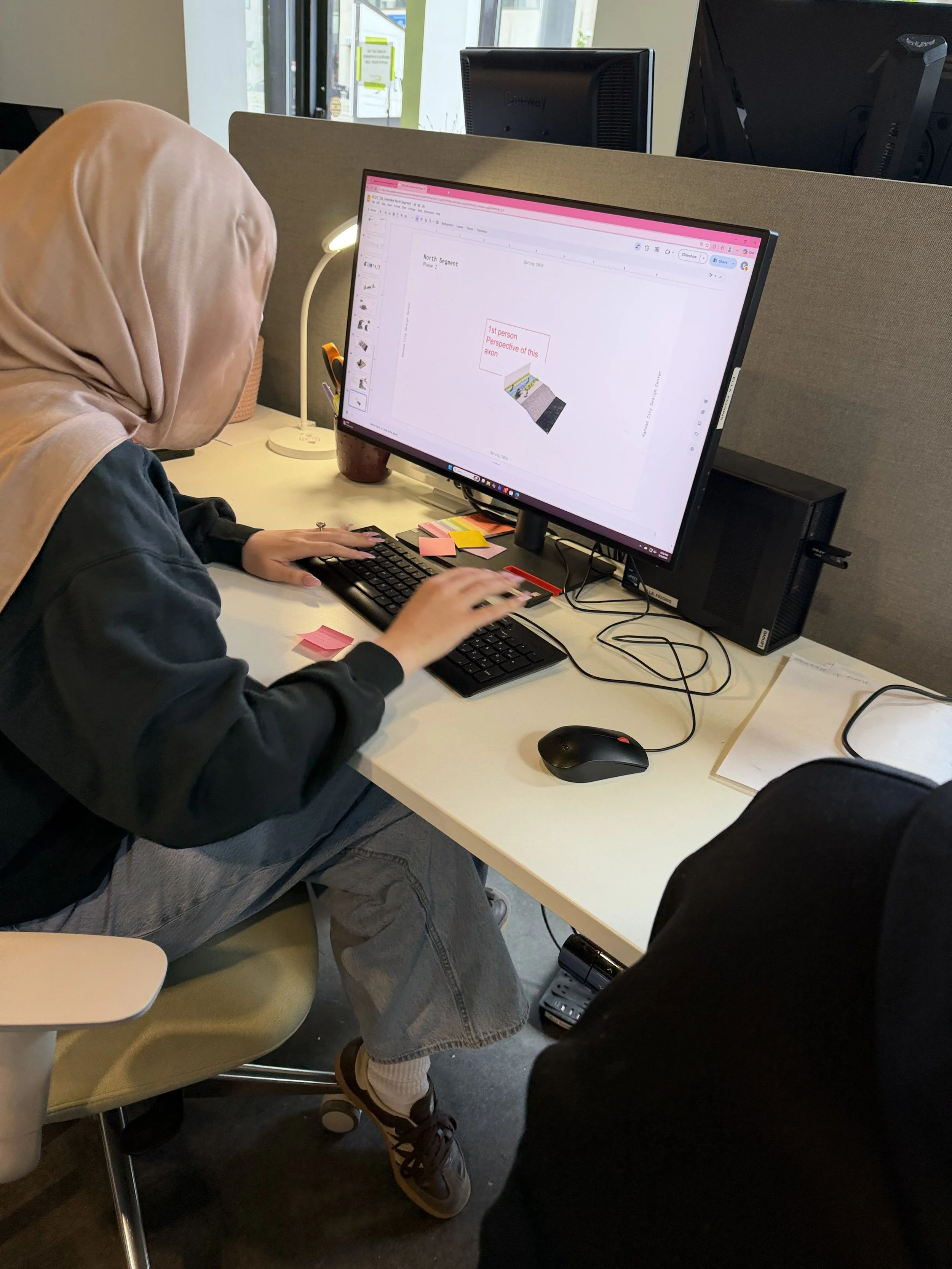
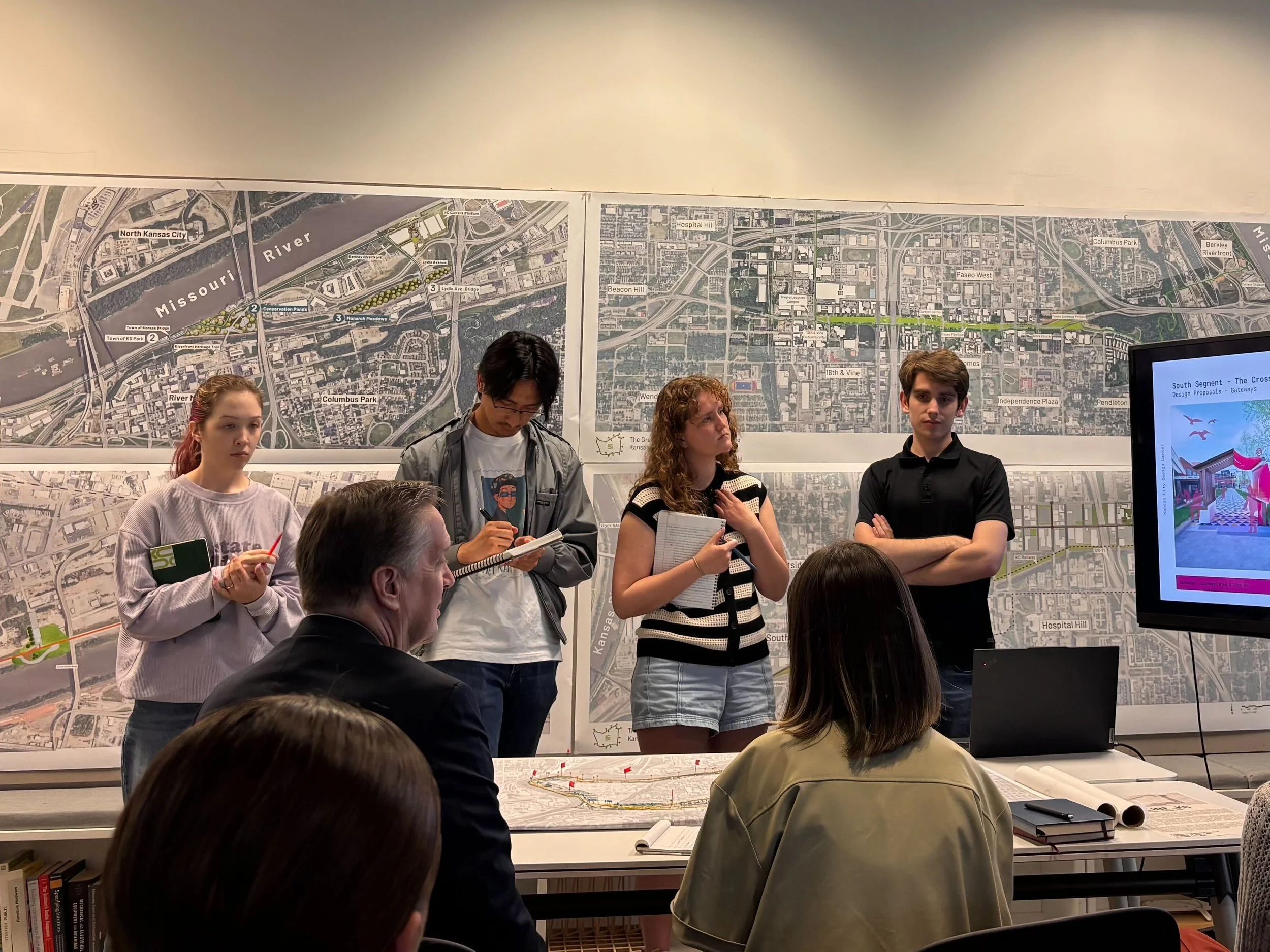
This week in studio, our focus has shifted toward final production as we prepare for presentations and the exhibit at the Kansas City Public Library. All of the segment teams have been refining their proposals and translating the months of work into clear, communicative posters. As the East Segment team, we are prioritizing how our ideas are read by an audience, making sure our narrative is concise, visually engaging, and grounded in a strong sense of purpose. Using Miro as a collaborative tool, we have been aligning our layouts and content so that each poster can effectively tell the Greenline story.
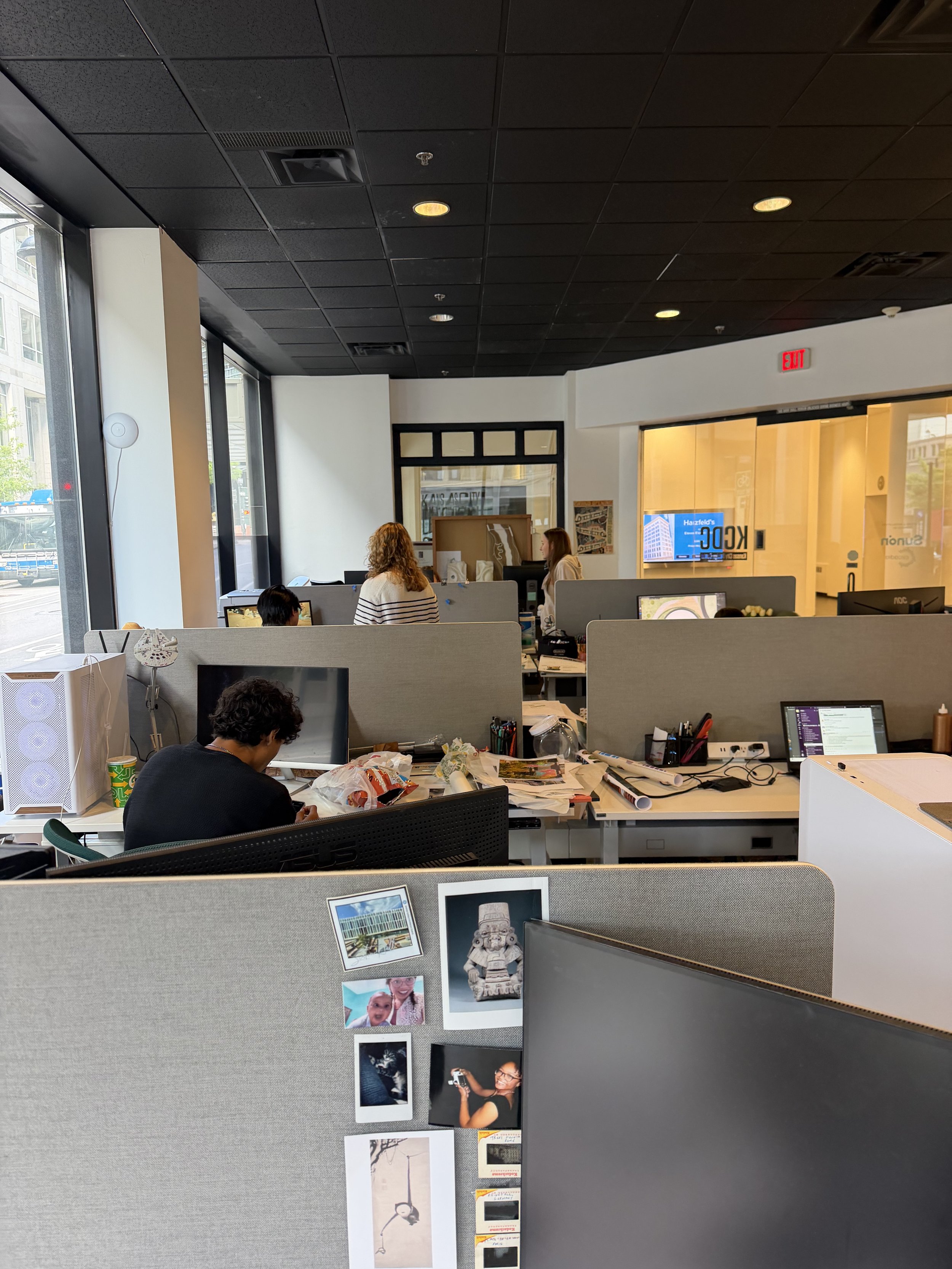
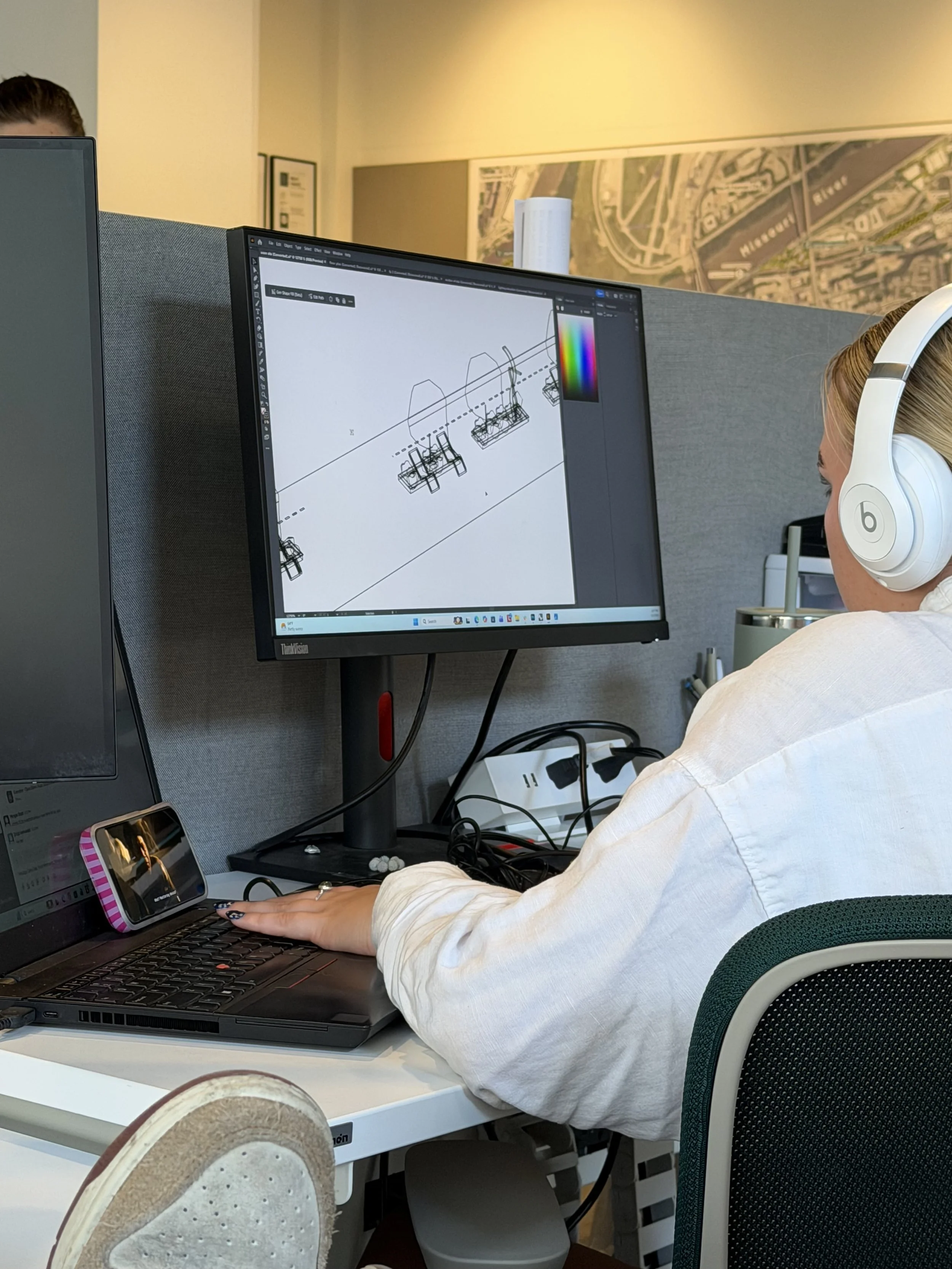
As we move through these final edits, we are focusing on clarity and intention. With limited space, every diagram and render needs to work efficiently in telling the story. A central theme in our work has been implementation, specifically how our design can be introduced through a series of phases rather than all at once. By illustrating before and after conditions, we are able to communicate change over time, helping viewers understand both the immediate and long-term potential of the corridor. On The Paseo Boulevard, we have identified that for the Greenline to be most impactful, a road diet is necessary, reducing the street from three lanes to two, with the third lane becoming on-street parking. This shift not only calms traffic but also opens opportunities for safer pedestrian crossings and stronger connections to the central greenspace, which is currently underutilized. By reclaiming this space, we begin to reframe the corridor that prioritizes the people rather than the vehicle, making the push for a more walkable city.

A key moment within our segment is the gateway condition. Our proposal introduces a welcome center that acts as both an entry point and a cultural marker; it’s something that reflects the identity of the surrounding community while inviting users onto the Greenline. We have been exploring adjustments to the intersection where the gateway meets the entry point of the Paseo. By shifting both directions of traffic to one side of the street, we can expand the eastern side into a more generous greenspace along the trail, strengthening the presence of the Greenline and creating a safer, more intuitive experience for pedestrians and cyclists.

Writtten by Evion Ruff, Fourth Year Interior Architecture Student
Greenline Bike Tour

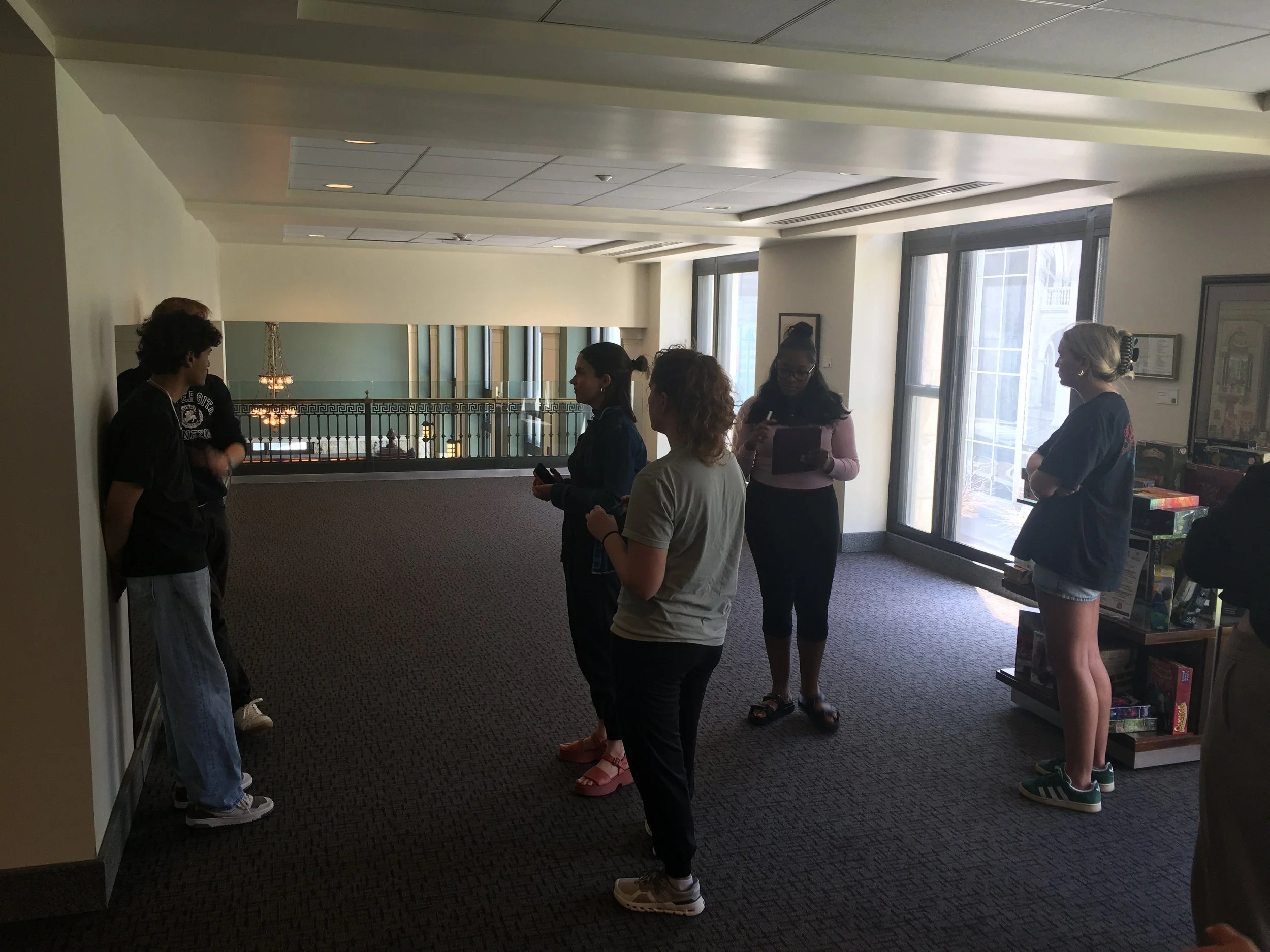
As we begin the last stretch towards the final reviews, each segment of the Greenline is finalizing their segment designs based on Chuck Flink’s feedback from last week.  Alongside our adjustments, we’re planning out our exhibit for the Greenline opening on May 11th at the Central Library. We’re working on compiling all of our research, laying out posters, and expressing the narrative of the entire Greenline and its individual segments in a way that is understandable by people who have never heard of the Greenline.

Exhibit Planning at the Central Library

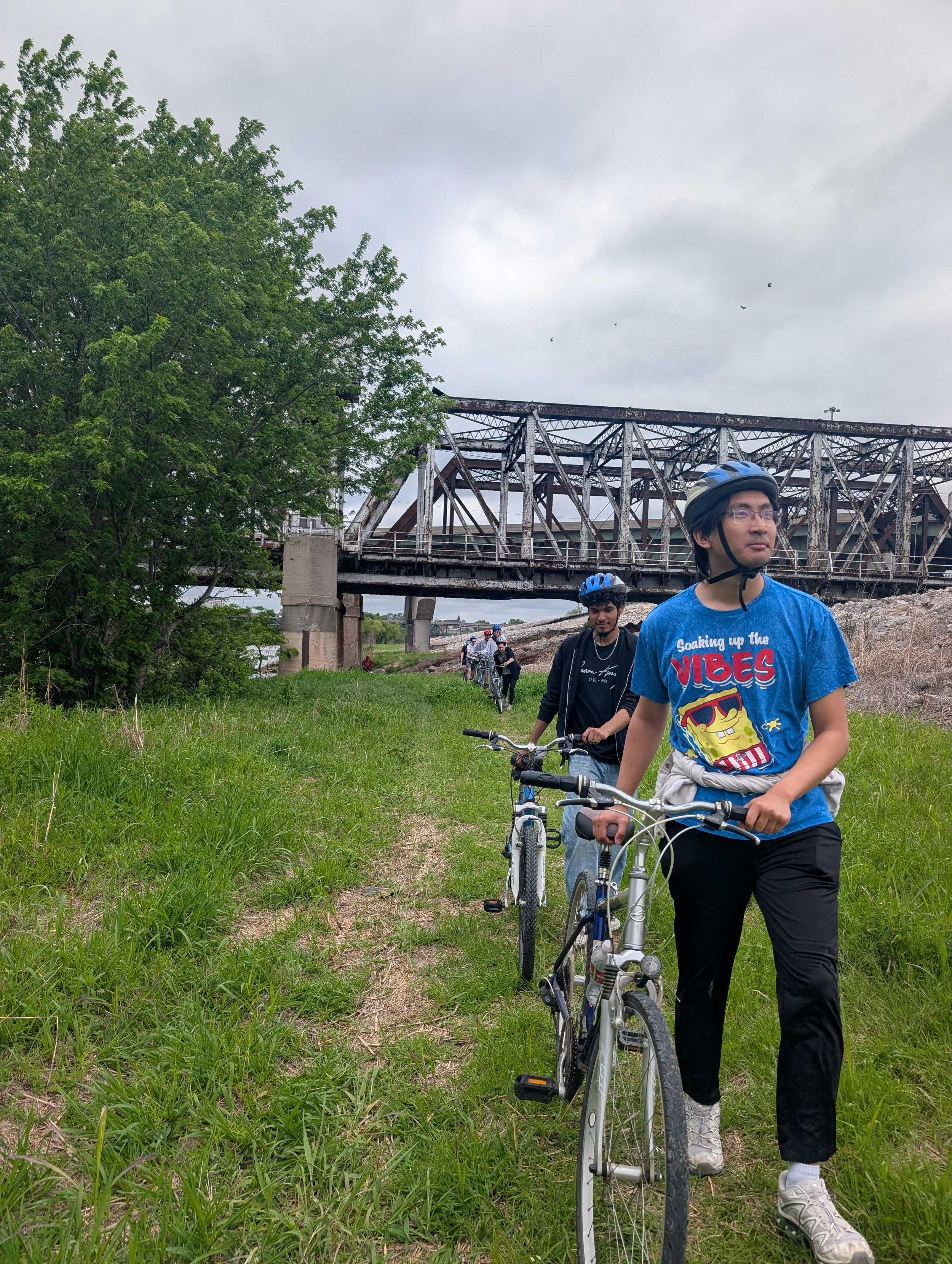
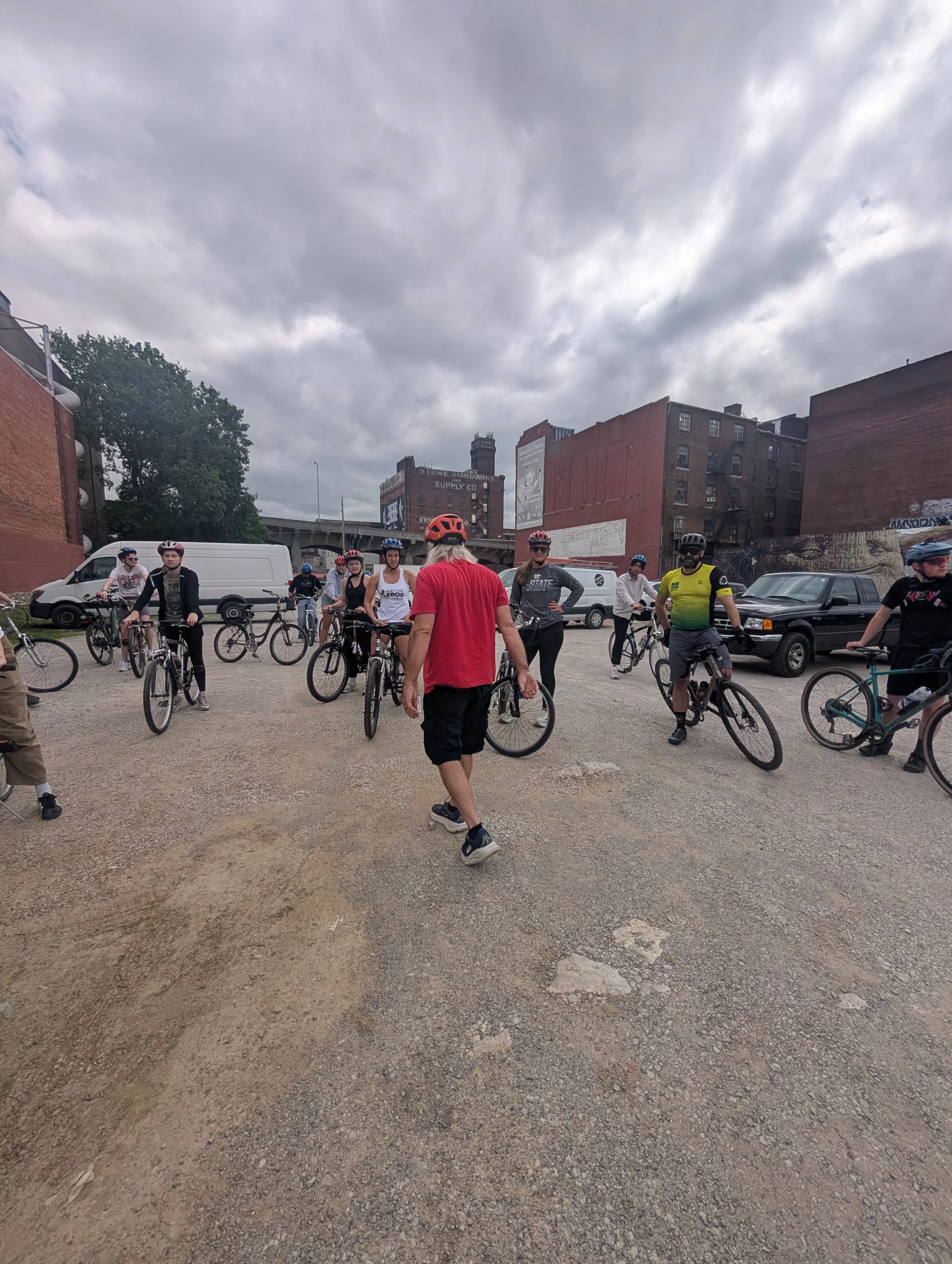
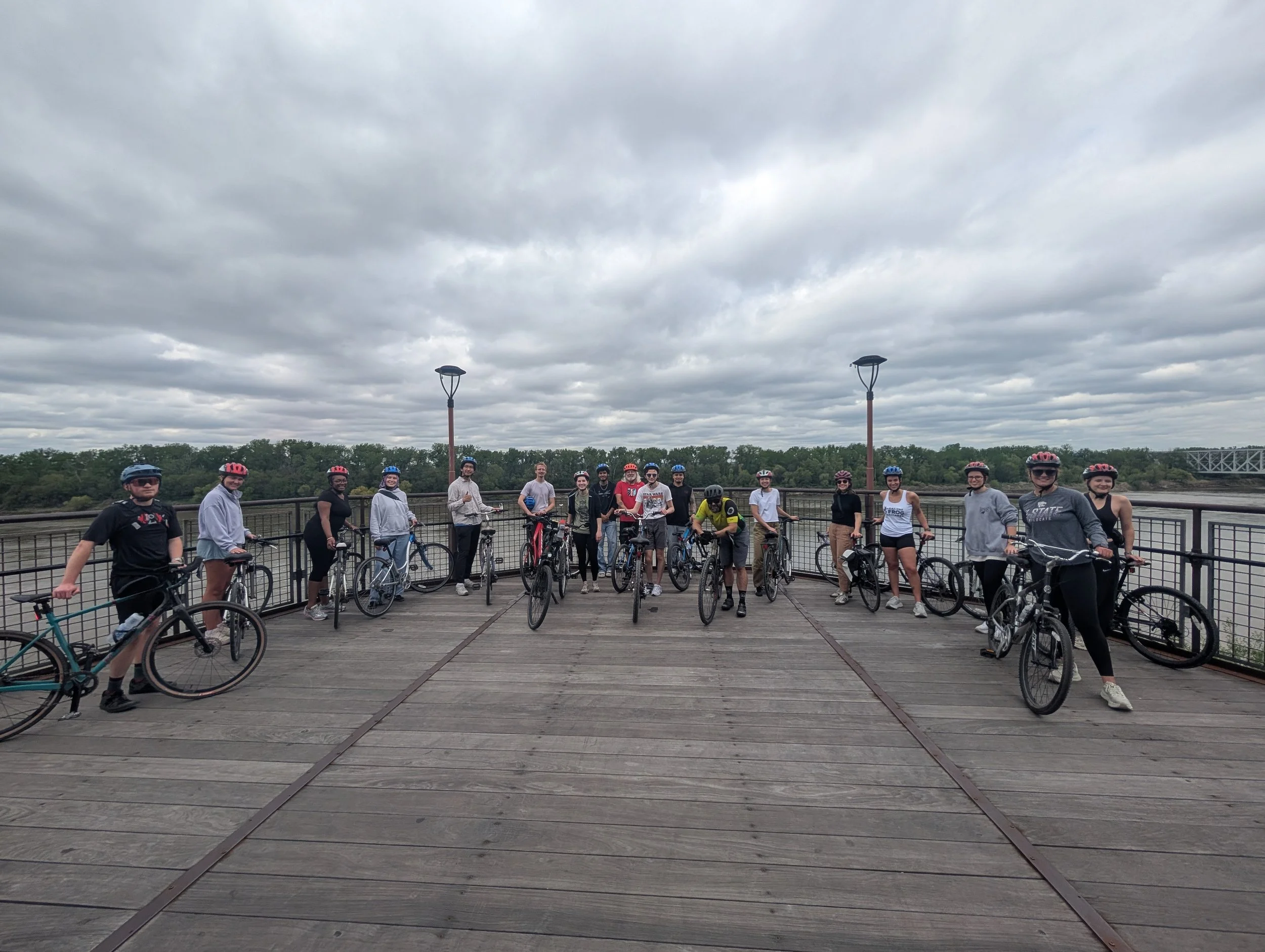
To gain a better understanding of the Greenline from a cyclist’s perspective, we thought it was important to do a bike tour of some of the segments. Lee Trotter with “Free Wheels for Kids”, let us borrow bikes and joined Andrew Arfstrom of West Bottoms Bicycles and Mark Horne of HOK to lead us in a tour. We rode from West Bottoms Bicycles, along the Riverfront Heritage Trail, to the Town of Kansas Bridge, into Kaw Point Park, and finally ending at the newly re-opened Rock Island Bridge. It was helpful to experience some of the specific alignment issues along the trail for ourselves, like when we had to get off our bikes under the Union Pacific bridge. 

I’ve been working on the South segment team along the Crossroads in our studio groups. Recently, we’ve had discussions over our gateway locations, and what the relationship between 19th Street and 18th Street looks like with the proposed opening of the Streetcar on 18th.  With our segment being a medium to house art and events, we’re currently designing strategies to potentially close certain segments of the Greenline to house these elements for business events or First Fridays.

In our seminar, we also met with Doug Stockman of Helix Architecture + Design.  Going over many of Helix’s projects over the years, we take this to give us a better understanding of what affordable housing could look like while keeping an element of community and architecture in our projects.

As we move into the final week of studio, we begin to refine and finalize our designs to reinforce our narrative for our team’s segments.  

Written by Andrew Bui, Fourth Year Architecture Student

Learning from Leaders in Practice

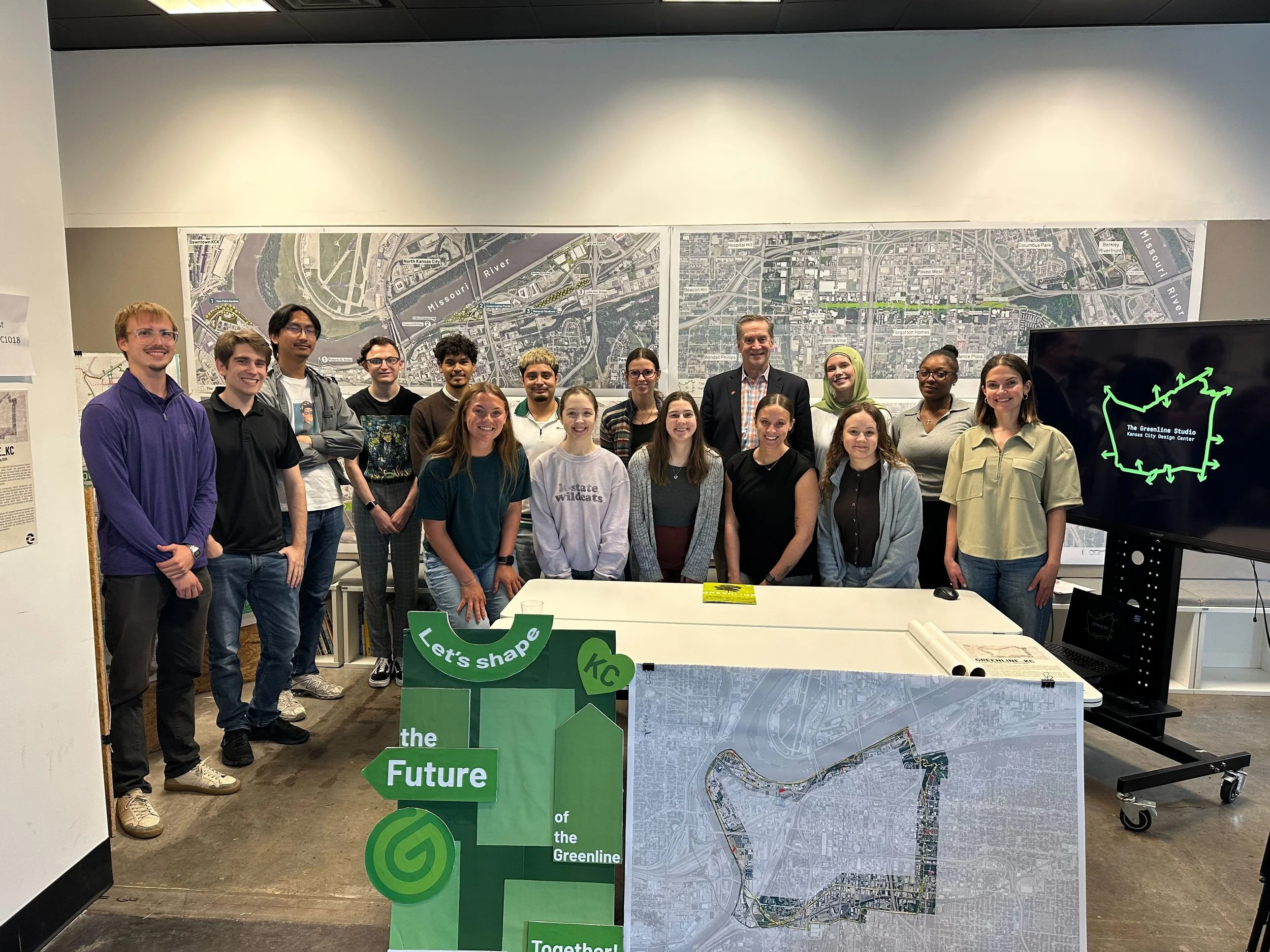
The studio this week welcomed landscape architect and author of Greenway Imperatives, Chuck Flink. Each segment team presented their current progress for the Greenline, showing more cohesive plans and stronger coordination across proposals. Chuck offered thoughtful feedback and shared insights from his experience.

I am part of the north segment team, and he encouraged us to look at the Loop Levee Trail in Louisville and the Brickline Greenway in St. Louis. He also emphasized how impactful and restorative greenway systems can be for the local ecology of the Missouri Riverfront.

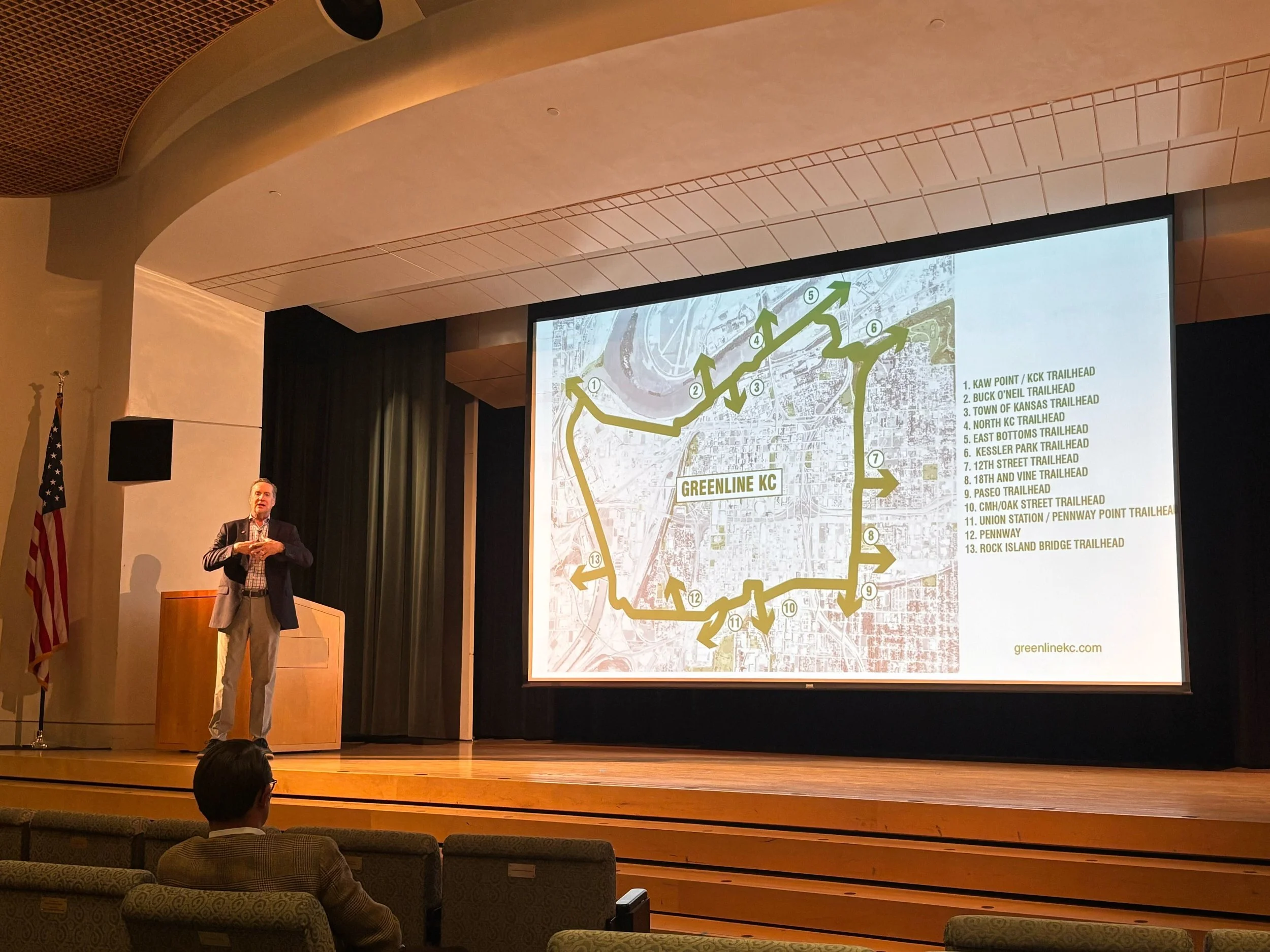
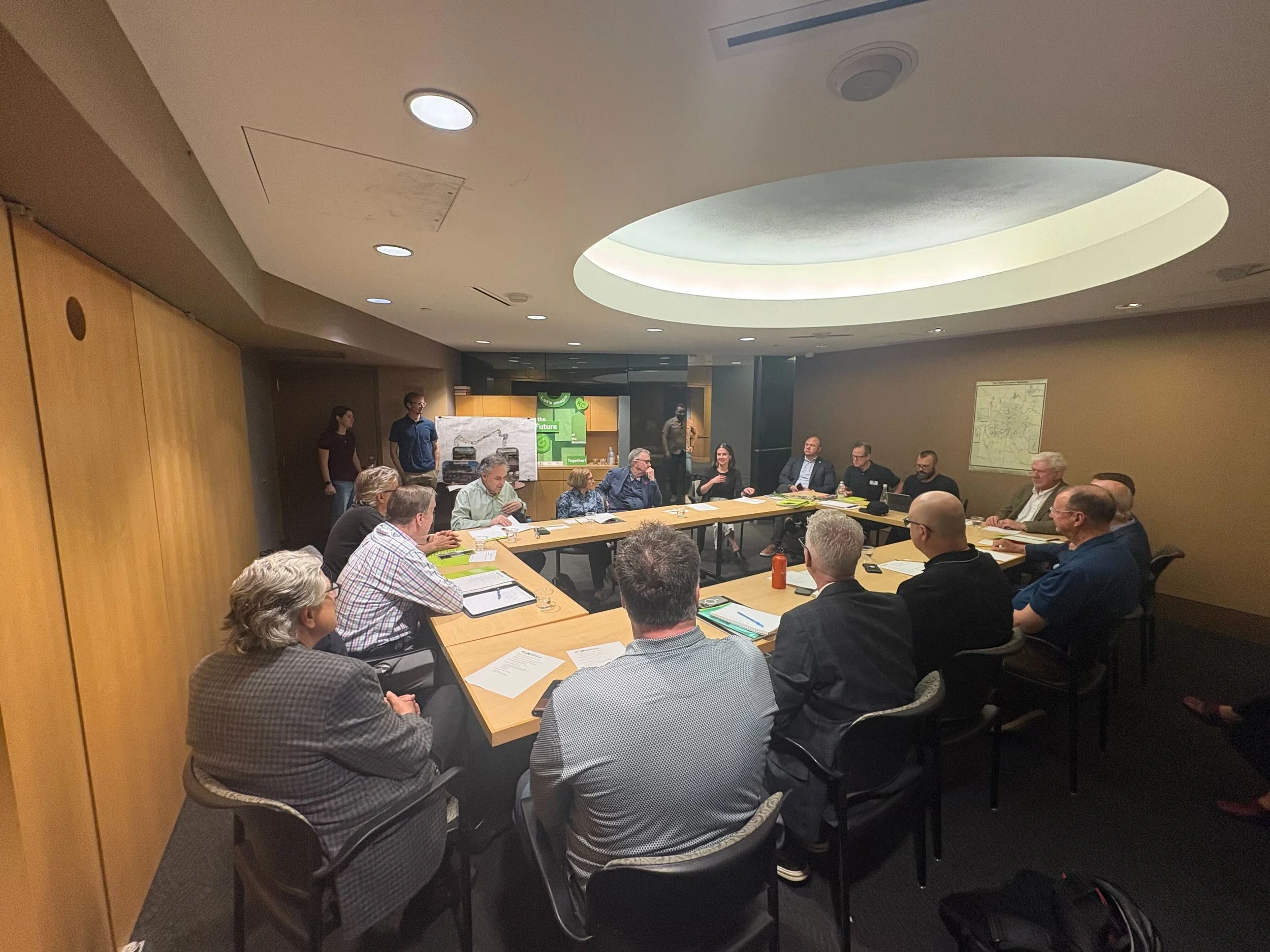
While in town, Chuck presented “Connecting Communities and Landscapes” as part of the Making a Great City lecture series. The studio attended to better understand the potential impact of the Greenline in Kansas City. He shared examples from projects across the US and explained how greenways preserve valuable land, act as green infrastructure, shape movement through cities, reduce flooding impacts, and support local economies. Before the lecture, program director Lauren Harness and a few students attended a roundtable discussion with Chuck and other leaders in the city involved in the Greenline and other biking infrastructure projects.

In seminar, we heard from Karan Gupta, a project manager from North Carolina with a focus on panelized construction. He walked us through the process and how it is influencing the construction industry.

Overall, the studio gained a lot from this week’s guests. As we move toward the end of the semester, the focus will shift to refining and strengthening the cohesion of our Greenline proposals.

Written by Lauren Brueggemann, Fourth Year Architecture Student