The Greenline Studio Kick-Off
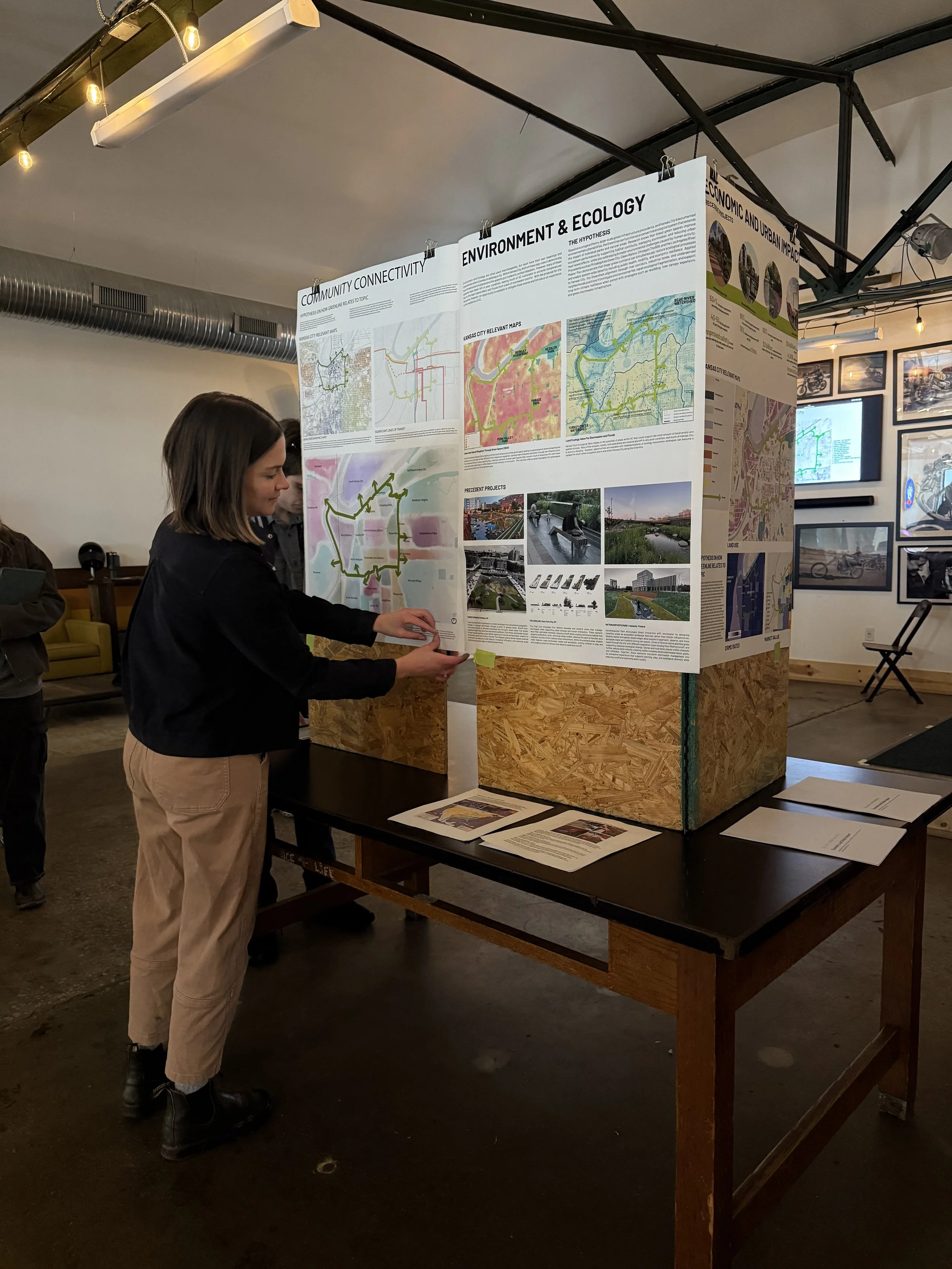
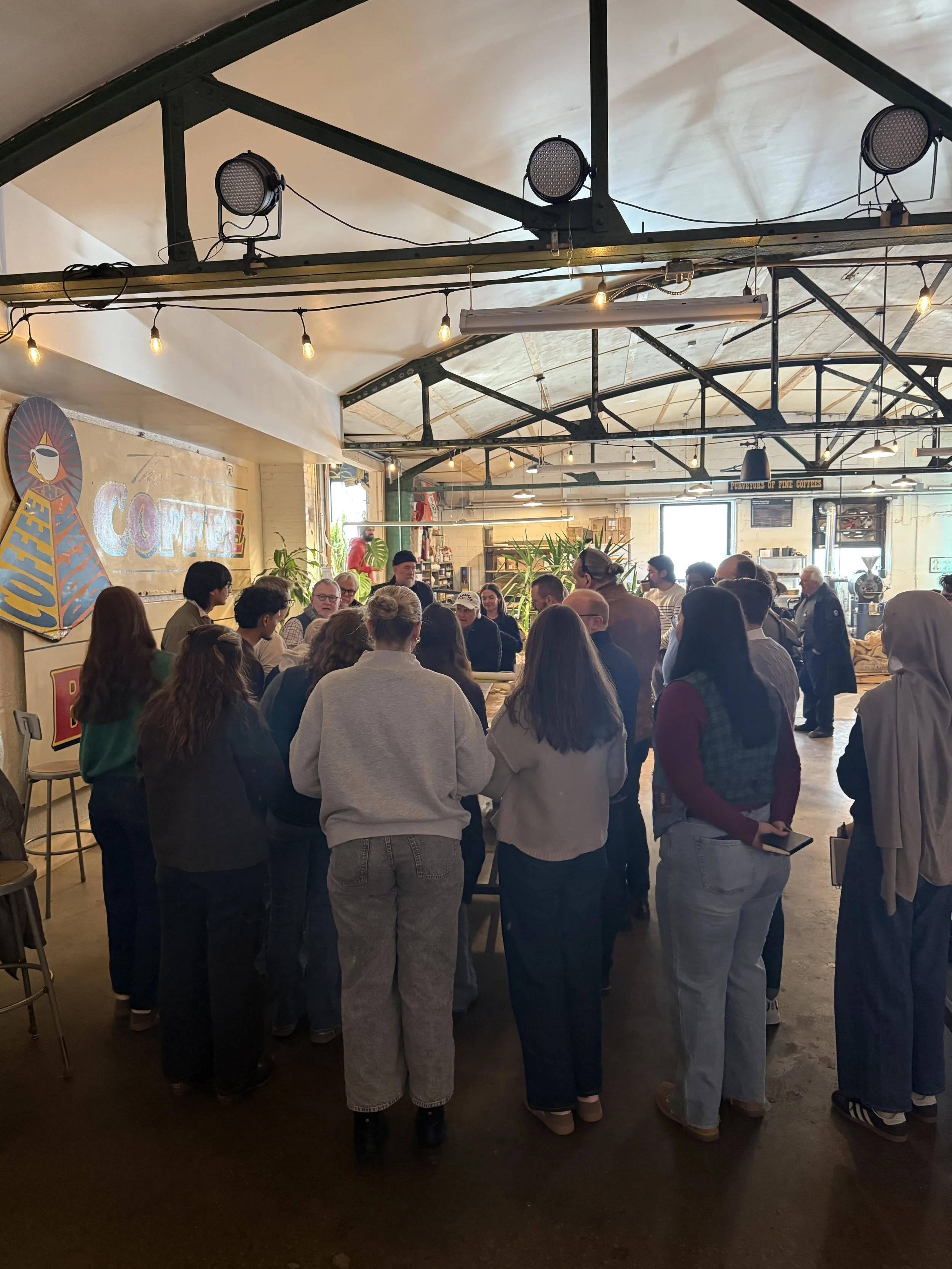
This semester, KCDC is studying the Greenline, a 10-mile urban trail that will loop around Downtown KC. This week, we went to Blip Coffee for our Community Kick-Off Event, where we presented our research across five focus areas: Community Connectivity, Social Equity, Environmental and Ecological Systems, Economic and Urban Impact, and Public Space Use and Character. Representatives from BNIM, the Downtown Council, BikeWalkKC, the Levee Betterment Project, and others attended to listen to our presentations and help us deepen our research.
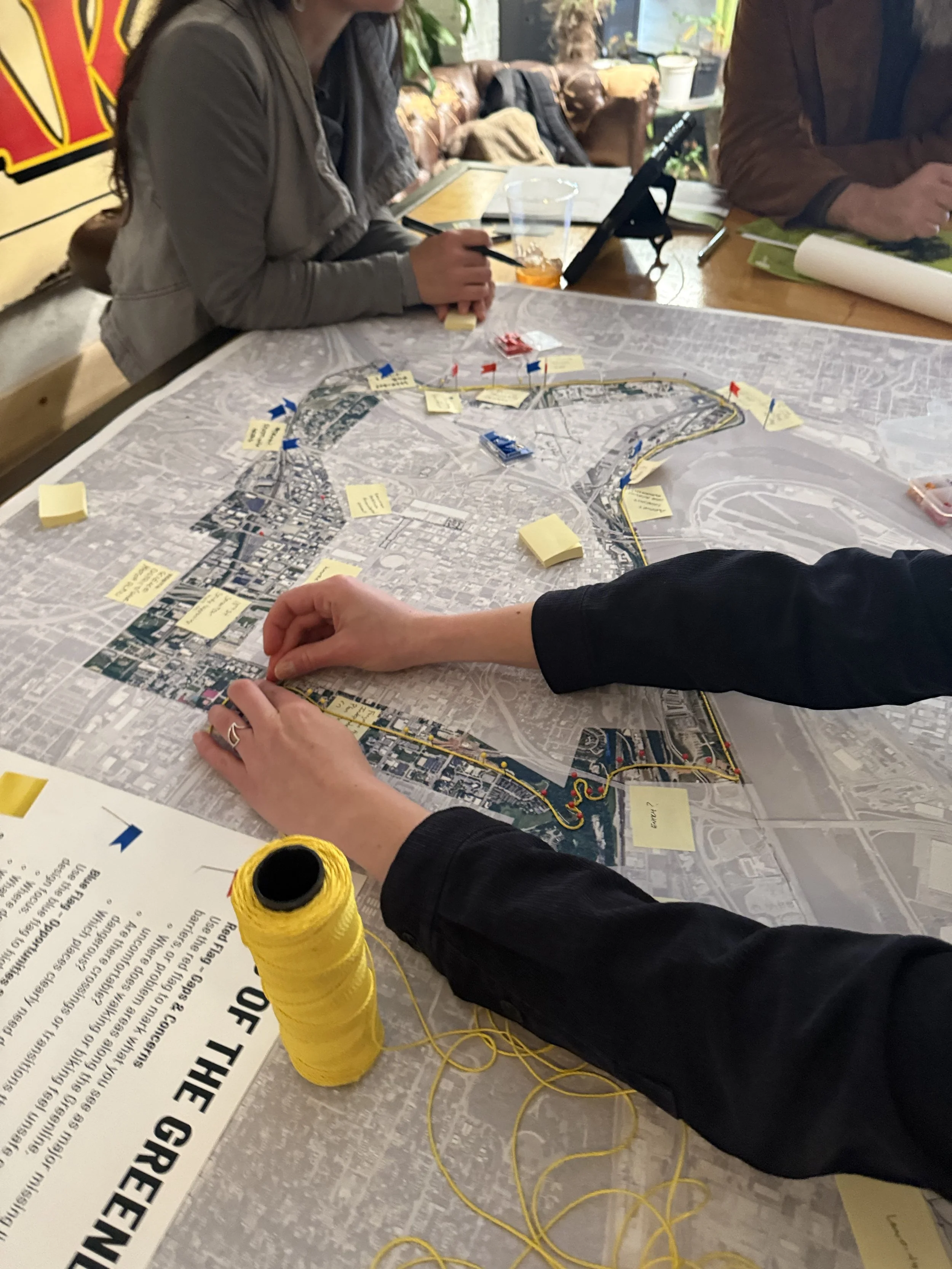
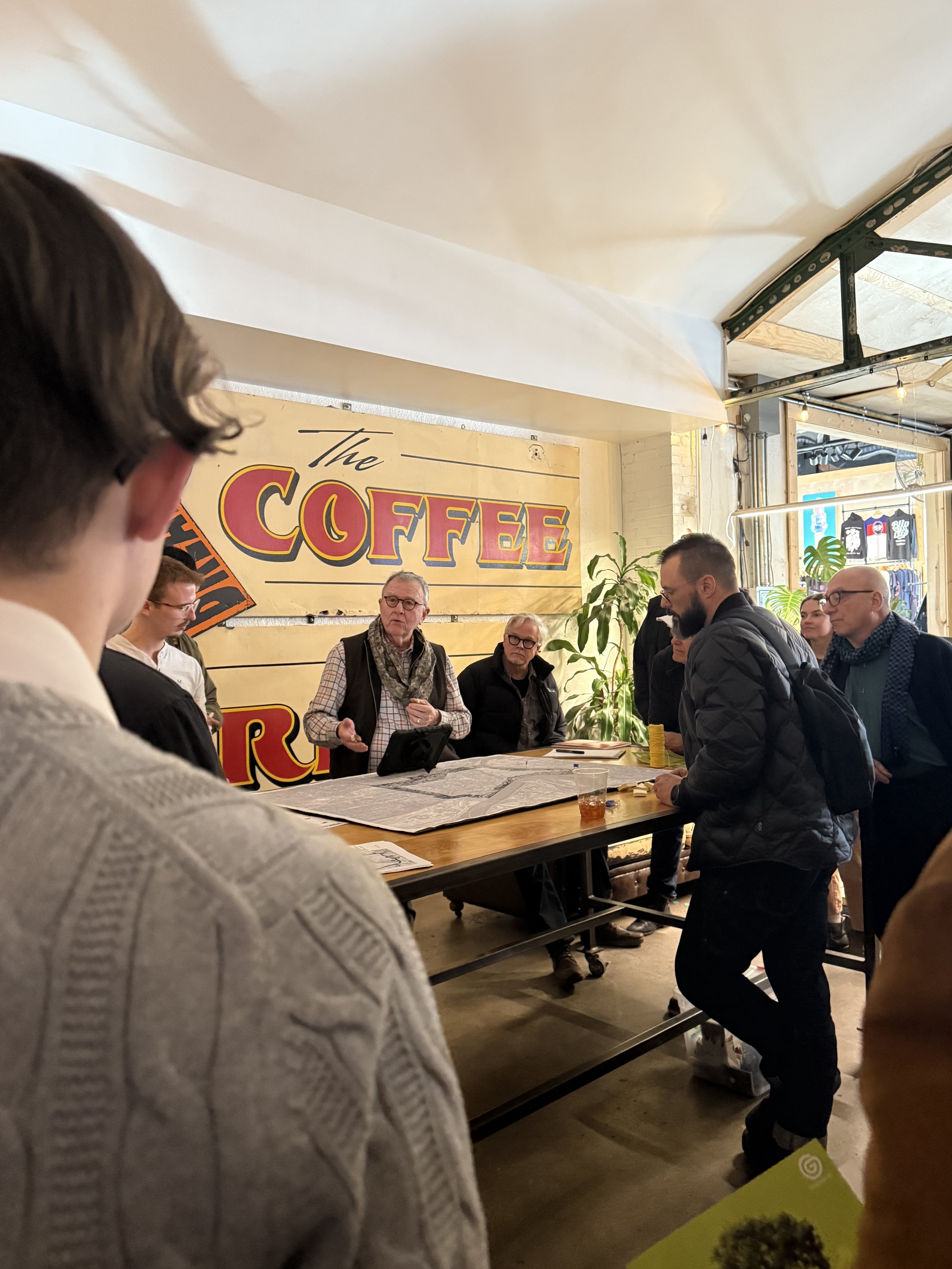
The event began with a short talk by Steve McDowell from BNIM, who gave us background on the Greenline project and how it first emerged as an idea. He explained that the project began as a volunteer effort before gaining support from the Downtown Council, which helped move it forward. From there, the project secured funding through MARC and is now actively underway. He concluded his talk by reminding us that “designers are good at moving communities.”
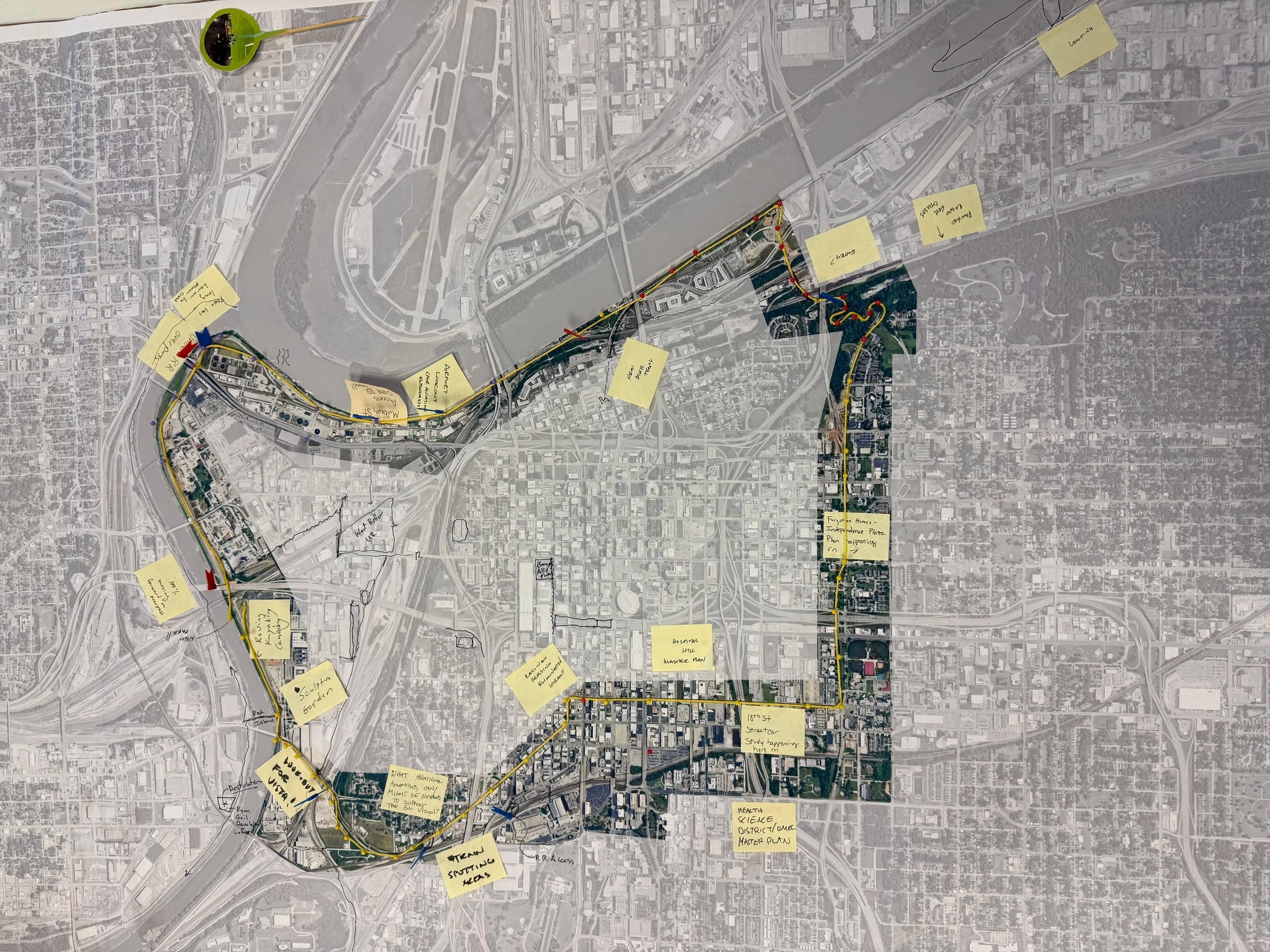
The Greenline concept itself is not new. First proposed in 2019, the Greenline is an ambitious vision for a 10-mile recreational loop around downtown Kansas City, inspired by successful rails-to-trails projects like Atlanta’s BeltLine. Championed by developer Vince Bryant and supported by BNIM, the concept focuses on repurposing underutilized infrastructure, such as access roads along existing rail corridors, to connect neighborhoods, parks, and cultural districts. The Greenline aims to bring safer, greener paths that improve mobility, livability, and access to public space to people living in the urban core. With growing support from the Downtown Council and community organizations, the project represents a key step toward a more connected and people-centered downtown.
Following the kickoff, students continued to dive deeper into their research. The Community Connectivity team is studying the history of Kessler Park, downtown neighborhood connections, transit access, greenways, cycling infrastructure, and relevant case studies. The Social Equity team is focusing on population and demographics, health and wellness, and access to essential goods and services. The Environmental and Ecological Systems team is researching watersheds and stormwater mitigation, pollution reduction, ecological longevity, and greenway systems. The Economic and Urban Impact team is examining land use, displacement precedents, crime rates, and nearby development patterns. The Public Space Use and Character team is documenting neighborhood characteristics, trail segment identities, landmarks, and historical aspects along the corridor.
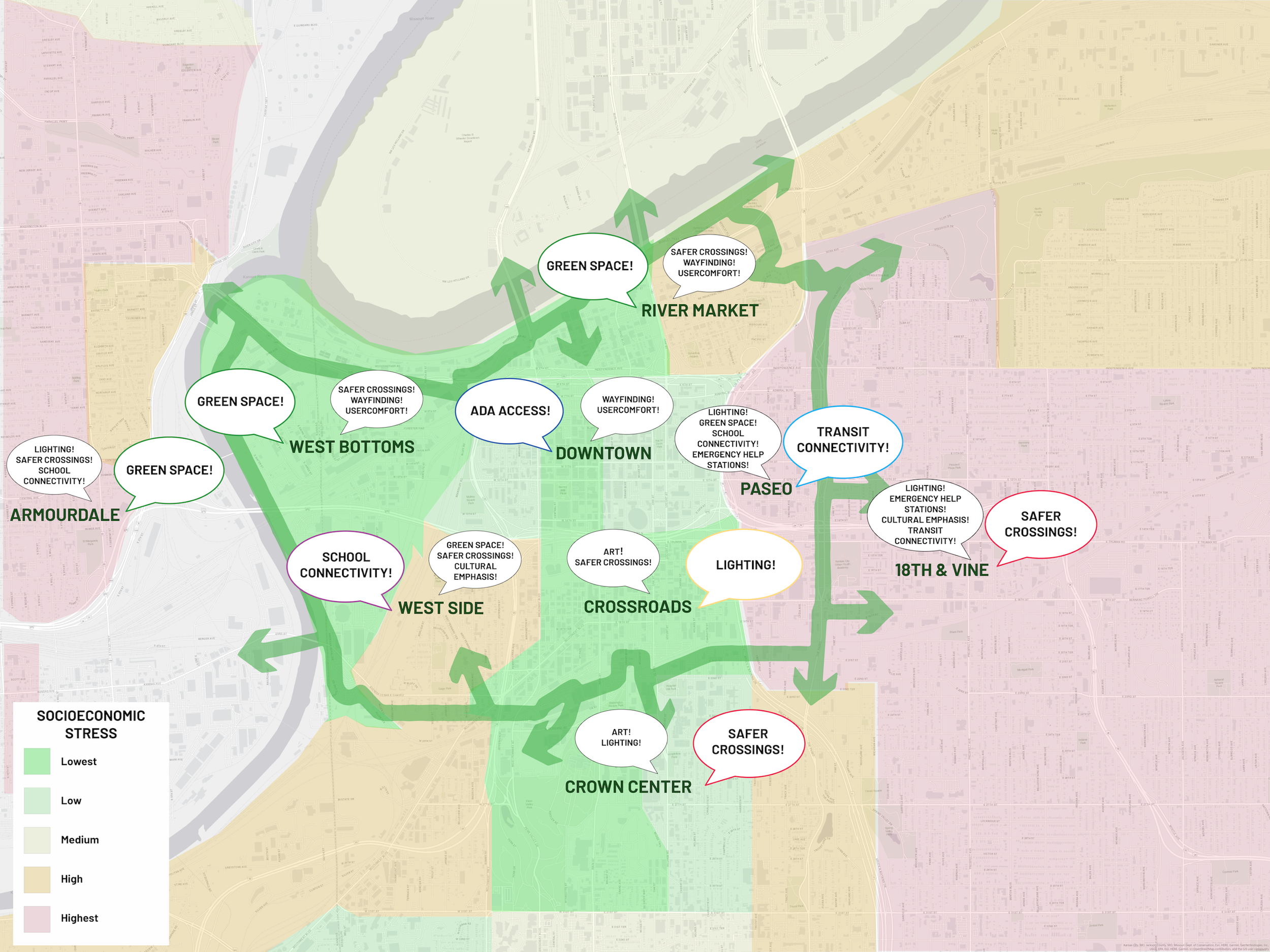
As we move into the next phase, we are beginning to think about how these findings will directly inform our design work. This phase will focus on connecting insights across teams, identifying key opportunities and challenges along the Greenline, and translating research into early design ideas. Our goal is to use this groundwork to guide thoughtful, community-centered design decisions as the project moves forward.
Written by Anna Hurst, Architecture Student