
"We've Built Cities We Can't Afford" Seminar with Dennis Strait
How we approach the development of our cities has the potential to benefit every resident that lives there, or it can lead to slow deterioration. This week, our studio was privileged to hear "We've Built Cities We Can't Afford" presented by Principal Emeritus Dennis Strait of Multistudio, which fundamentally challenges how we view development in Kansas City. Our city’s physical footprint has quadrupled since the 1950s, while our population in that area has remained flat. This has left us with massive infrastructure liabilities, over 6,500 miles of streets, that our current tax base simply can’t maintain. Data reveals that our older, pre-1950s neighborhoods (often mixed-use and higher density) are far more financially productive for the city than the sprawling, high-value suburban developments, which typically cost more in long-term infrastructure maintenance than they generate in tax revenue from day 1.
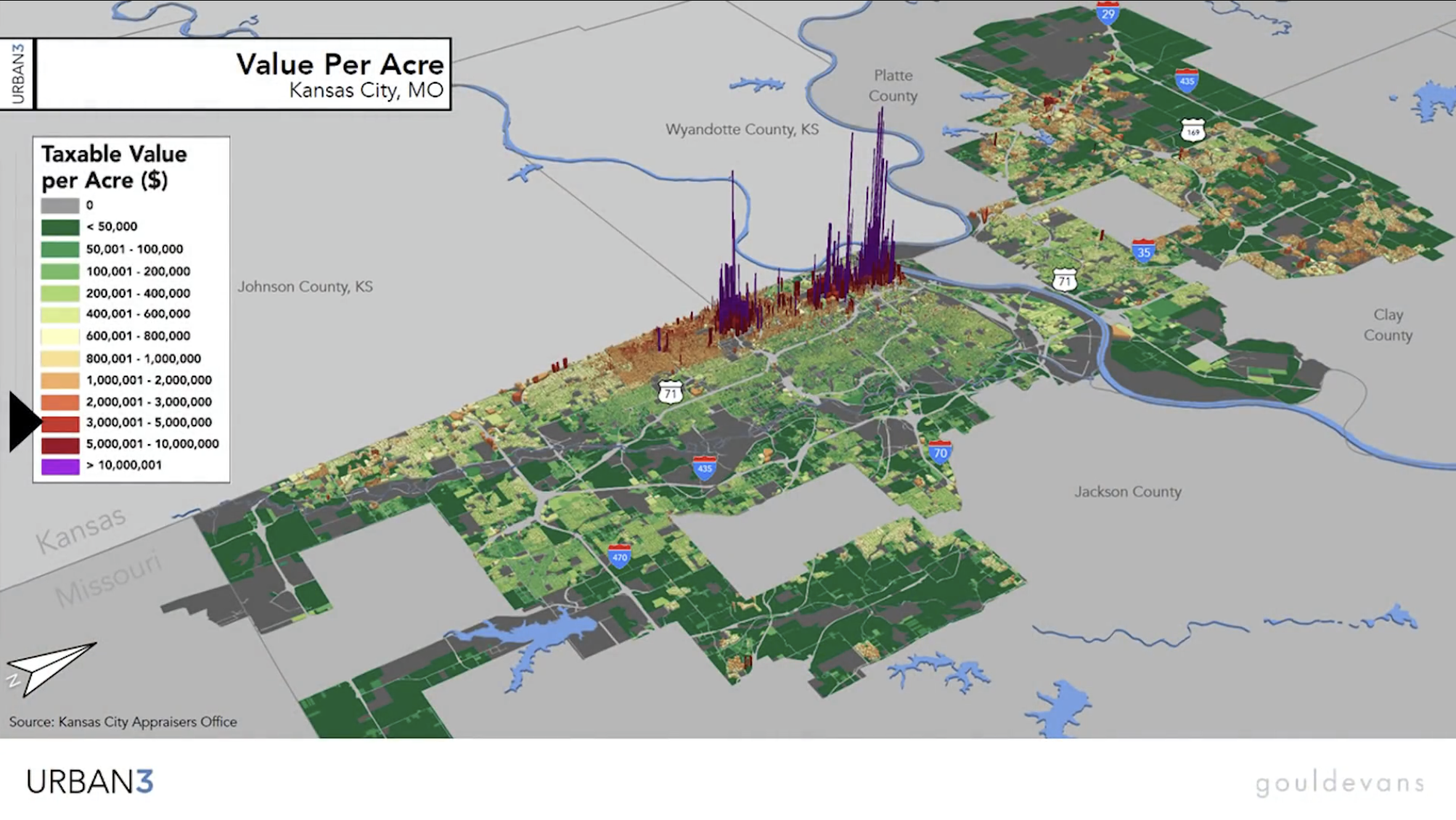
Multistudio, along with urban development firm Urban3, has worked to create value per acre maps, which visualize these economic disparities in an easy-to-understand graphic. By shifting our focus from value per parcel to value per acre, we can better identify opportunities for infill development and mixed-housing types (like duplexes and fourplexes) that utilize existing infrastructure. Currently, we continue to develop suburbs on the outskirts of the metro area that require more of every infrastructure type to support new residents, all while not having enough density to financially support themselves from day 1.
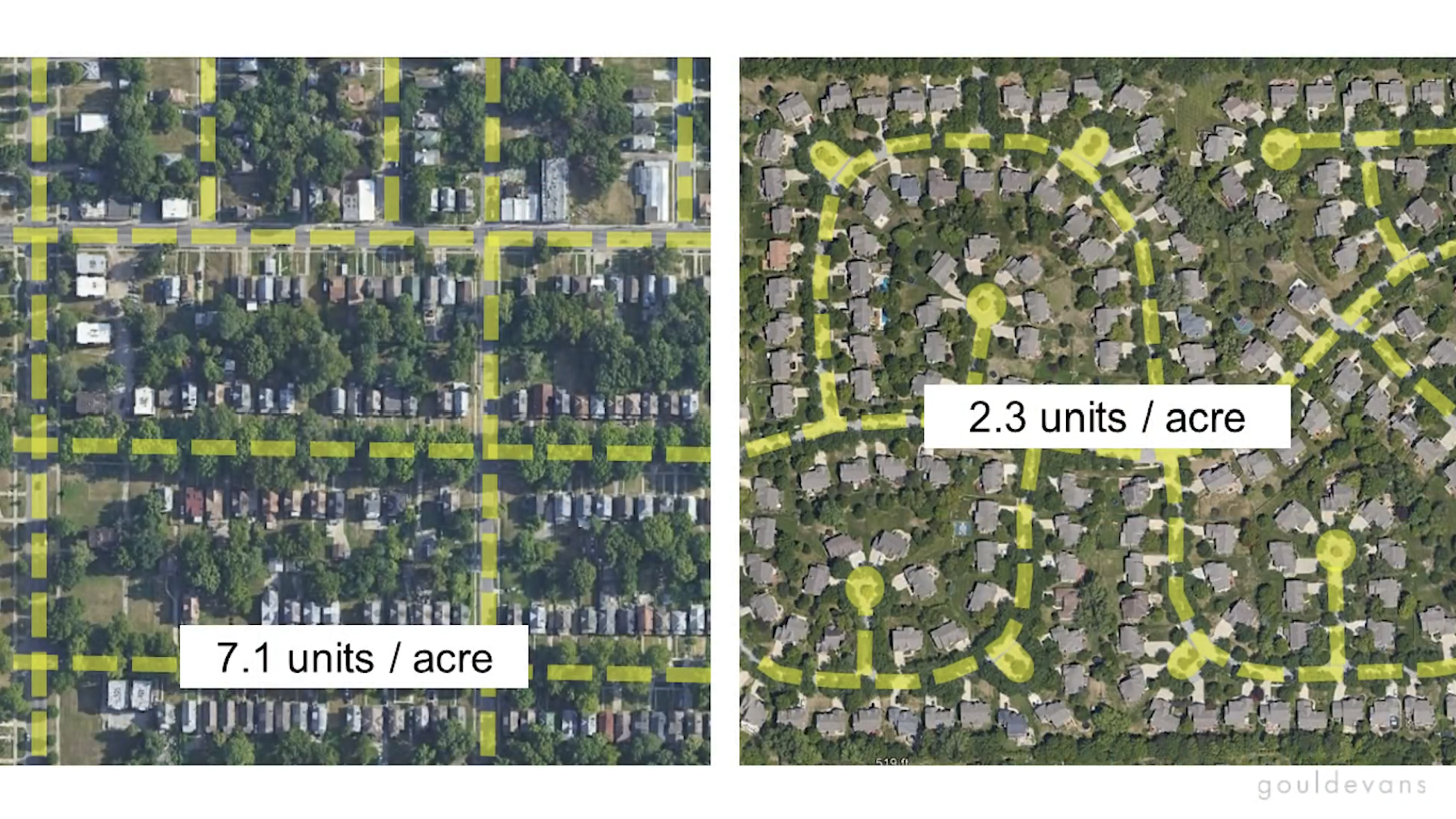
There is an urgent need to repopulate and reinvest in our city’s core, specifically Downtown and the East Side, to correct our financial imbalance over the next 30 years. Strait notes that while downtown represents the most "productive soil" in our region, our current tax code often incentivizes low value uses like surface parking lots rather than productive density. To solve our infrastructure crisis, we must shift focus away from building new roads on the edges and instead prioritize repopulating these central neighborhoods where infrastructure already exists. Ultimately, achieving a financially resilient Kansas City isn't just about math. It will require a shift toward cultivating our existing neighborhoods, rather than avoiding them. This means valuing the efficiency of our core, healing historic divides on the East Side, and choosing sustainable density over endless expansion.
Written by Alex Smith, Architecture Student