The Greenline Studio Kick-Off

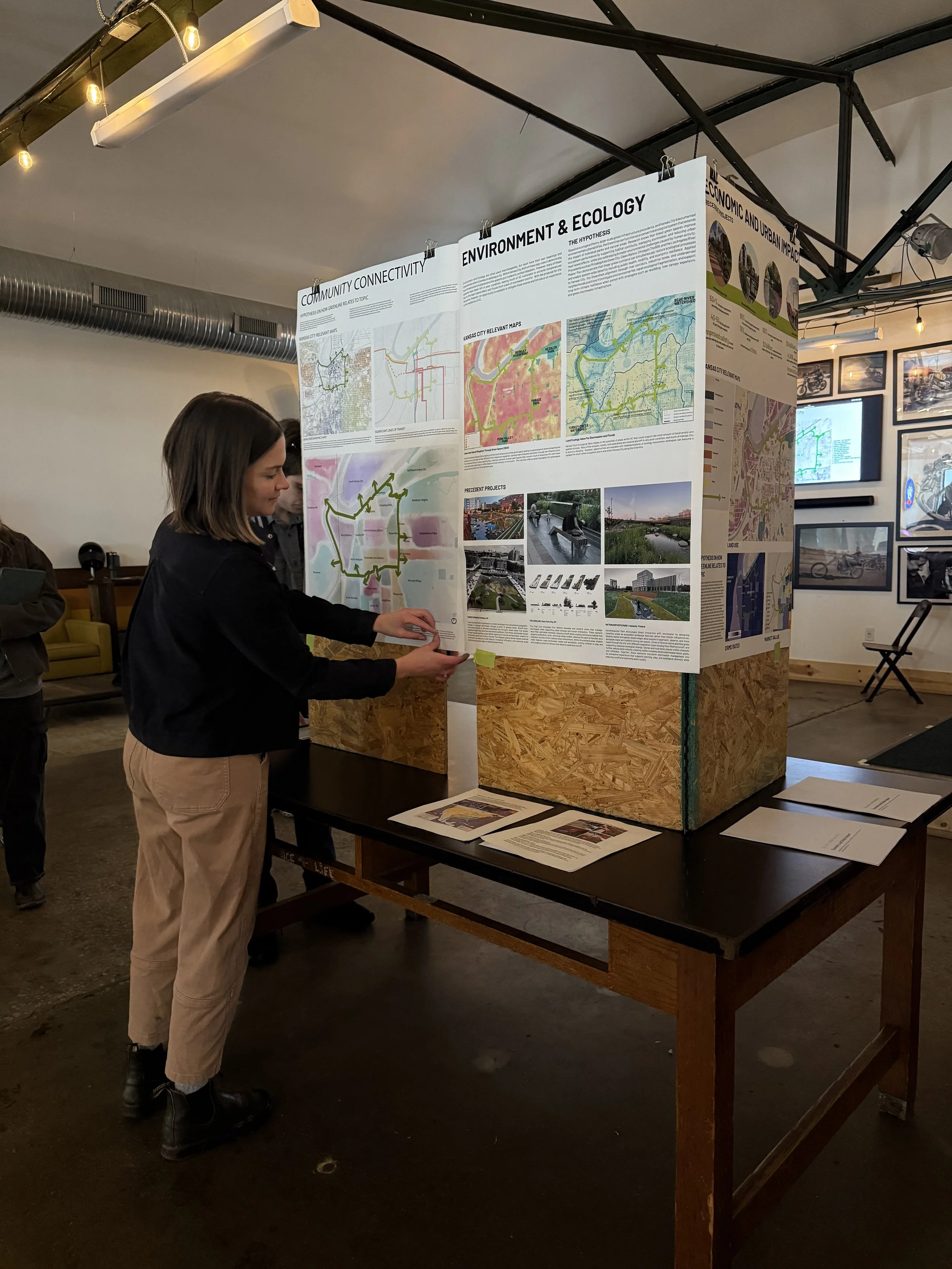
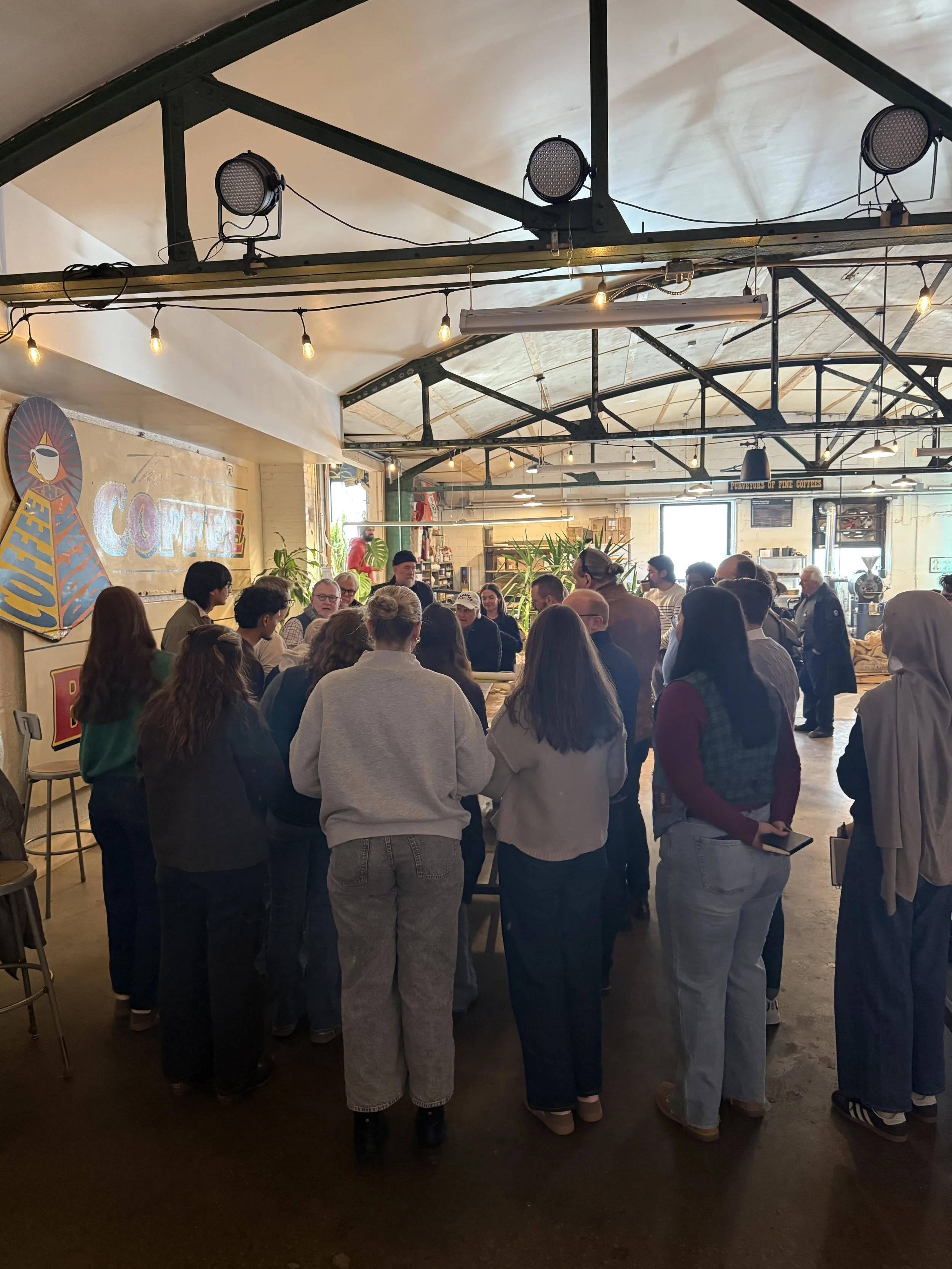
This semester, KCDC is studying the Greenline, a 10-mile urban trail that will loop around Downtown KC. This week, we went to Blip Coffee for our Community Kick-Off Event, where we presented our research across five focus areas: Community Connectivity, Social Equity, Environmental and Ecological Systems, Economic and Urban Impact, and Public Space Use and Character. Representatives from BNIM, the Downtown Council, BikeWalkKC, the Levee Betterment Project, and others attended to listen to our presentations and help us deepen our research.
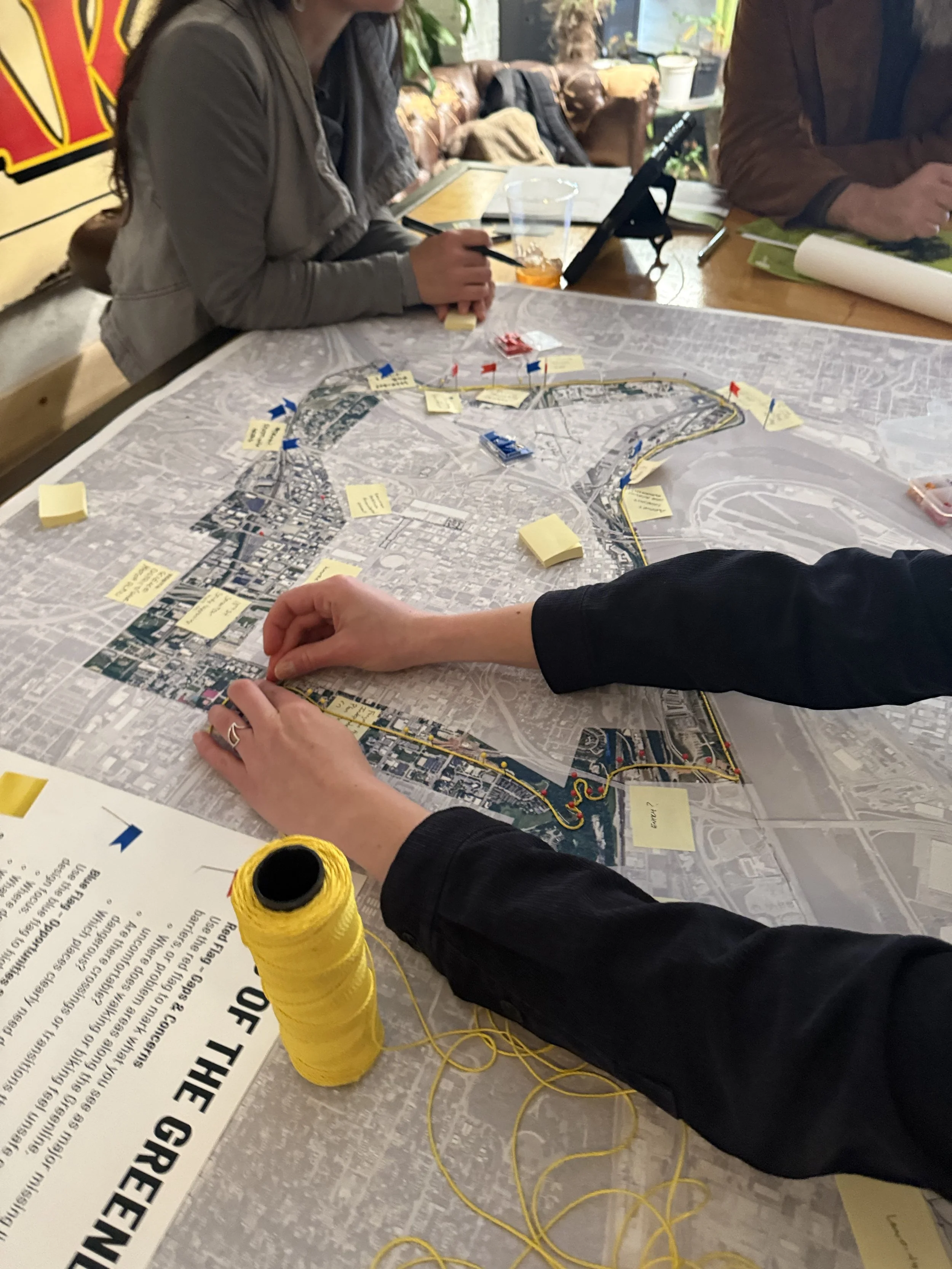
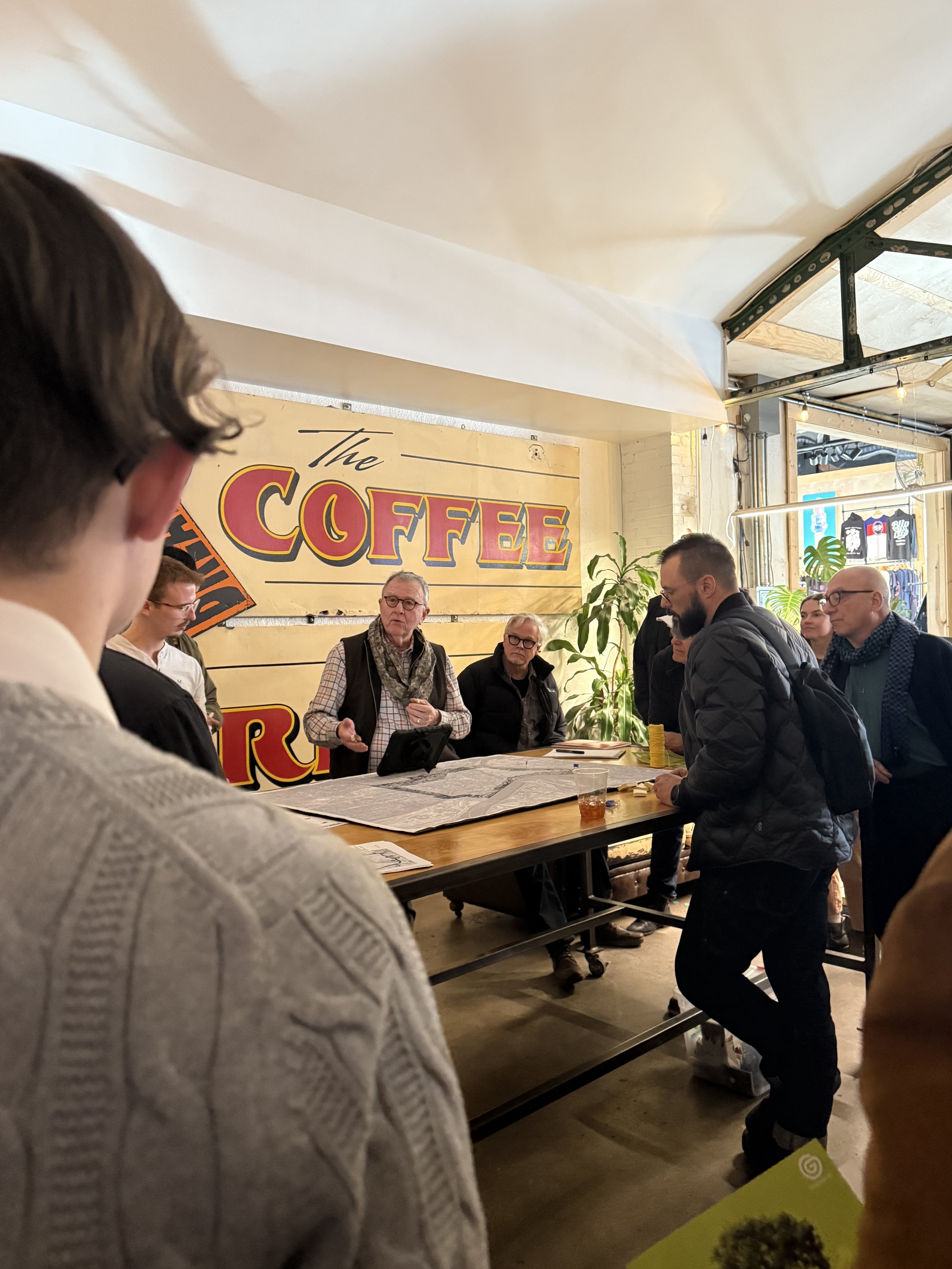
The event began with a short talk by Steve McDowell from BNIM, who gave us background on the Greenline project and how it first emerged as an idea. He explained that the project began as a volunteer effort before gaining support from the Downtown Council, which helped move it forward. From there, the project secured funding through MARC and is now actively underway. He concluded his talk by reminding us that “designers are good at moving communities.”
The Greenline concept itself is not new. First proposed in 2019, the Greenline is an ambitious vision for a 10-mile recreational loop around downtown Kansas City, inspired by successful rails-to-trails projects like Atlanta’s BeltLine. Championed by developer Vince Bryant and supported by BNIM, the concept focuses on repurposing underutilized infrastructure, such as access roads along existing rail corridors, to connect neighborhoods, parks, and cultural districts. The Greenline aims to bring safer, greener paths that improve mobility, livability, and access to public space to people living in the urban core. With growing support from the Downtown Council and community organizations, the project represents a key step toward a more connected and people-centered downtown.
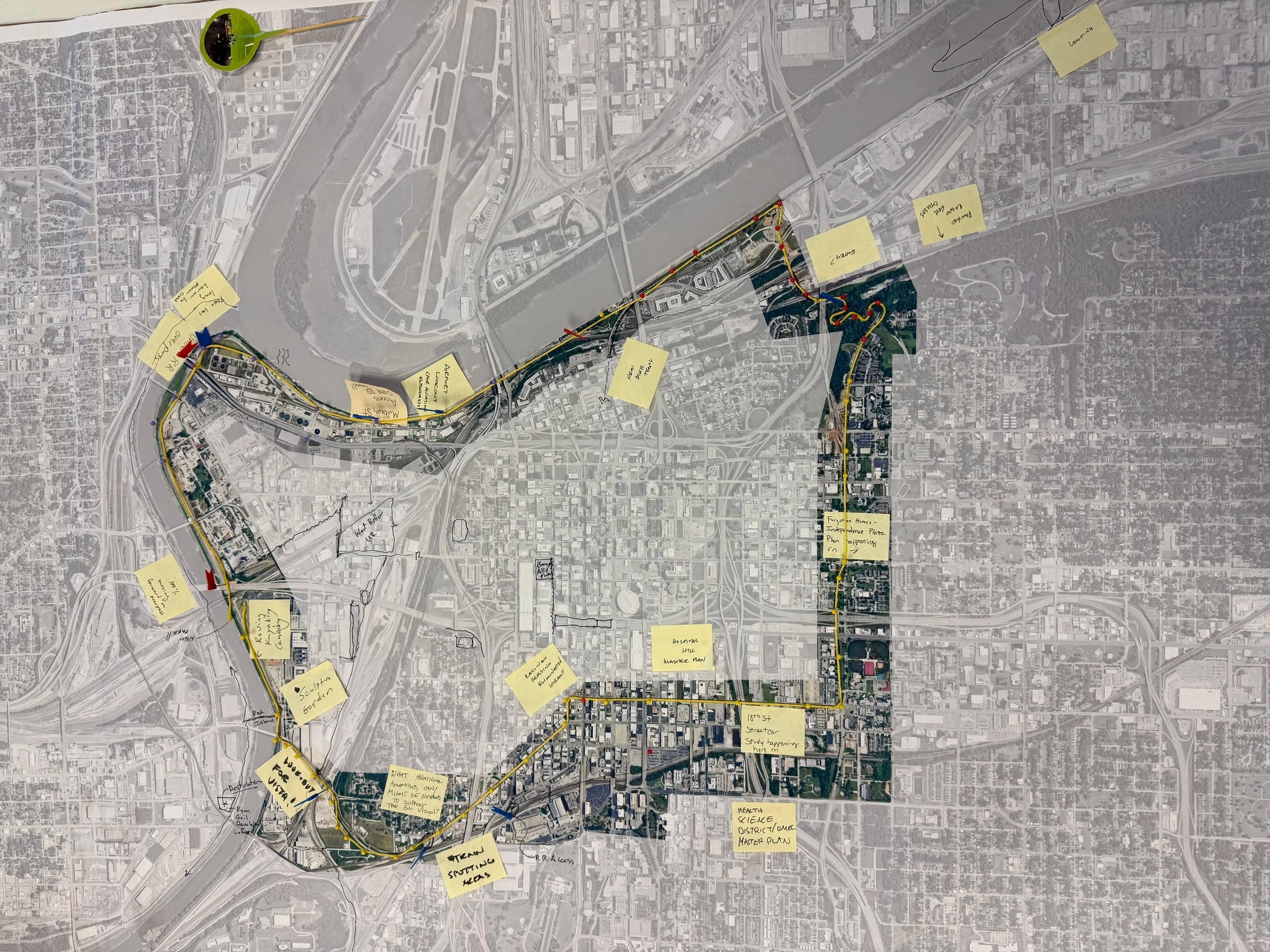
Following the kickoff, students continued to dive deeper into their research. The Community Connectivity team is studying the history of Kessler Park, downtown neighborhood connections, transit access, greenways, cycling infrastructure, and relevant case studies. The Social Equity team is focusing on population and demographics, health and wellness, and access to essential goods and services. The Environmental and Ecological Systems team is researching watersheds and stormwater mitigation, pollution reduction, ecological longevity, and greenway systems. The Economic and Urban Impact team is examining land use, displacement precedents, crime rates, and nearby development patterns. The Public Space Use and Character team is documenting neighborhood characteristics, trail segment identities, landmarks, and historical aspects along the corridor.
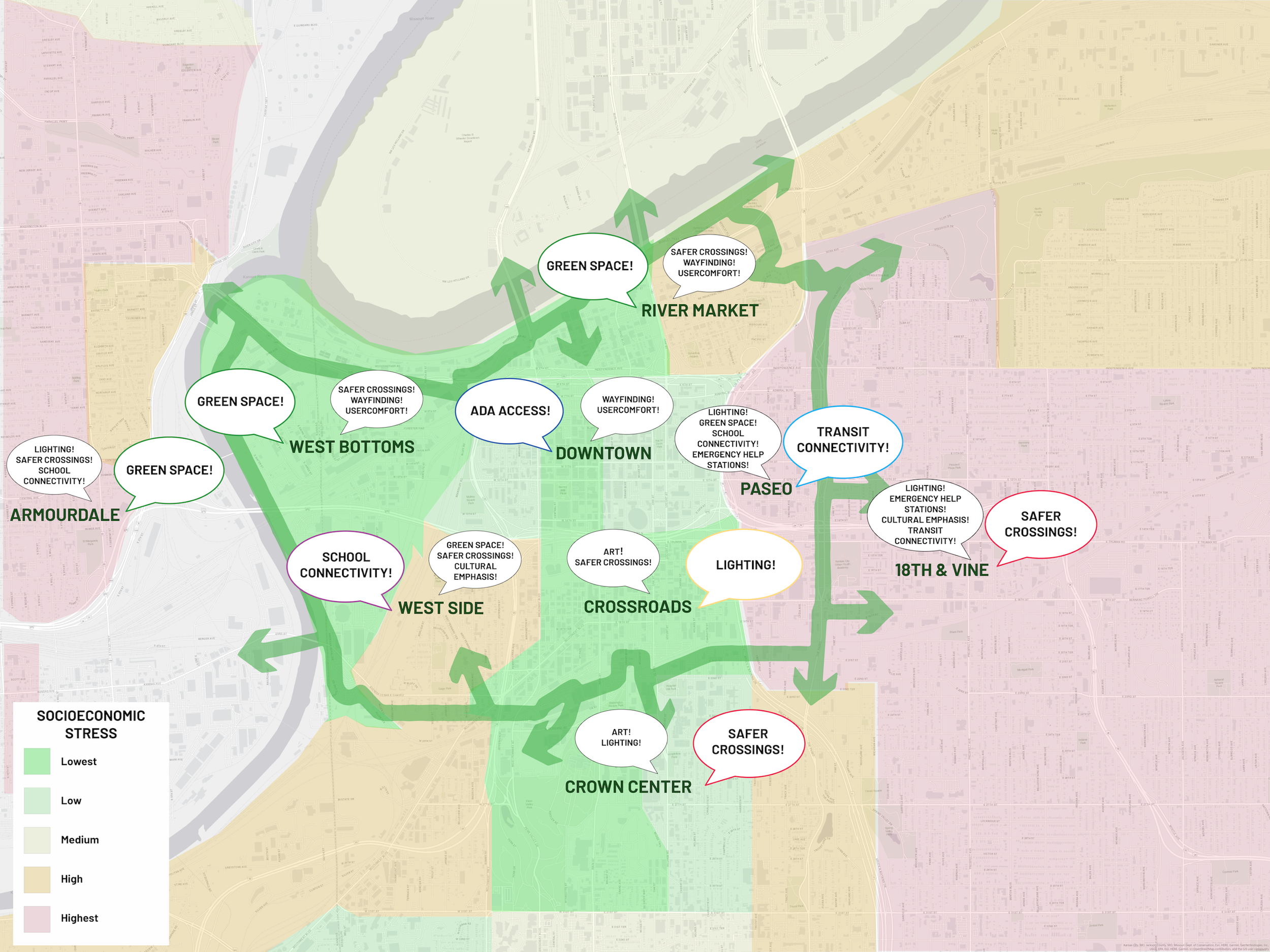
As we move into the next phase, we are beginning to think about how these findings will directly inform our design work. This phase will focus on connecting insights across teams, identifying key opportunities and challenges along the Greenline, and translating research into early design ideas. Our goal is to use this groundwork to guide thoughtful, community-centered design decisions as the project moves forward.

Written by Anna Hurst, Architecture Student
The Importance of Gathering for Resilience

Resilience is a complex idea made up of multiple factors working together to create strong, well-supported communities. One crucial component of social resilience is the ability for communities to build relationships that support: trust, resource sharing, and mutual aid to better support themselves in times of disaster and begin to rebuild after tragedy. This social resilience is actively built through repeated gathering that develops relationships. This capacity for community self-reliance is especially vital for minorities and marginalized populations who are less likely to receive timely aid from government institutions during crises. Sociologist Eric Klinenberg explains this concept in his book Palaces for the People, writing that "People forge bonds in places that have healthy social infrastructures not because they set out to build community, but because when people engage in sustained, recurrent interaction, particularly while doing things they enjoy, relationships inevitably grow." In other words, the casual, repeated interactions that happen in shared spaces, whether at a community garden, library, or neighborhood gathering place, naturally build the connections that become critical during emergencies. These organic social networks enable communities to act quickly and effectively, filling gaps where formal systems may fall short or arrive too late.

How Does This Affect Our Local Neighborhoods in KC?

The concept of social resilience deeply resonates in the Dunbar neighborhood, historically known as the "Garden of Eden" precisely because of a strong, self-reliant community structure and the abundance of shared spaces, such as the original Dunbar School. Today, the erosion of this social infrastructure, due to decline, razing of original buildings, and residents moving away, stands as a significant threat to current community resilience. Yet, efforts are underway to rebuild this vital capacity, especially through the Resilience Hub and various community garden projects that would intentionally reconnect those casual, repeated interactions that foster trust. The gathering places and food system initiatives of today focus on honoring Dunbar's historical roots as an intensive way to strengthen the organic social networks required to protect and sustain this marginalized community during future crises. This focus on rebuilding shared spaces like Dunbar Park, with its many events, including “Make Music Day”, has critical implications for mutual aid capacity and overall neighborhood stability.

Our Studio Experience

Designing for resilience today goes far beyond preparing for climate events. Our learnings show a shift toward a holistic, community-centered approach that responds to changing social and economic conditions. Adaptability is now a priority, ensuring facilities can support public safety partners and local service providers whenever needs arise. Flexibility is essential, with everyday community spaces designed to transition quickly during emergencies, similar to educational medical environments that can operate as surge-capacity care centers. Even with rising material costs, designers continue to pursue strategies that create multiple benefits, such as integrating green infrastructure into public amenities to manage stormwater and enhance overall quality of life.

Growing Industrial Design in KC: Drawing Connections

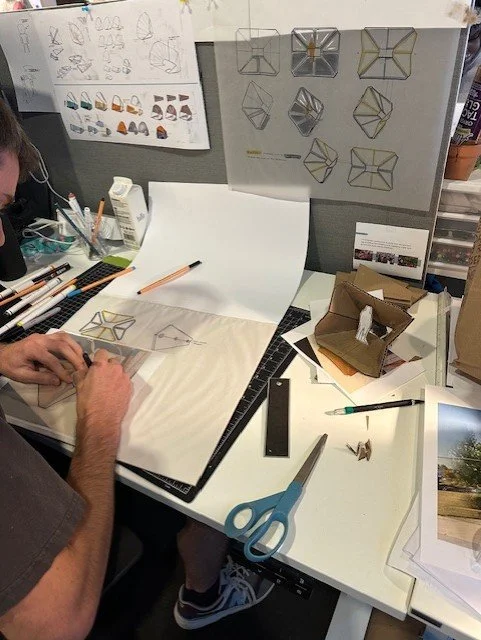
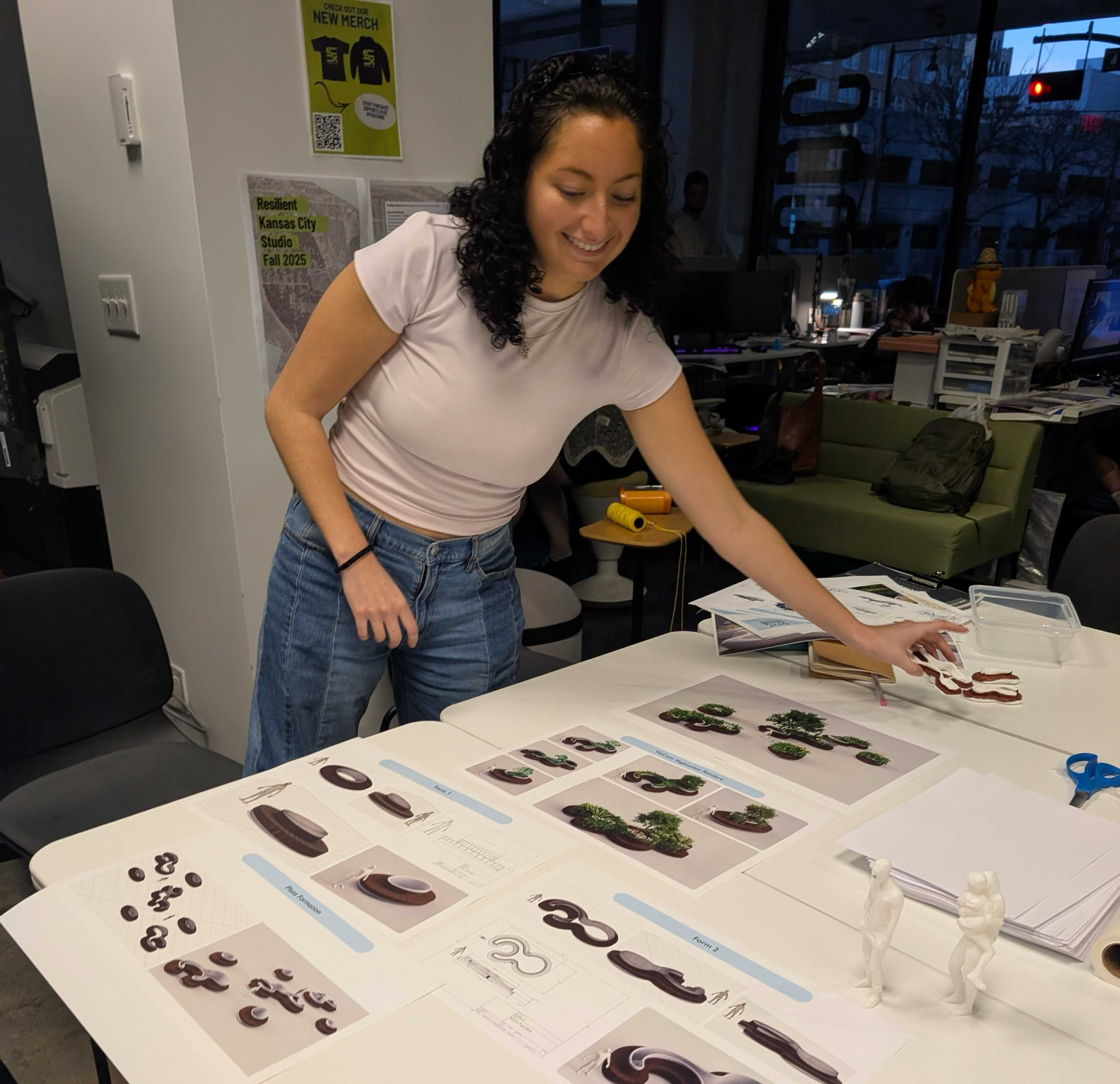
At Kansas City Design Center, we believe great design happens when different scales and disciplines come together. This semester, we offered Industrial Design for the first time as part of our studio program. Industrial design brings a focus on the human experience, shaping how people use, understand, and connect with the world around them. Read more about our current studio project on our website.

We’re proud to have 11 industrial design students this semester whose fresh ideas are enriching the work across the center and helping build a stronger industrial design presence in Kansas City.

A major highlight this fall was hosting Andreas Bell, who, though originally from Germany, studied industrial design at the University of Kansas before going on to lead TEAMS Design USA. During his talk, Andreas shared how he developed his design thinking and how sketching has remained a constant thread in his practice, a way to explore ideas, communicate clearly, and refine solutions that truly serve people. His presentation reflected TEAMS Design’s belief that good design is purposeful, empathetic, and grounded in understanding the needs of those who use it.

We’ve also been collaborating with several local industrial design organizations to expand our reach and opportunities. Along with our design consultant Jonathon Kemnitzer from KEM STUDIO, we’ve received valuable input from the Industrial Designers Society of America local chapter, Gil Manilo at Garmin, and Dimensional Innovations. Their support has helped shape the student projects and connect students to the design profession as they consider their next move entering their final year of college.

On November 7th, we hosted a Sketch Jam student competition to showcase sketching skills. We had a great turnout to cheer on the students, and we loved welcoming design professionals and other students into the space. It was inspiring to see so much creativity and community energy in one place.

As we continue to grow industrial design at KCDC, we’re excited about its potential to advance design that serves people and improves everyday life in Kansas City and beyond.