Housing Policy Innovation

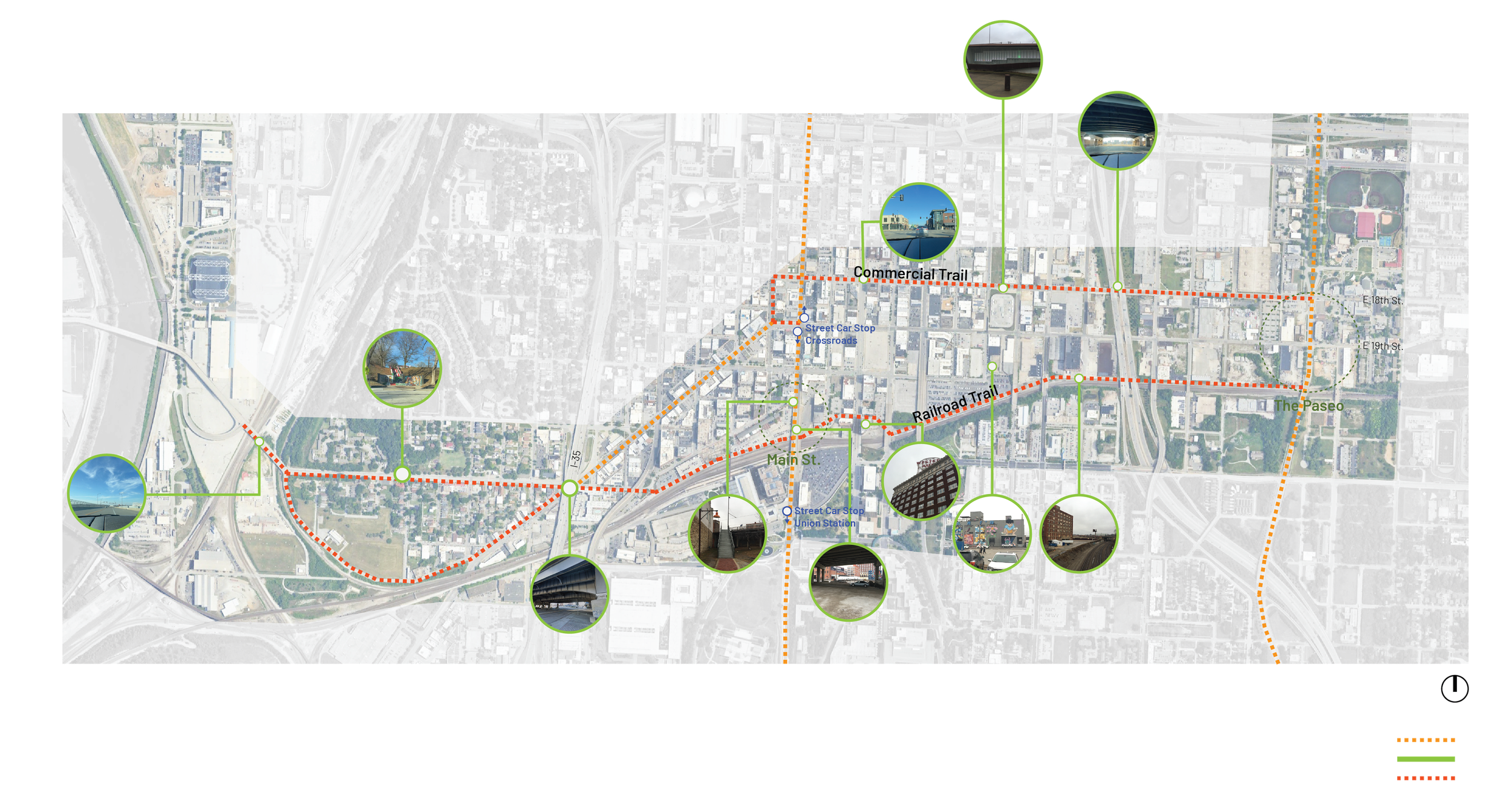
This week in studio our focus shifted primarily to our Greenline segment teams as we prepare for our mid review. We also met with a few different groups to broaden our horizons in studio and in seminar. I’m part of the East segment team, which stretches from Cliff Drive through The Paseo and down to 18th and Vine District. It’s a corridor shaped by history, long-term divestment, and incredible resilience that we as a team are working to honor. Our central argument is that the Greenline should serve as a tool for connection, stitching together areas divided by highways, reconnecting communities and resources and opening the possibilities for fresh opportunities.
Donna Schneck-Hamlin discussion

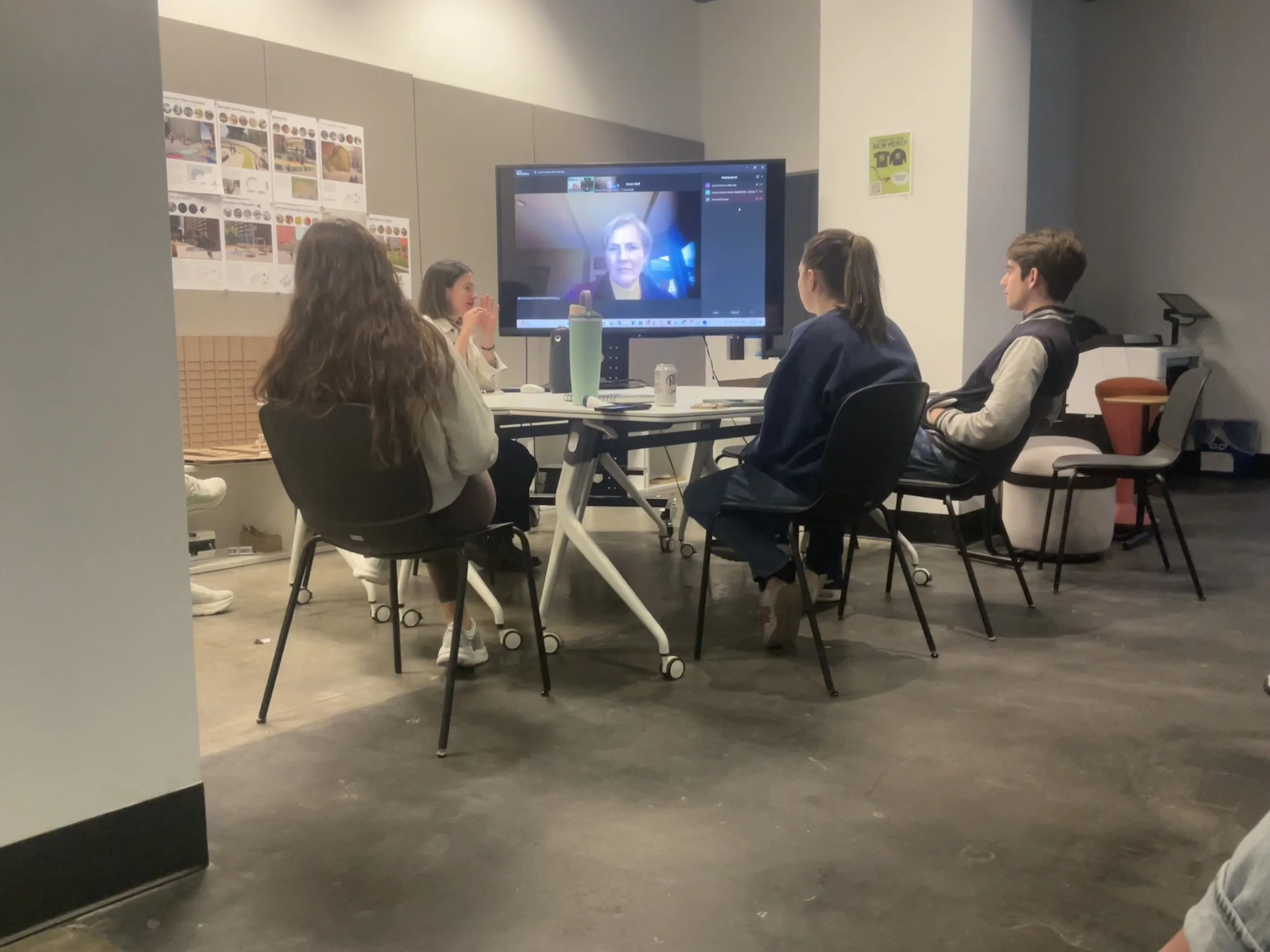
On Monday we met virtually with Donna Schneck-Hamlin of Workforce Solar Housing Partnership to discuss community land trusts. At their core, CLTs rethink what it means to own a home. In this model, the home owner purchases the house while the land beneath it is held within a trust and leased at a low cost. This structure keeps the initial purchase price lower while ensuring long term affordability when the home is resold. The homeowner still builds equity, but the property remains accessible to the next buyer which is critical in neighborhoods vulnerable to displacement. 
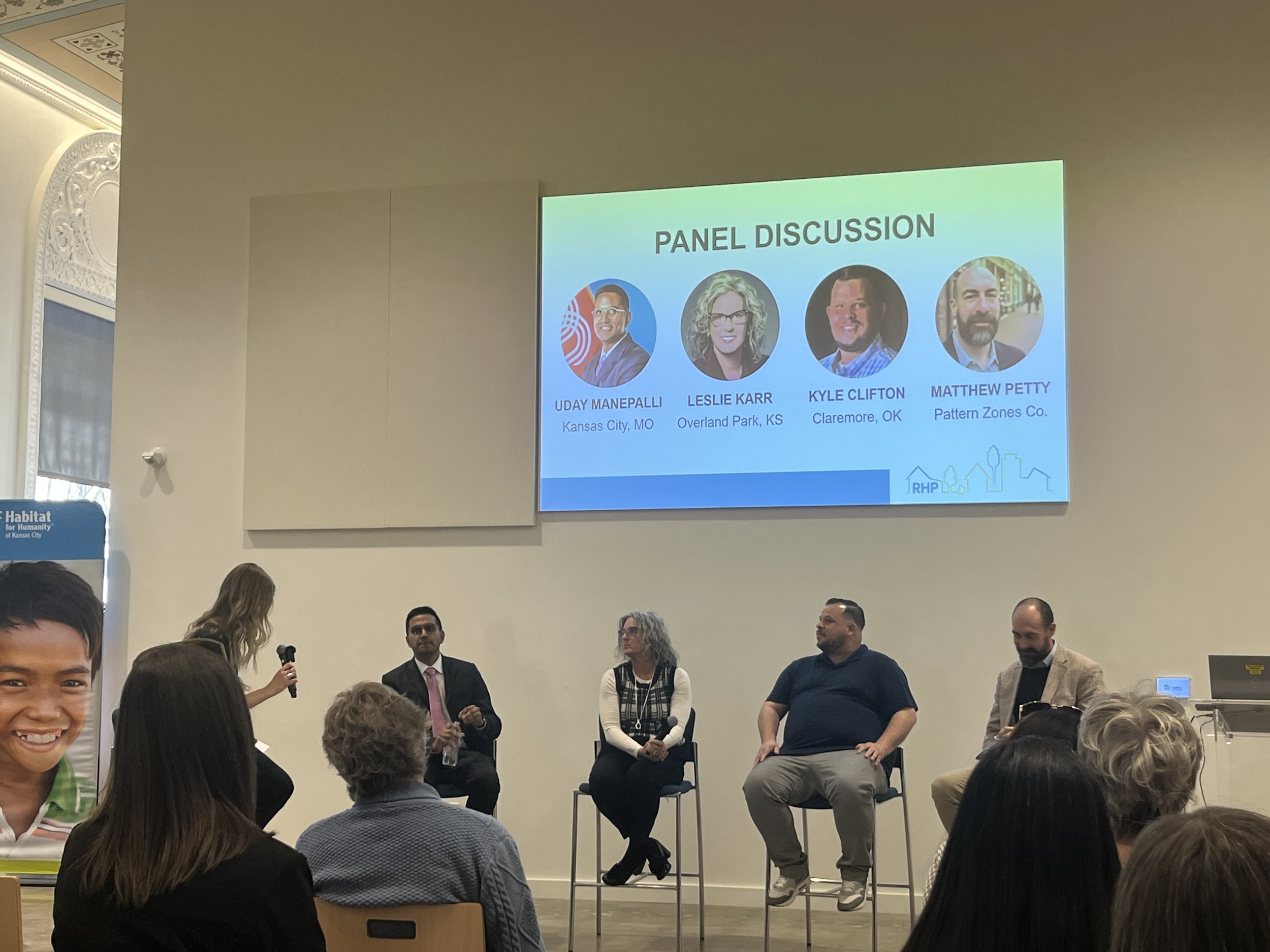
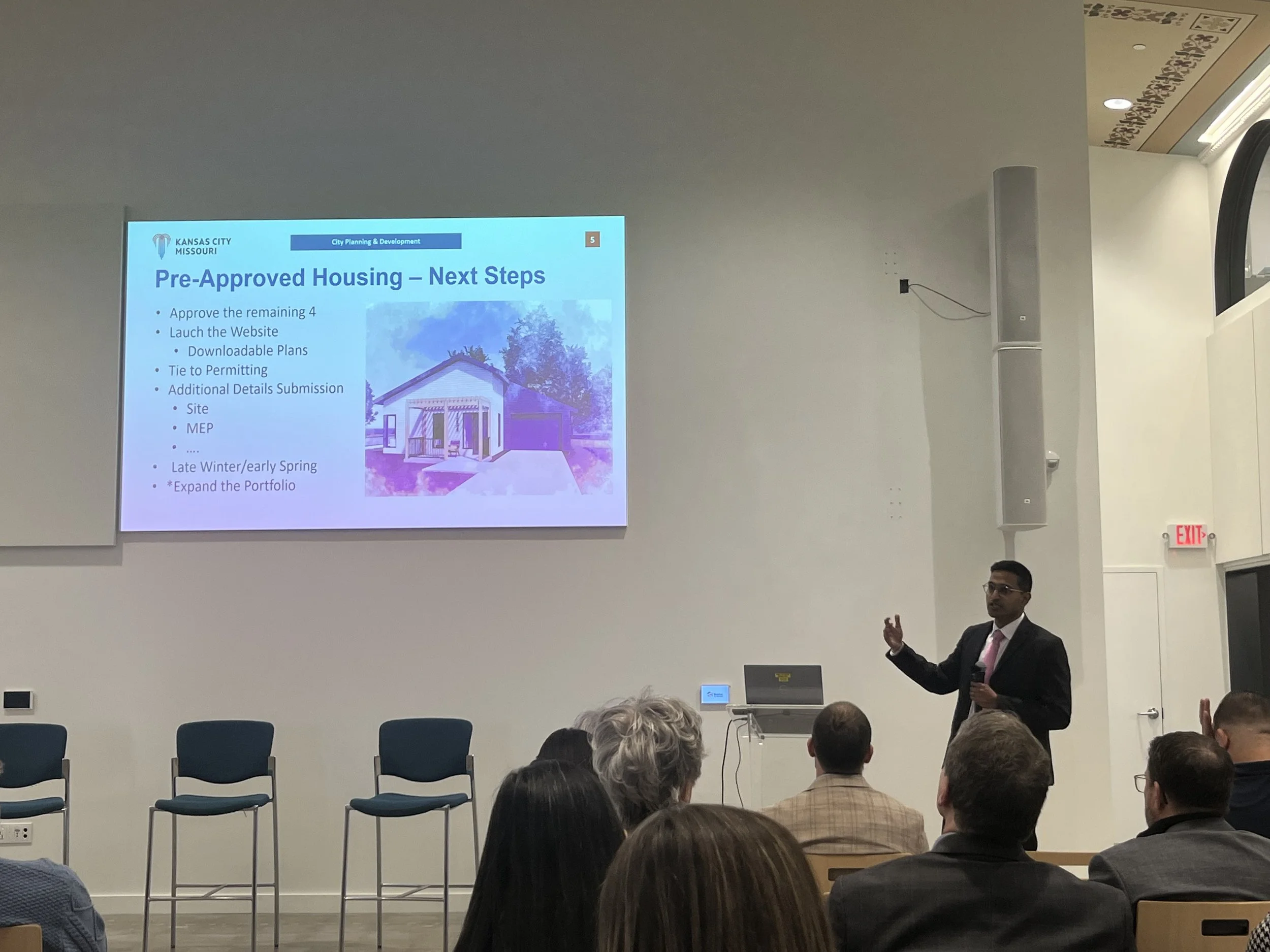
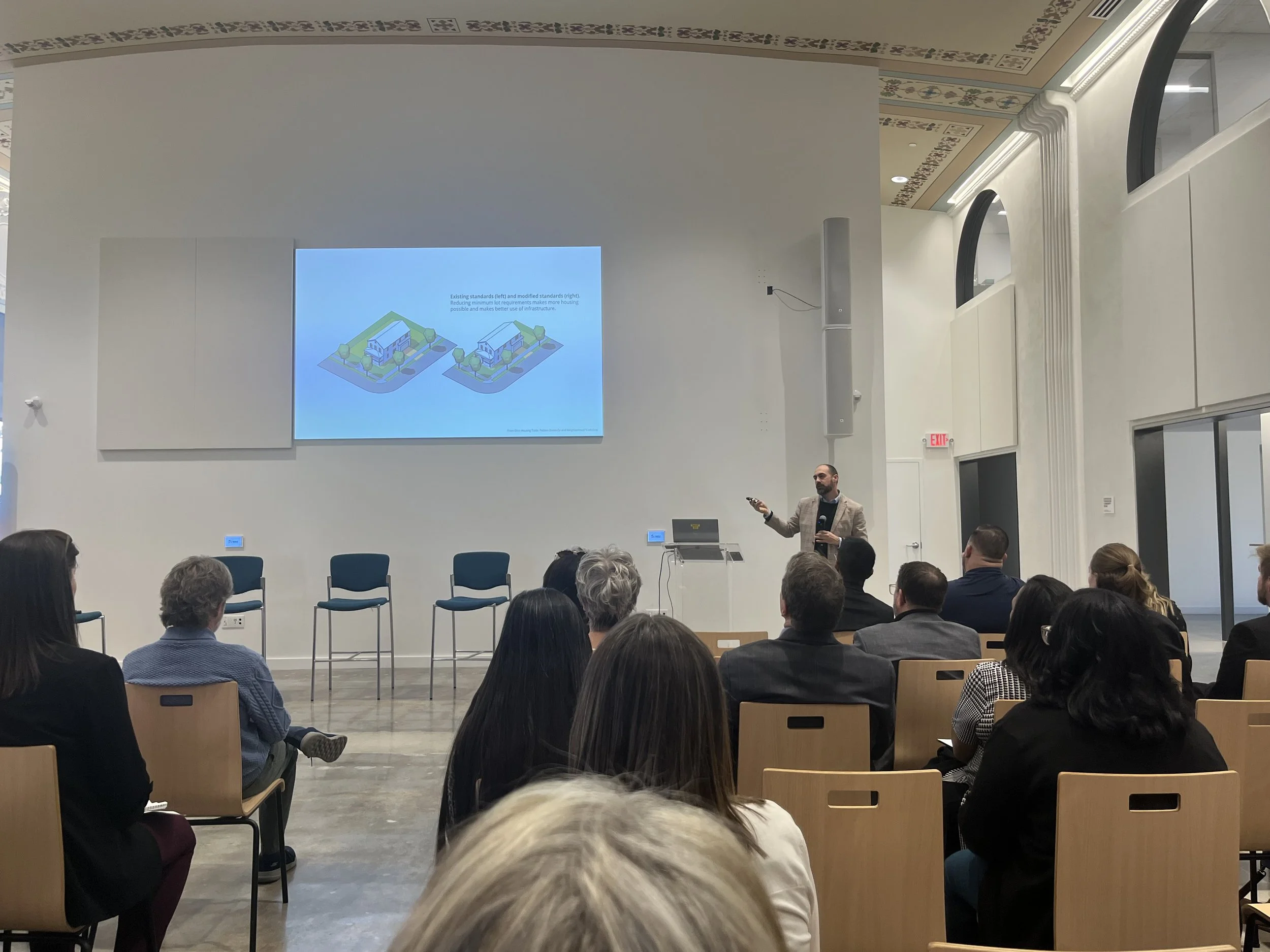
Later in the week we attended the Mid-America Regional Council's Housing Policy Innovation Series at Habitat for Humanity of Kansas City. We heard from Matthew Petty, Kyle Clifton, Leslie Karr, and Uday Manepalli about pre-approved building plans. The idea is straightforward, a developed portfolio of well-designed and code compliant housing plans that are able to move through the approval process more quickly. Claremore, OK, Overland Park, KS, and Kansas City, MO are early adopters of this new strategy in streamlining the construction of missing middle housing. While there is much to learn about the strategy, it holds immense promise for helping address the kinds of housing neighborhoods need.

As we move toward our mid review, our work on the Greenline feels very connected to Kansas City and its problems. We have an opportunity as design students to respond to these problems. If the Greenline can operate as a connective tissue, socially, economically, and create a stronger, more equitable, more connected ecosystem through our city, it moves beyond the diagram into viability. 

Written by Jonah Hammel, Architecture Student
Crossroads Community Improvement District

As a studio, we’ve been developing proposals for different segments of the Greenline, organizing our work into four key areas: North, East, West, and South. This structure has helped us break down the larger system into more manageable pieces while still thinking about how they connect as a whole. This week, we focused on connecting our design work to real people and real places across Kansas City.

Rick Usher, Crossroads Community Improvement District

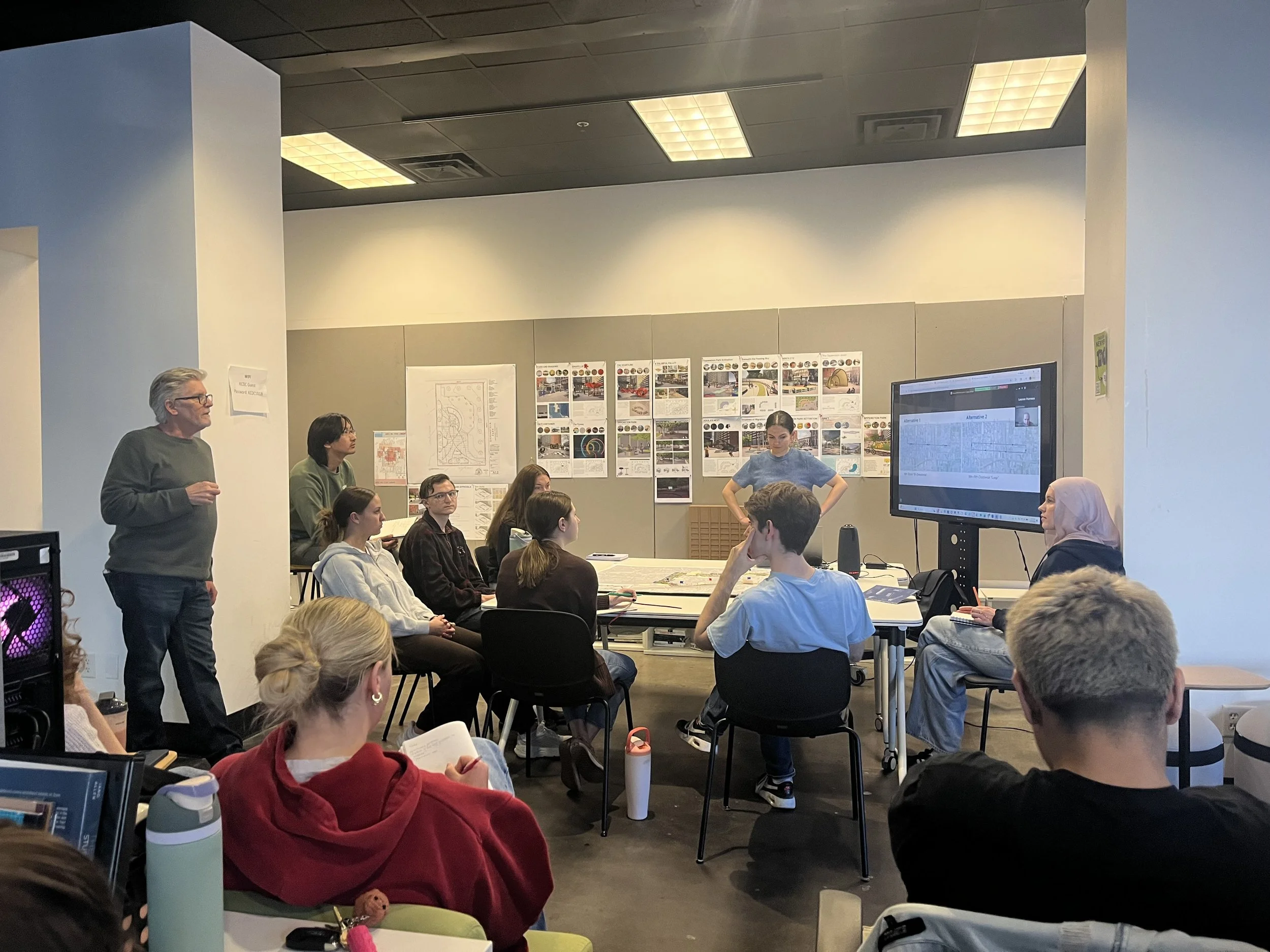
We welcomed Rick Usher from the Crossroads Community Improvement District to our studio. He spoke to us about the ongoing work in the Crossroads and other neighborhood developments. He talked about new bike lanes along Southwest Boulevard that could possibly be integrated into the Greenline and efforts to increase the number of trees in the Crossroads. He gave feedback on different ideas for alignment along the southern portion of the Crossroads. The Southern segment team is currently looking at two different streets for their segments, one of them being a commercial trail along 18th street. Hearing directly from a neighborhood leader like Rick gave us a clear understanding of the potential impact of our project and how to incorporate other community efforts.

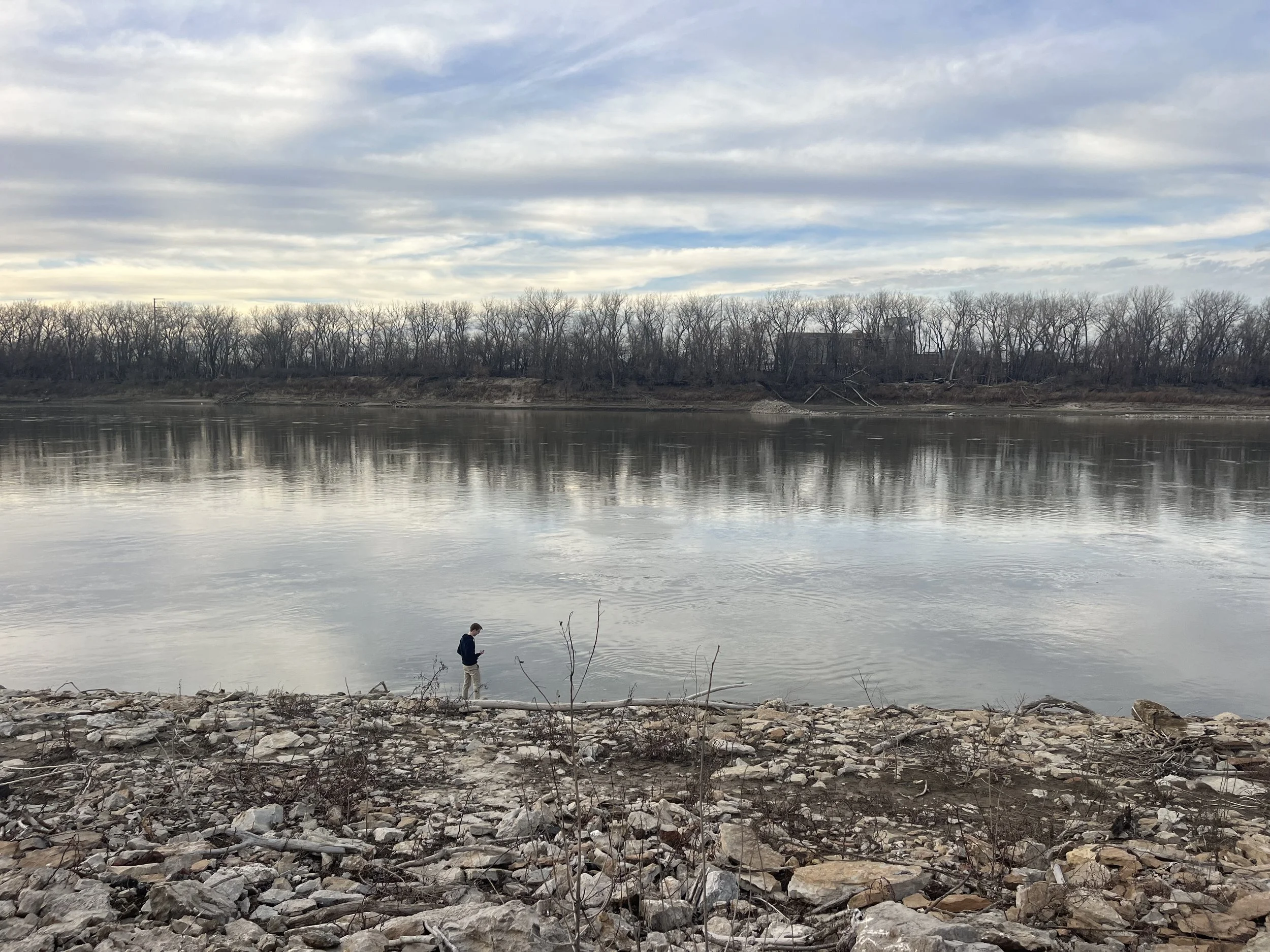
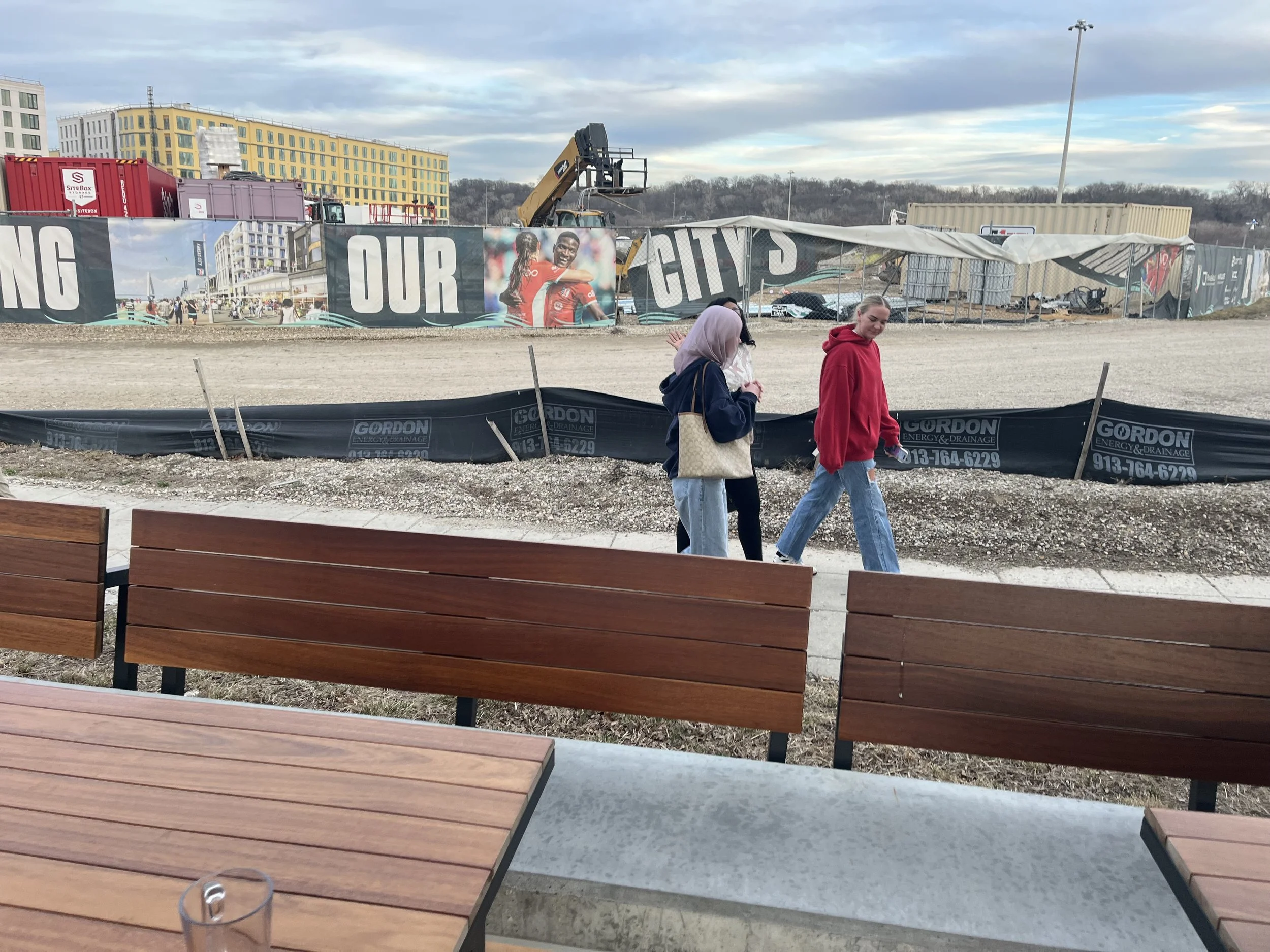
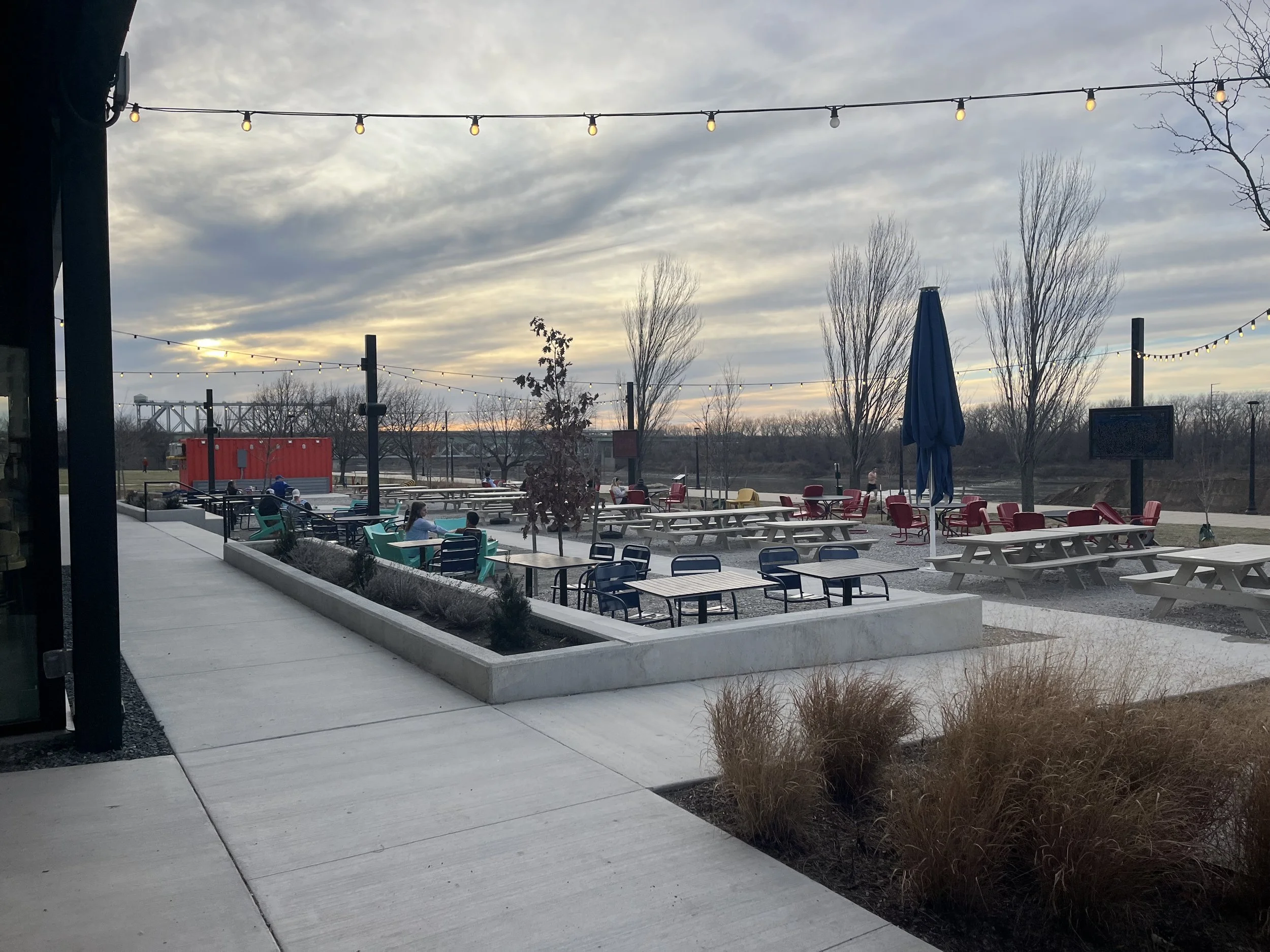
Later in the week, we took a short studio trip to the Berkley Riverfront. Walking the site allowed us to see recent developments firsthand and observe how public space, infrastructure, and recreation come together along the river. The visit wrapped up with a stop at Two Birds One Stone, giving us time to reflect as a group in a more casual setting. 

Overall, this week was about learning from the community, experiencing sites in person, and continuing to develop our Greenline proposals with a stronger connection to context.

Written by Brian Medina, Architecture Student

Zahner Tour

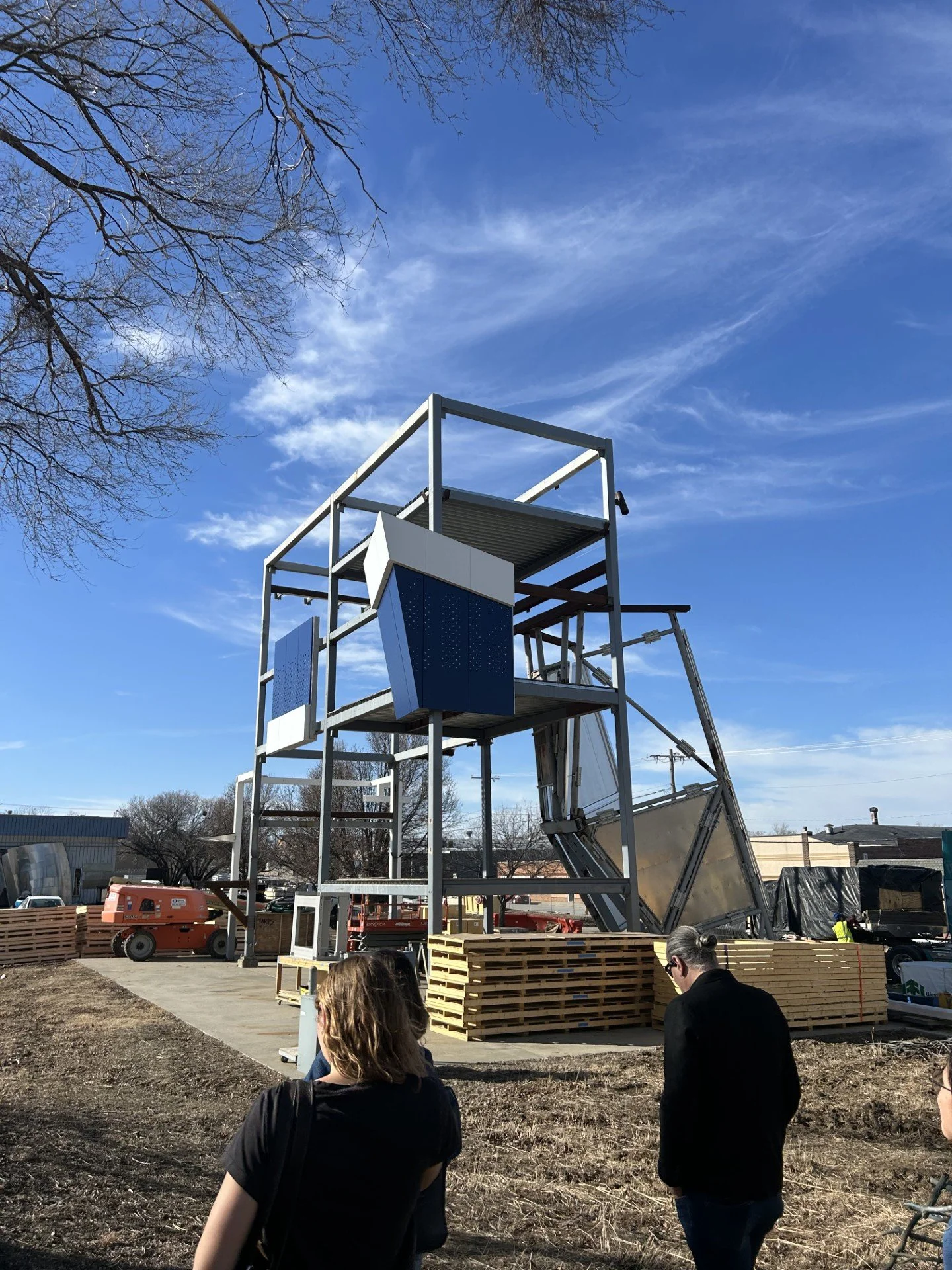
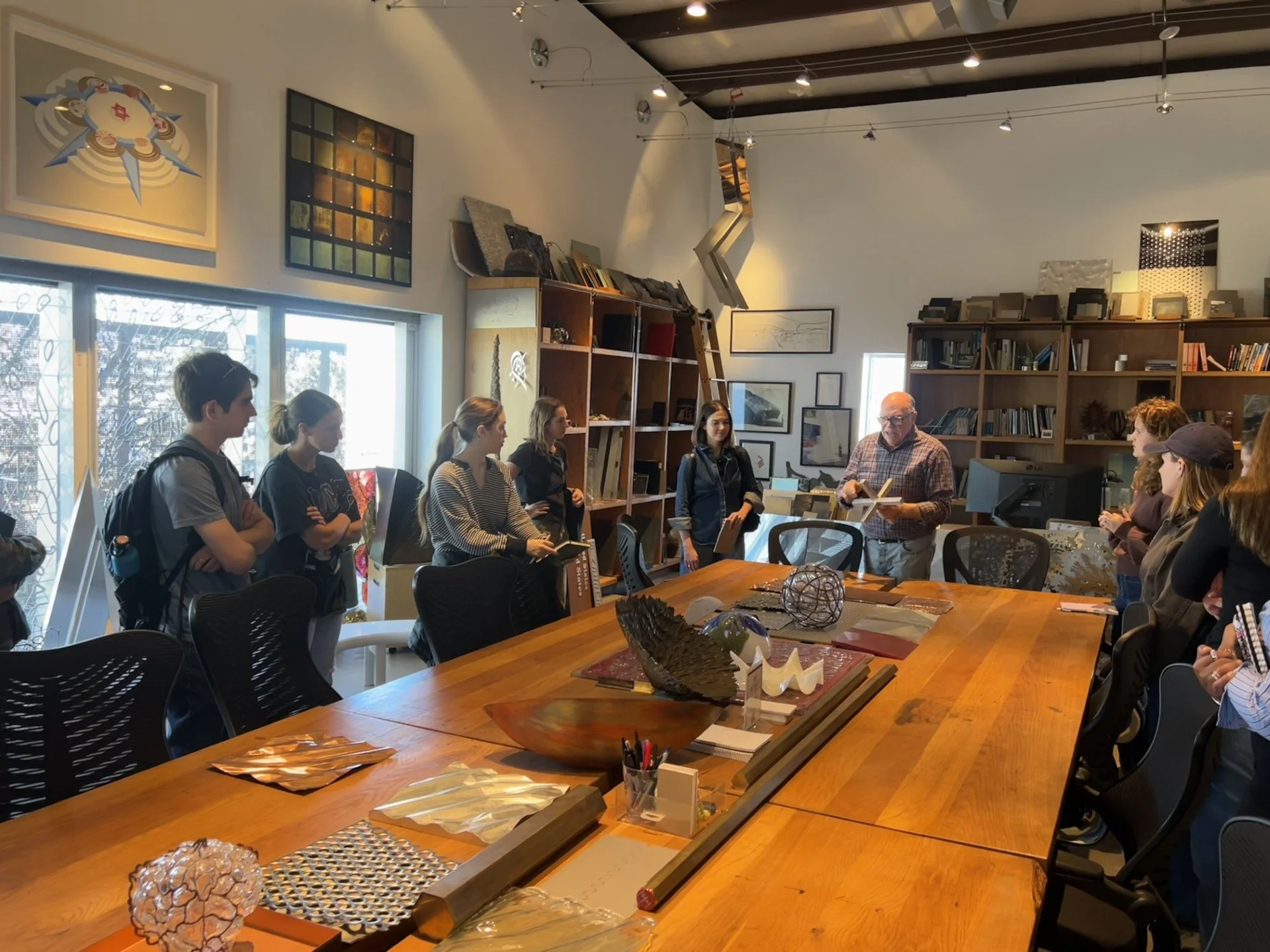
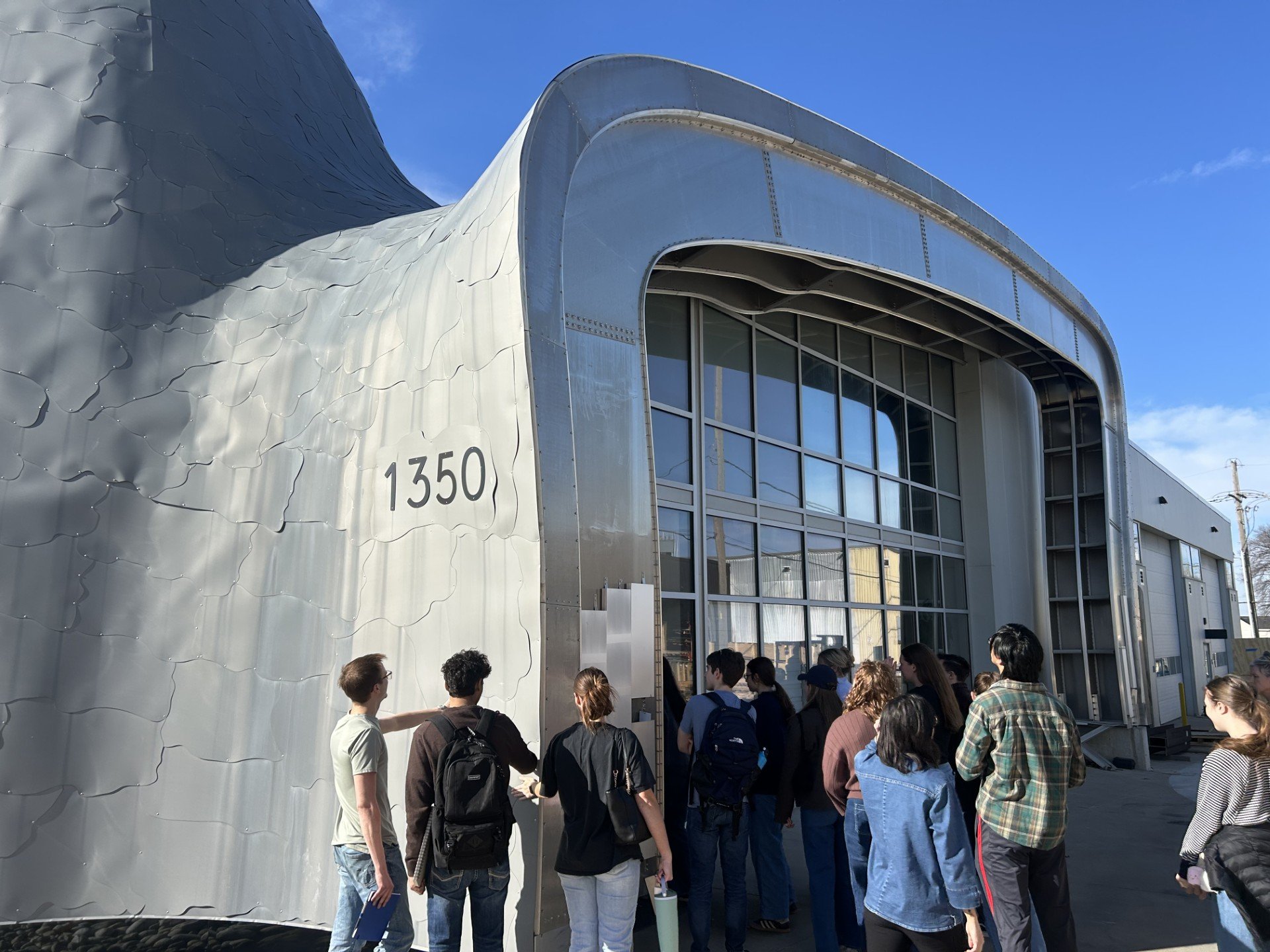
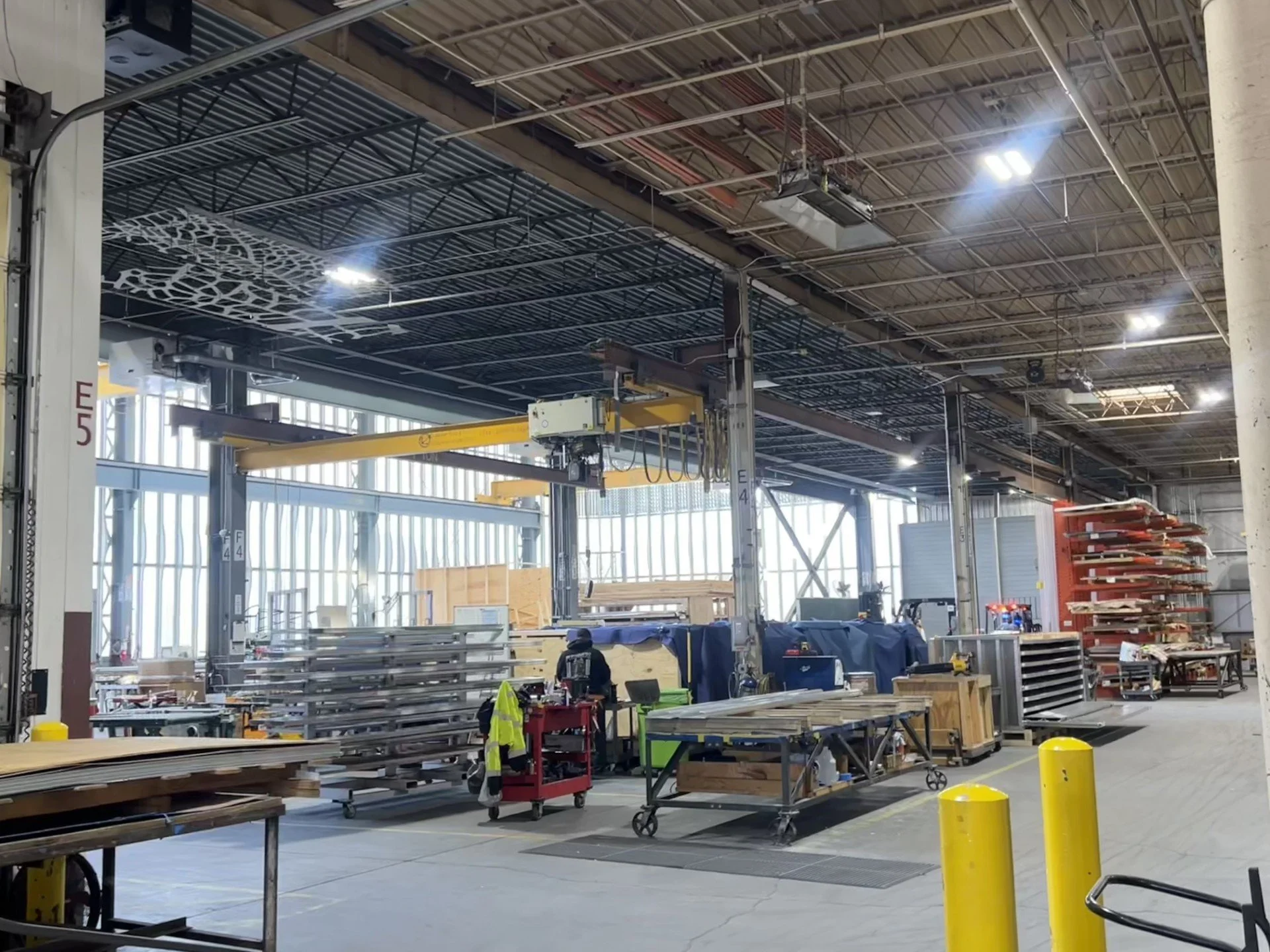
This week, KCDC toured Zahner’s offices and fabrication facilities and broke out into our Greenline segment teams. Zahner is a Kansas City local business that is globally renowned for their innovative custom metalwork. We began the tour outside, where to-scale mockup models are built for clients before a final contract is signed. Their work is displayed throughout the property, inside and outside, at various different scales, patinas, and forms.

Matthew Sutton, who founded the Industrial design department at Zahner, shared that the company is now able to produce products that can be ordered online because of the creation of this new department. He also explained what the logistics of working with metal are to create site furnishings for the Greenline. Danielle Luyet, a product designer and fabricator at Zahner, shared her interest and design ideas with us for site furnishings that could be implemented in the Greenline. We will hopefully meet with her again soon at KCDC to discuss further.

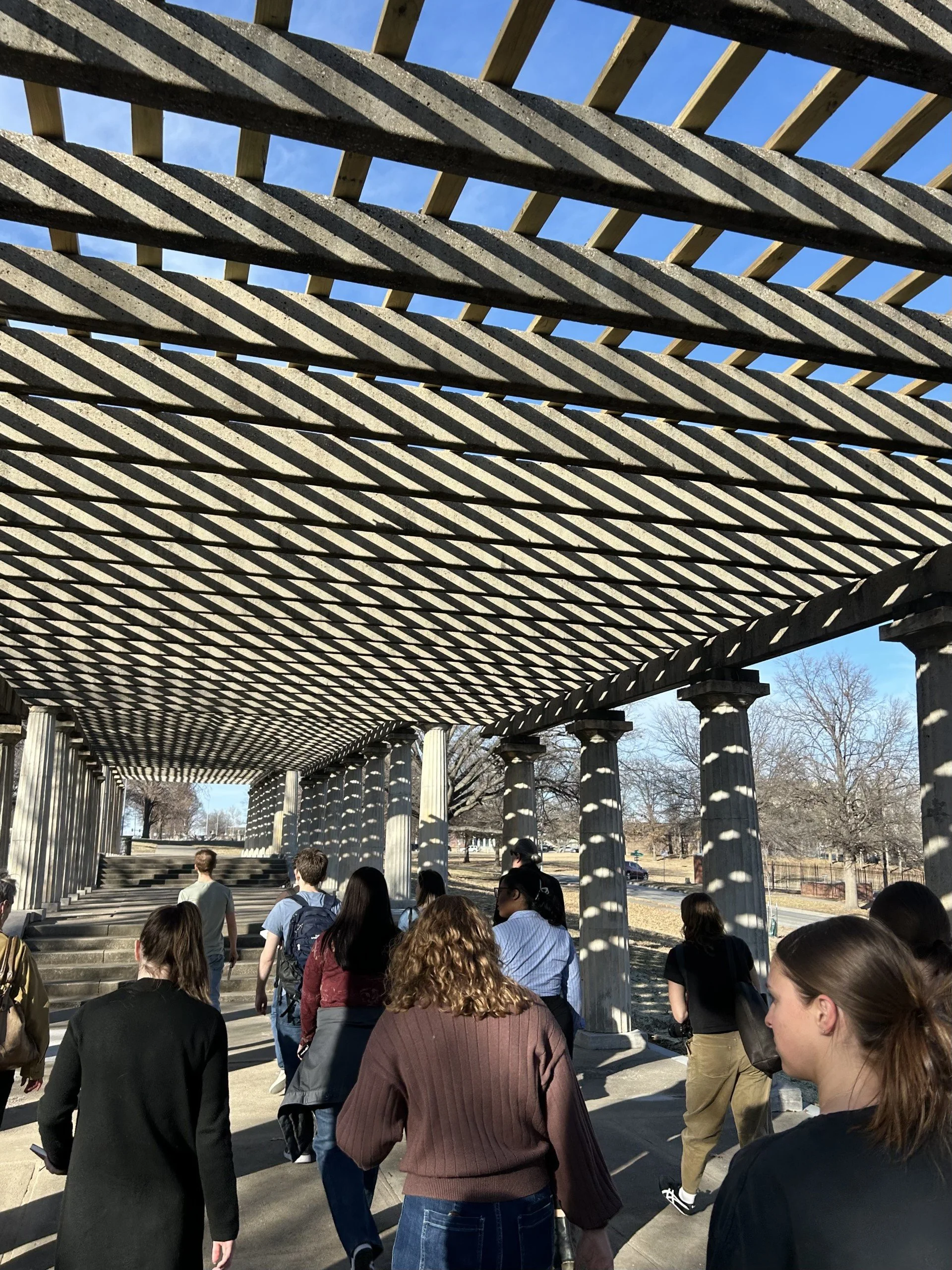
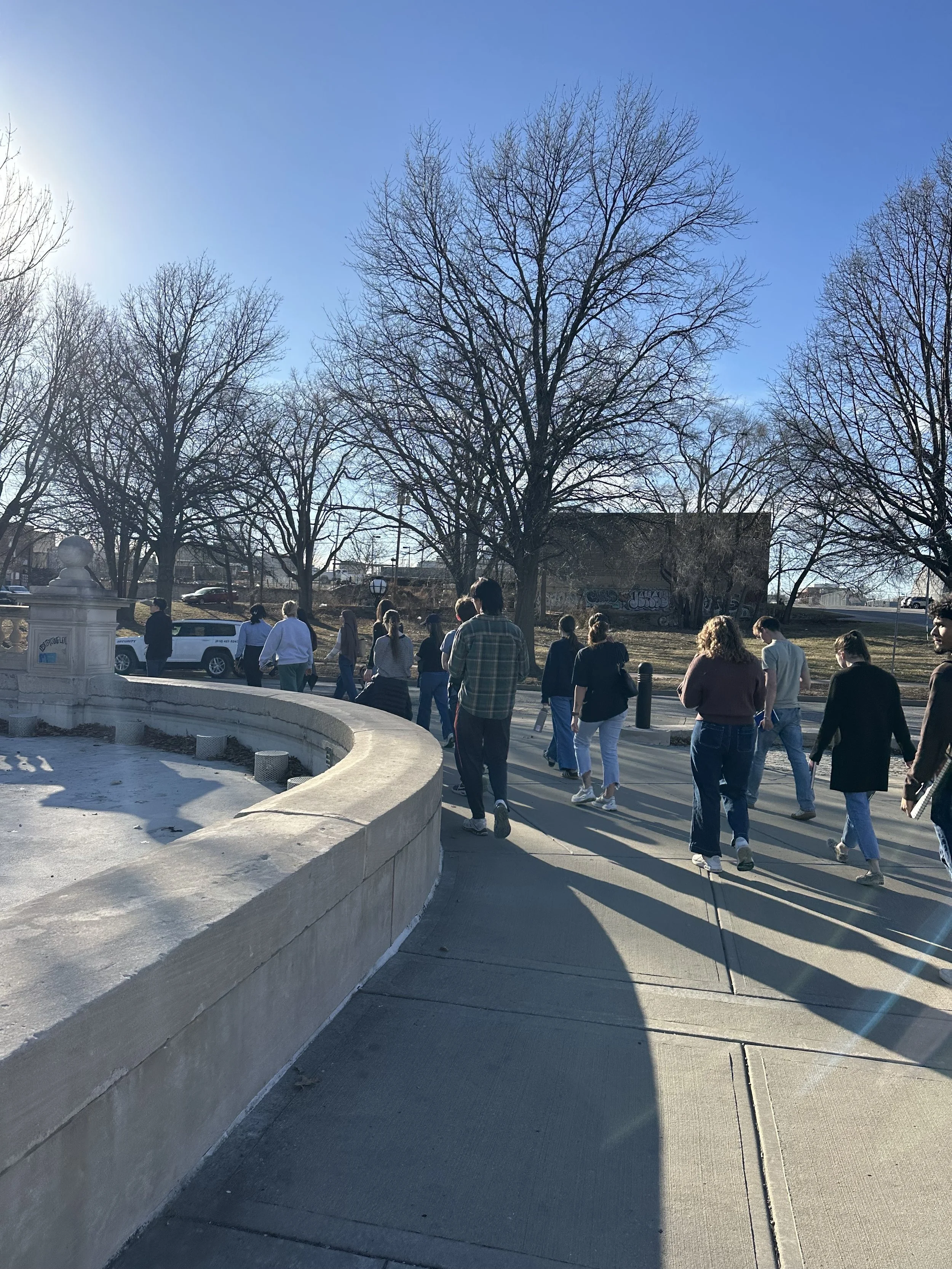
After the Zahner visit, we walked to the east segment of the Greenline on the Paseo. We experienced the lack of accessibility to the greenspace in the middle of the Paseo. Designing a safer pedestrian crosswalk with higher visibility for vehicles will be a vital consideration in the design process for the eastern segment team. The site features beautiful architectural features, such as fountains and a pergola, but it lacks supportive amenities that encourage gathering. This could also be a design opportunity for the eastern segment team. Each segment team will soon be conducting site visits and a site analysis of their specific section of the Greenline.

Written by Ella Figgins, Interior Architecture Student