East Segment Spotlight

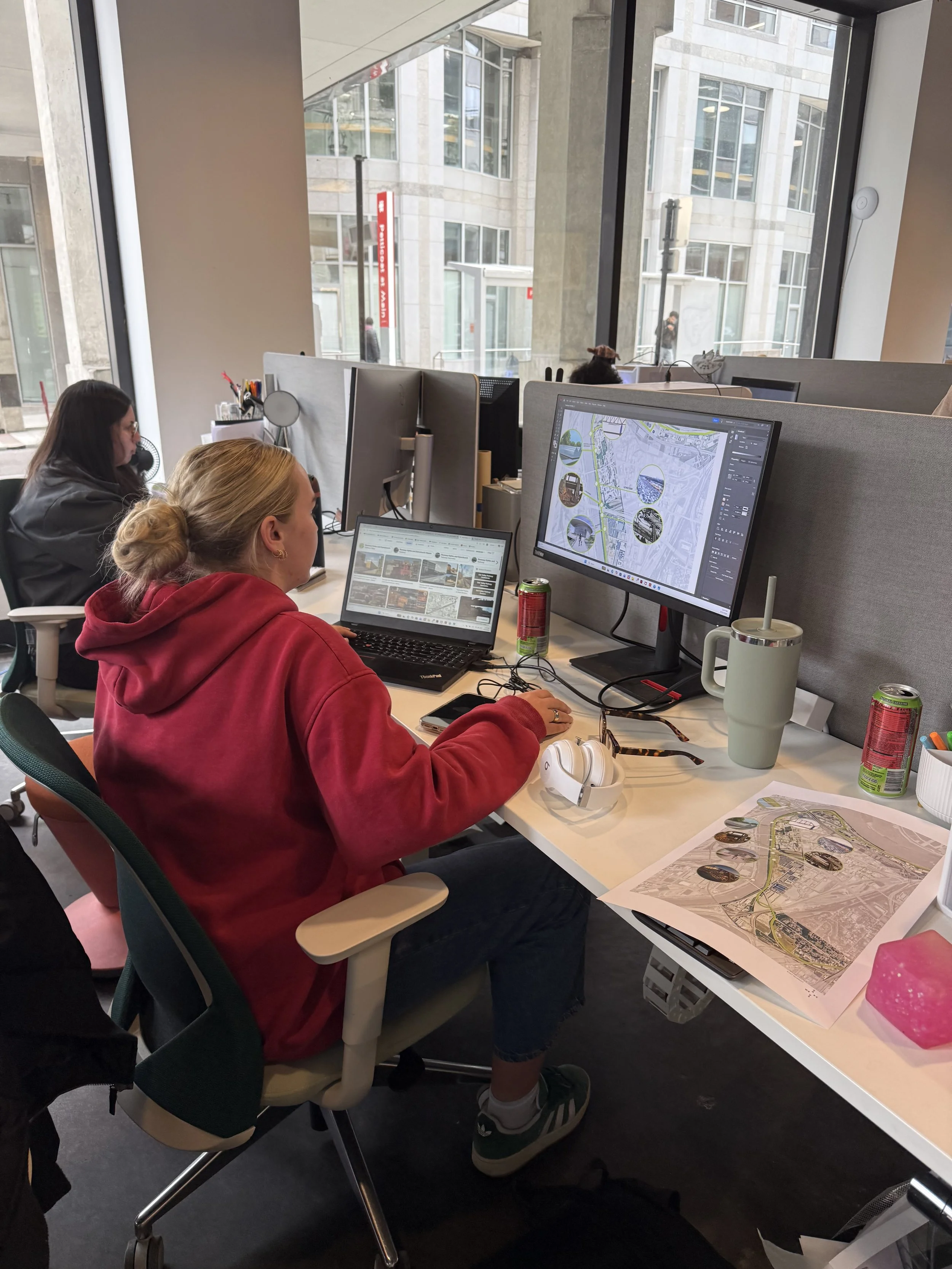
This week in studio, our focus was on advancing our work as segment teams and continuing to build toward a comprehensive plan for each portion of the Greenline. As part of the East team, we are developing our corridor along The Paseo, working to create a design that reflects both the history of the boulevard and the needs of the surrounding communities.
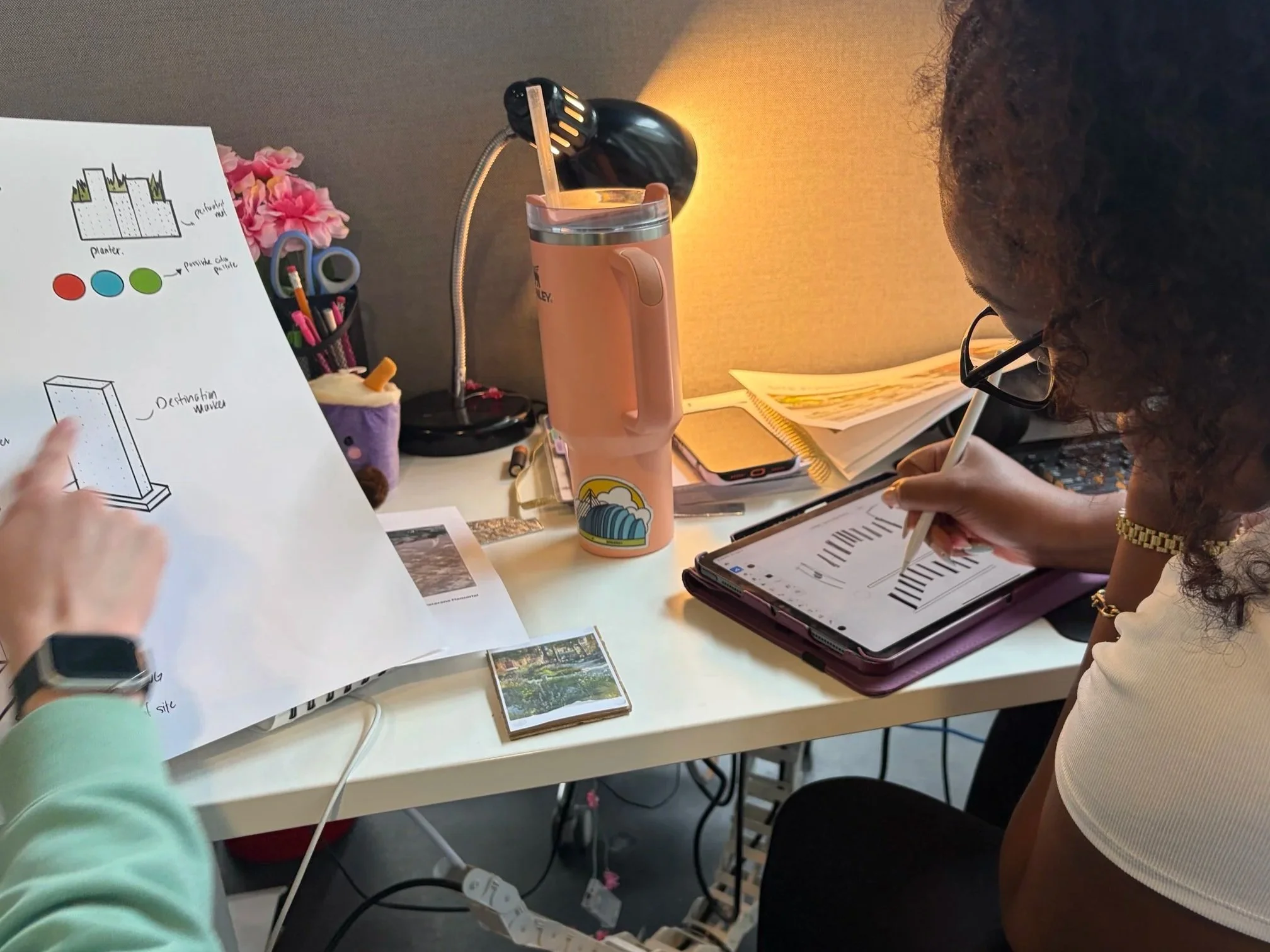
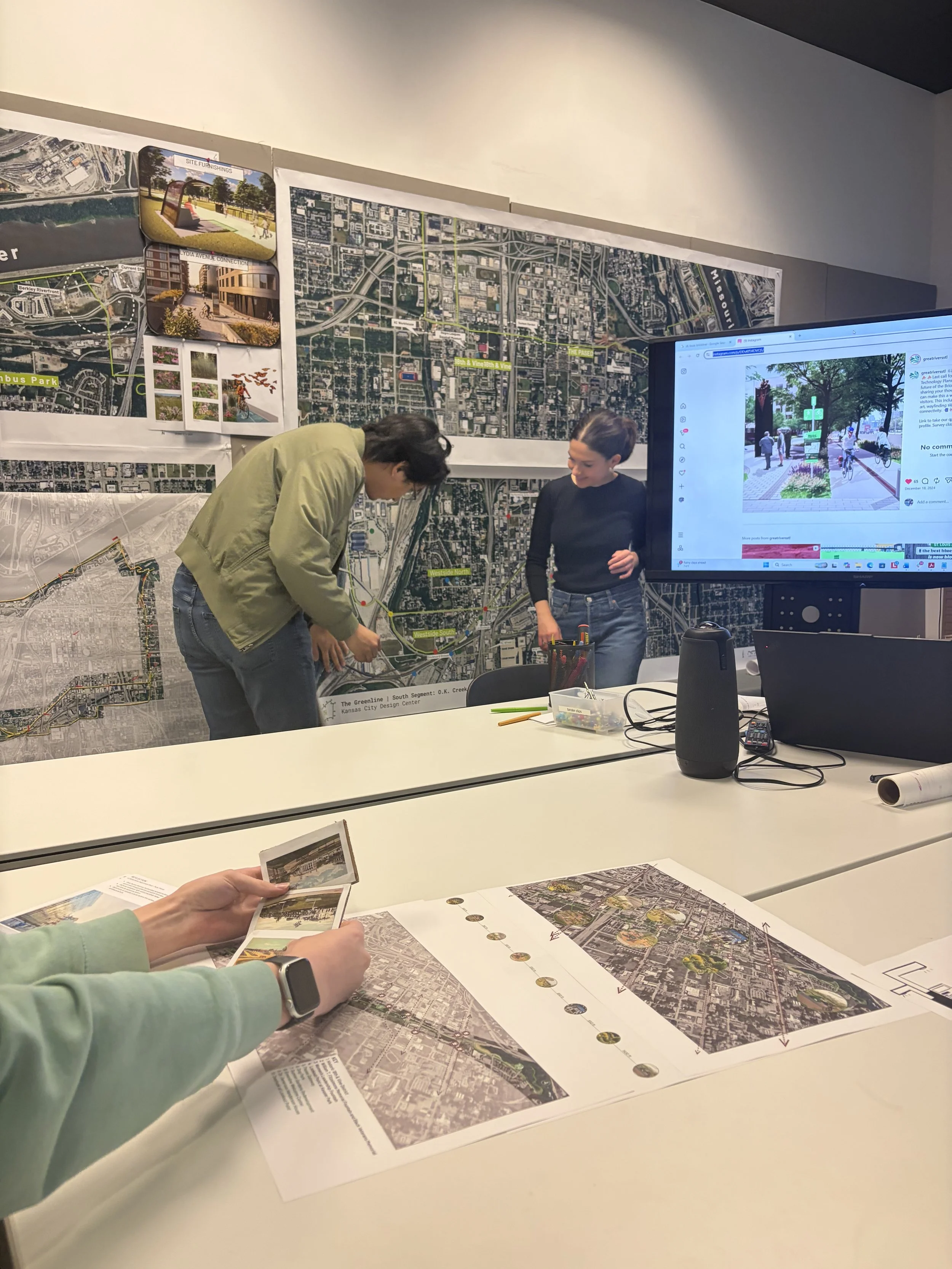
After our community meeting last Friday, we began translating that feedback into more specific design strategies. One of the key ideas we are developing is creating a rhythmic sequence of destinations along The Paseo that respond to both movement and place. We have been analyzing bus routes and surrounding parcels to better understand existing patterns of activity and identify opportunities for stronger connections. Because the pathway runs along the eastern sidewalk, we are also considering how people safely cross and move between destinations. This has led us to focus on protected crossings, buffers from traffic, and clearer relationships between parcels and adjacent spaces. At the same time, we are evaluating how underutilized parcels can support amenities that reflect community needs without competing with existing resources.

A major takeaway from our program discussions was the strong interest in community gardens and spaces for play. This pushed us to think about how the corridor can support both ecological systems and everyday activity in a way that feels connected rather than separate. The Paseo has historically functioned as part of Kansas City’s boulevard and park system, and it already contains some of the most significant green space within our segment. Because of this, we are leaning into ecological strategies such as pollinator gardens and native planting areas that support biodiversity and reinforce the identity of the corridor as a green spine. In addition, we are proposing a centralized community garden that acts as a shared resource for residents, offering space for growing food, learning, and gathering.
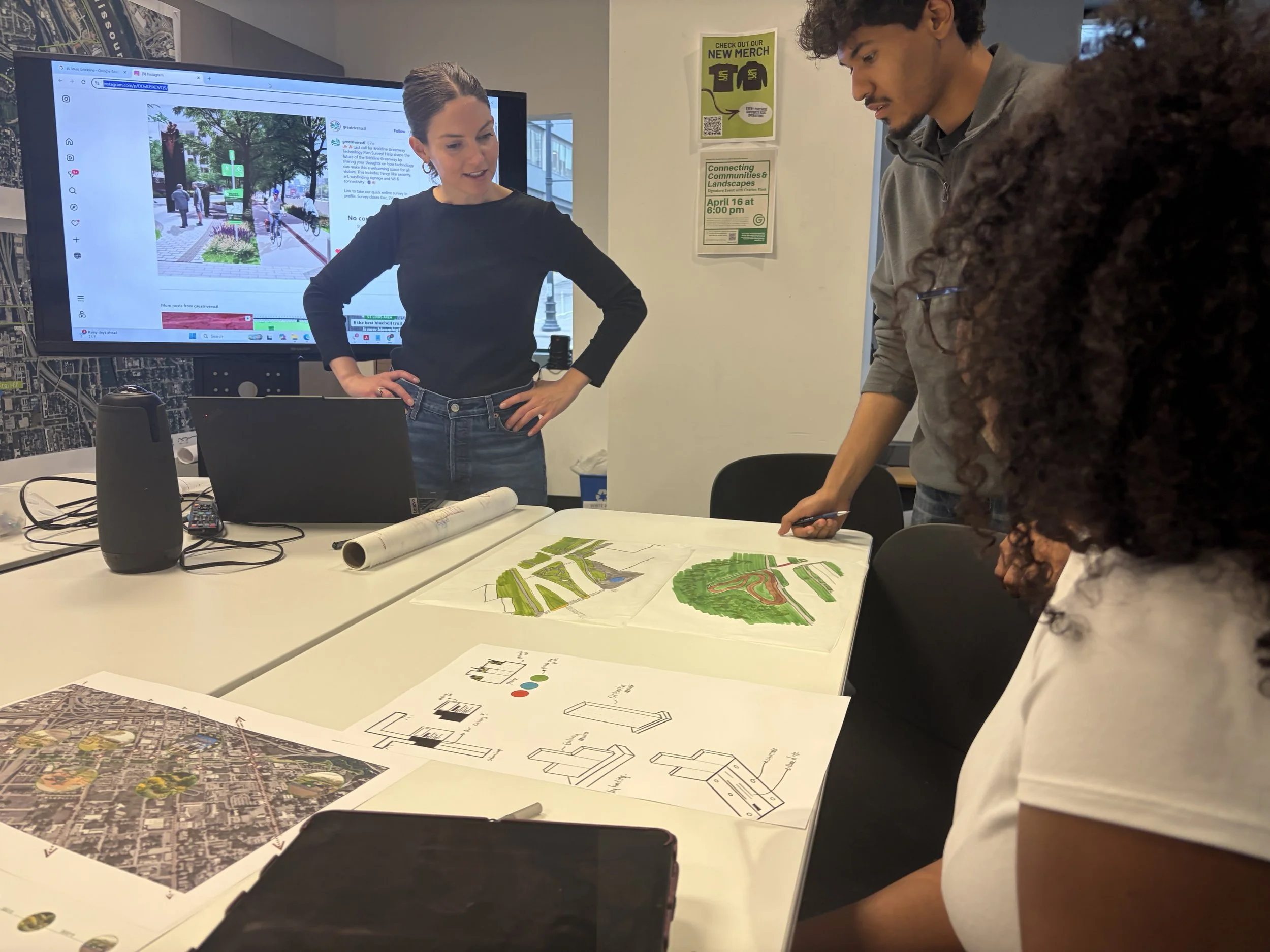
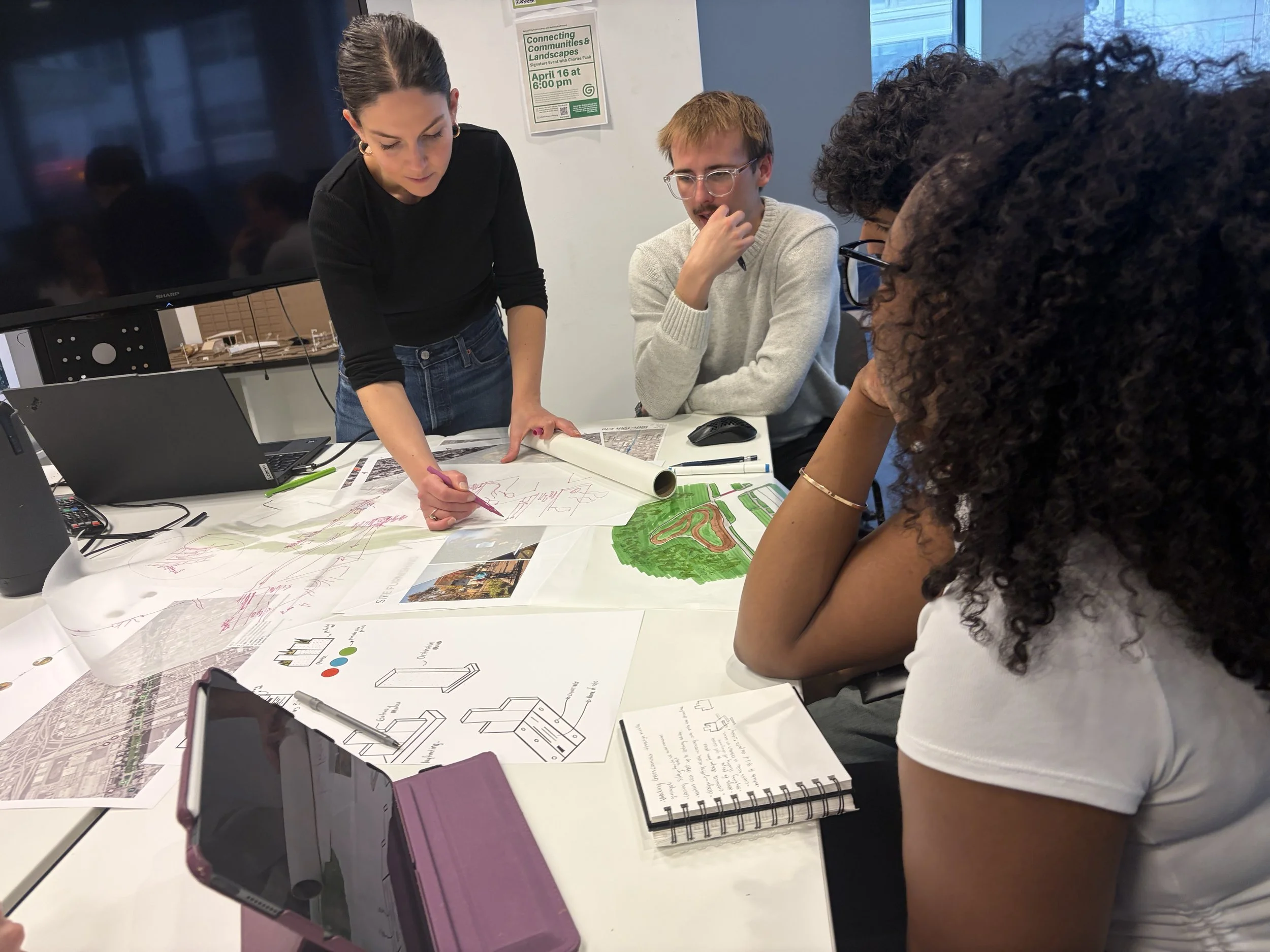
Alongside these ecological systems, play remains a key driver in our design. We are exploring different forms of play that go beyond traditional playgrounds to include physical, cognitive, and interactive experiences. Destinations such as a playground, pump track, fitness zone, and dog park create a range of activities that invite different users into the space. These areas are designed to shift in intensity, allowing the corridor to move between moments of energy and moments of rest. This creates a more dynamic experience along The Paseo, where people can engage with the space in different ways depending on their needs.

These strategies also connect back to the cultural and historical significance of the 18th and Vine District. Our goal is to strengthen this connection not only through movement, but through visible and experiential elements along the corridor. We are exploring opportunities for art and storytelling through murals, especially along the I-70 bridge, as well as through site furniture, crosswalk design, and signage. These elements help carry the identity of 18th and Vine beyond its boundaries, creating a continuous cultural thread that links the Greenline back to one of Kansas City’s most important historic districts.

As we move forward, we are beginning to integrate these ideas into our final design proposals. The feedback from the community meeting continues to guide our decisions, helping us refine a corridor that is not only connected and functional, but also reflective of the people, history, and identity of the East side.

Written by Jasmine Batres, Fourth Year Interior Architecture Student
Exploring Energy-Efficient Housing

This week in seminar, we focused on energy codes and passive housing standards for buildings. The Passive House Standard is an energy efficient building approach that creates comfortable, healthy, and environmentally friendly spaces while using up to 90% less heating energy than conventional construction. Originally developed in Darmstadt, this standard has gained significant traction in the United States.

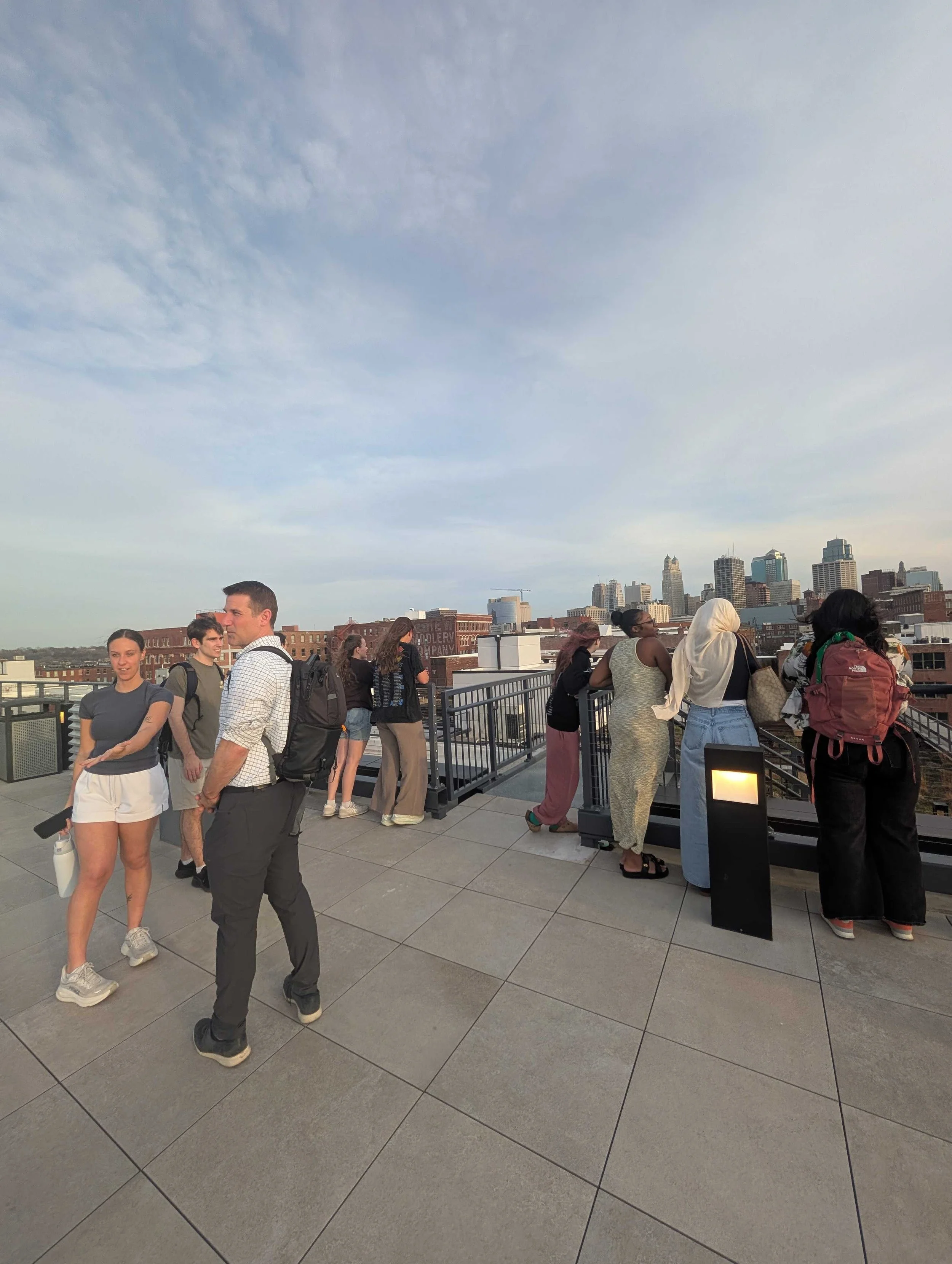
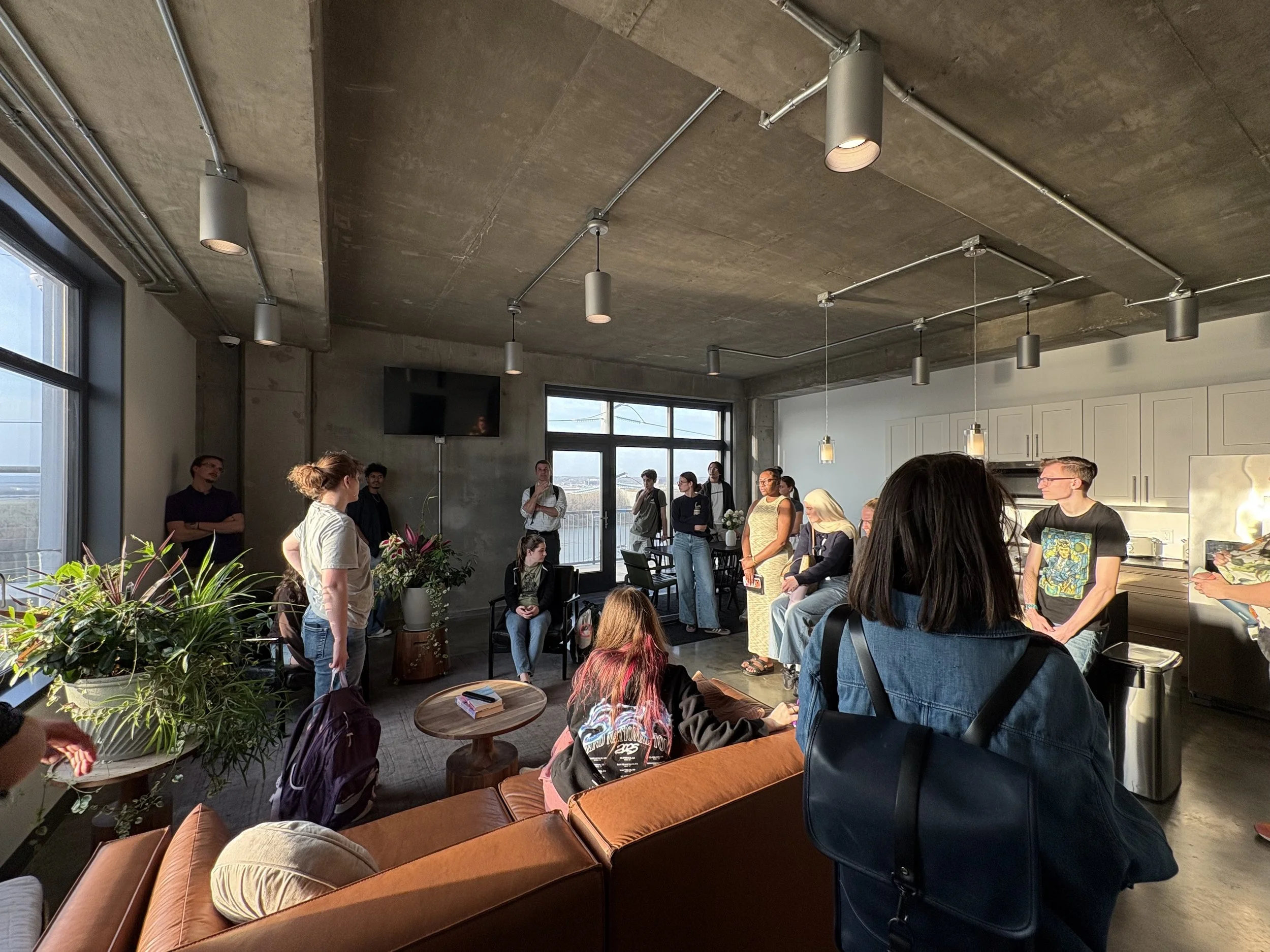
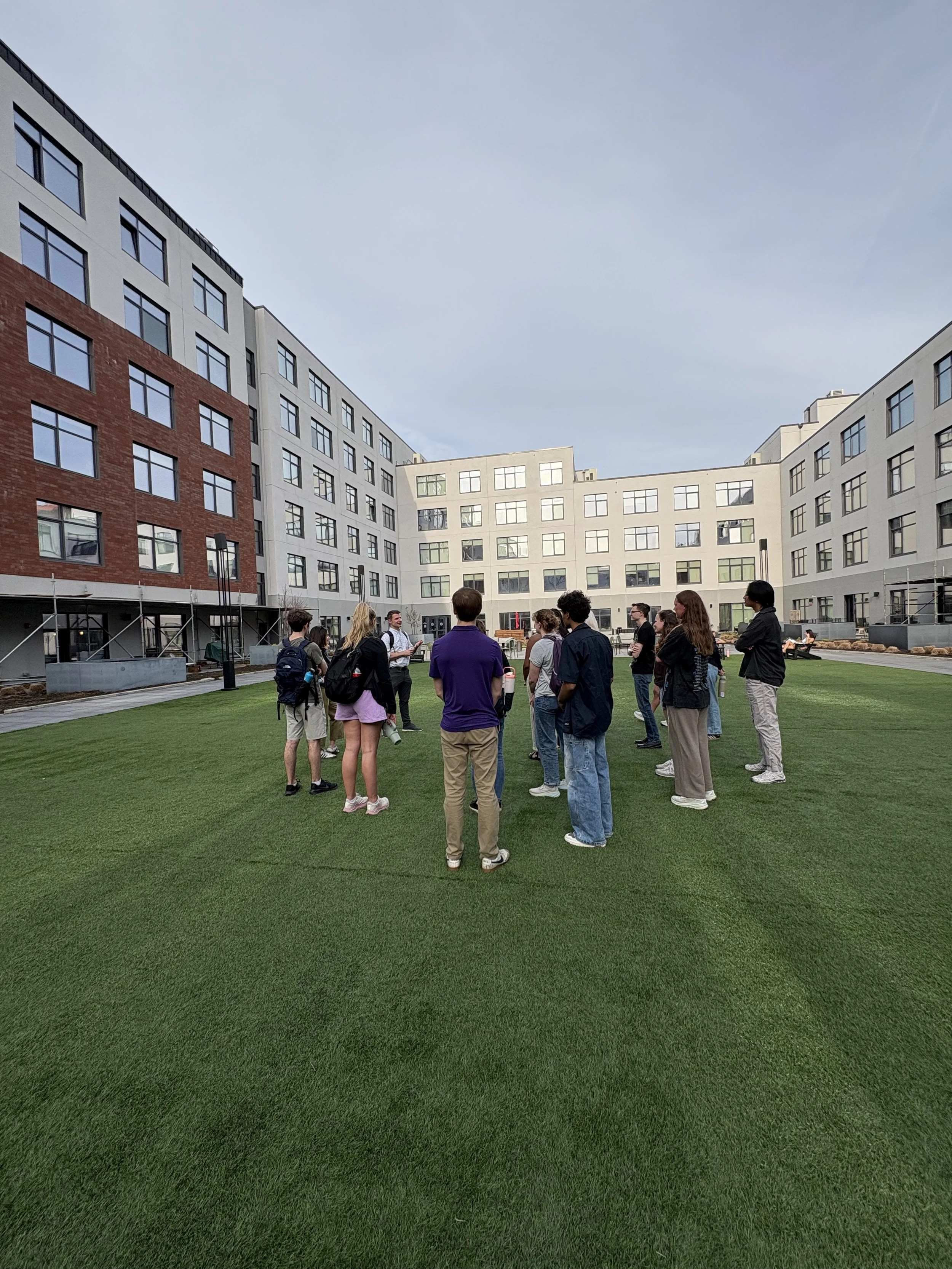
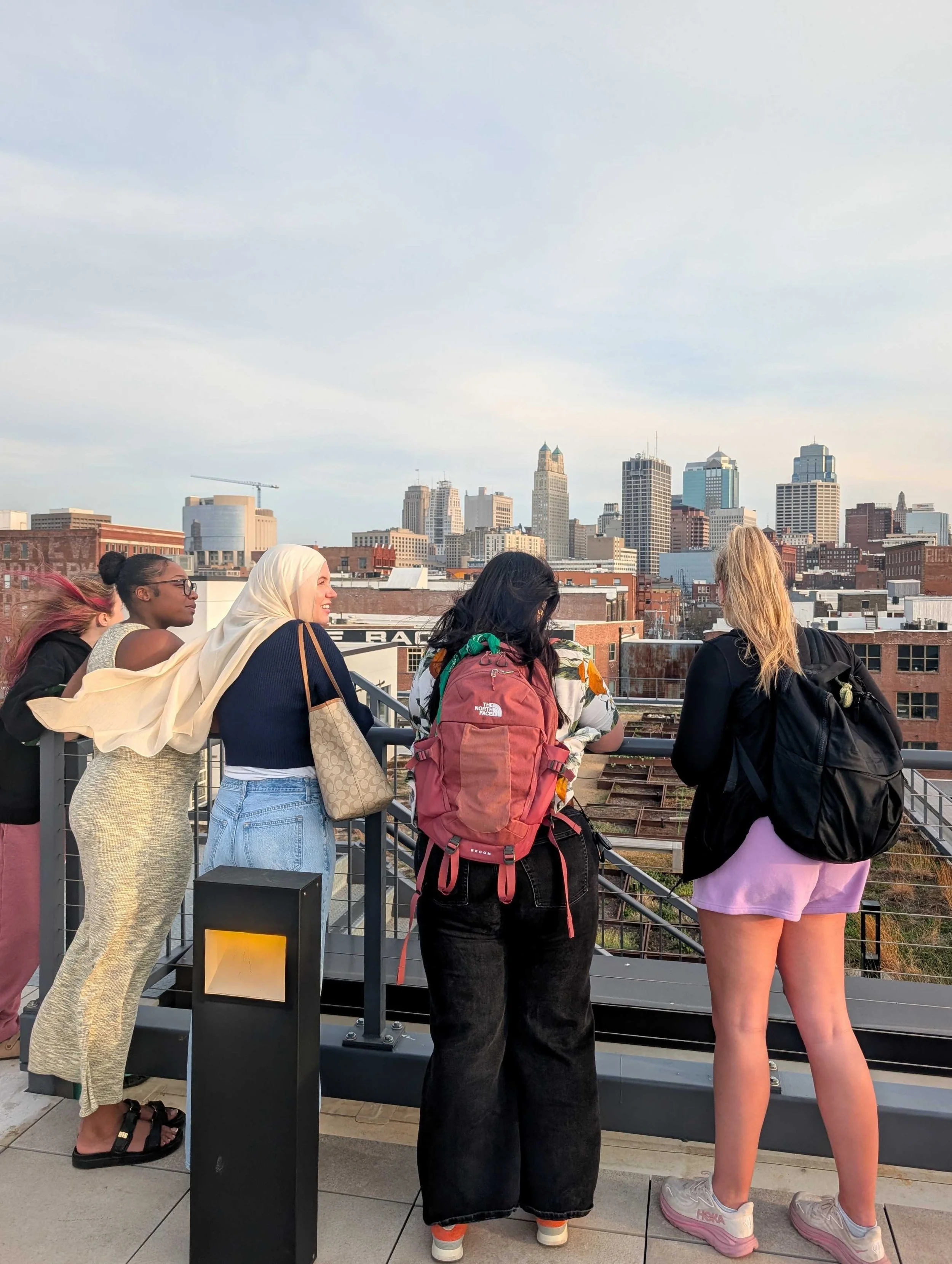
As part of this topic, we met with Jonathan Arnold, a developer who specializes in energy-efficient mixed-use projects. We were able to tour his energy-efficient apartment buildings at 2nd and Delaware. He guided us through the development process and explained how passive housing principles were applied to make the project both efficient and unique.

One of the key features of the building is its defensible courtyard space, which provides a sense of safety for residents while also encouraging social interaction. The project is also transit oriented, located near the Kansas City Streetcar and the Riverfront Heritage Trail, promoting walkability and healthier lifestyles.

The building envelope plays a major role in its performance. It uses extremely thick, airtight windows and construction techniques that prevent air leakage, maintaining indoor temperature efficiently. The L-shaped buildings are supported by six structural columns, allowing flexibility in floor plans for future adaptations. Additionally, the use of rockwool insulation enhances soundproofing, creating an interior environment that feels quiet and controlled similar to a recording studio.

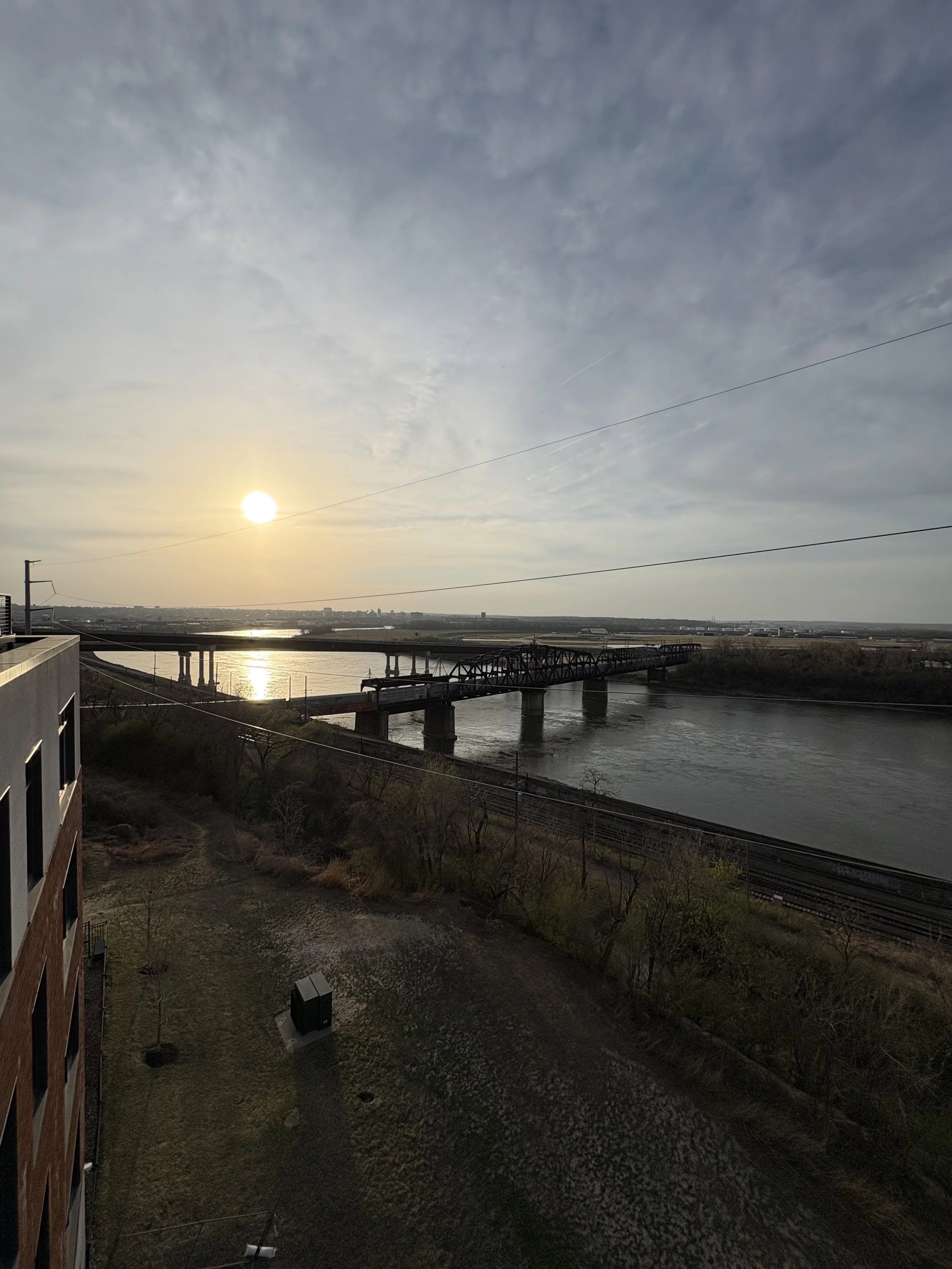
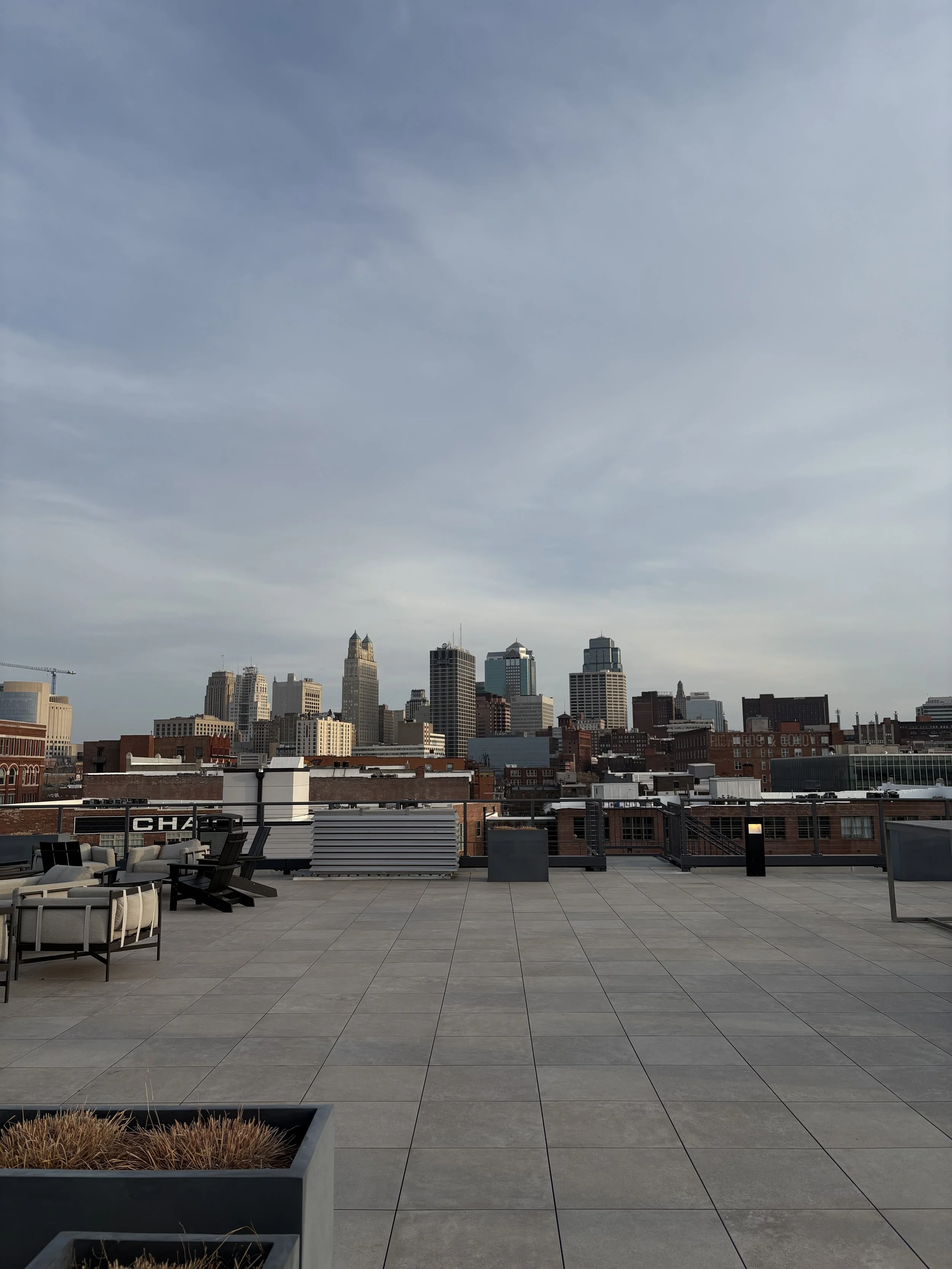
During the tour, we were able to experience the building firsthand. The layout felt open and accessible, and the upper levels offered impressive views looking north toward the Missouri River and south toward downtown Kansas City. This visit gave us valuable insight into how passive housing is being implemented locally and how it can influence future development in Kansas City.

Following the tour, we regrouped in class to reflect on what we learned and began selecting topics for our upcoming assignment, “The Role of Designers in Housing Access.”

Written by Erick Hernandez, Fourth Year Architecture Student

Community Happy Hour

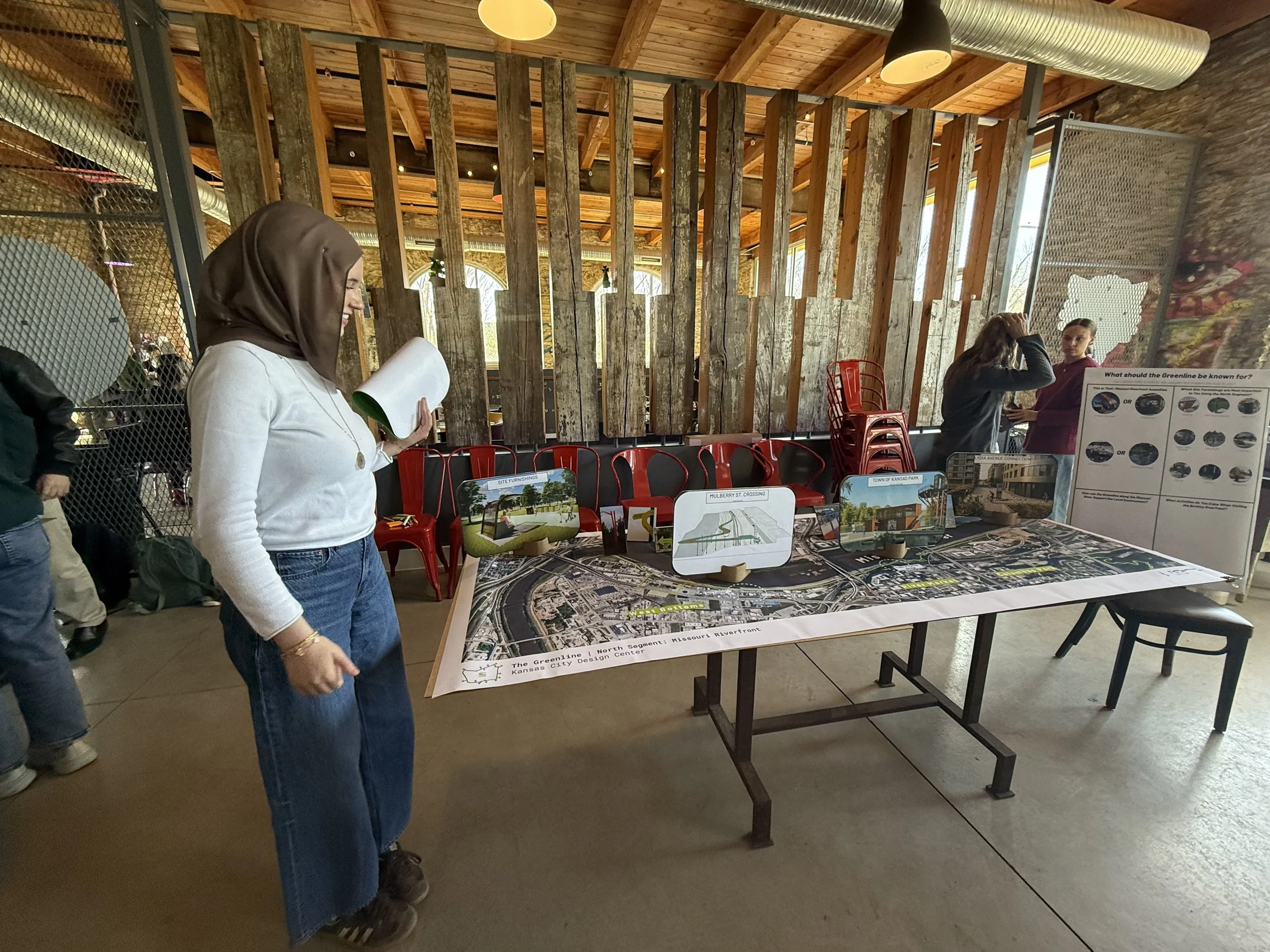
This week in studio, we regrouped after mid-reviews for each segment and progressed to the next phase in design working toward  a comprehensive plan for each segment of the Greenline. By the end of the week, our work will be showcased at a happy hour and community meeting located in the 18th and Vine district.

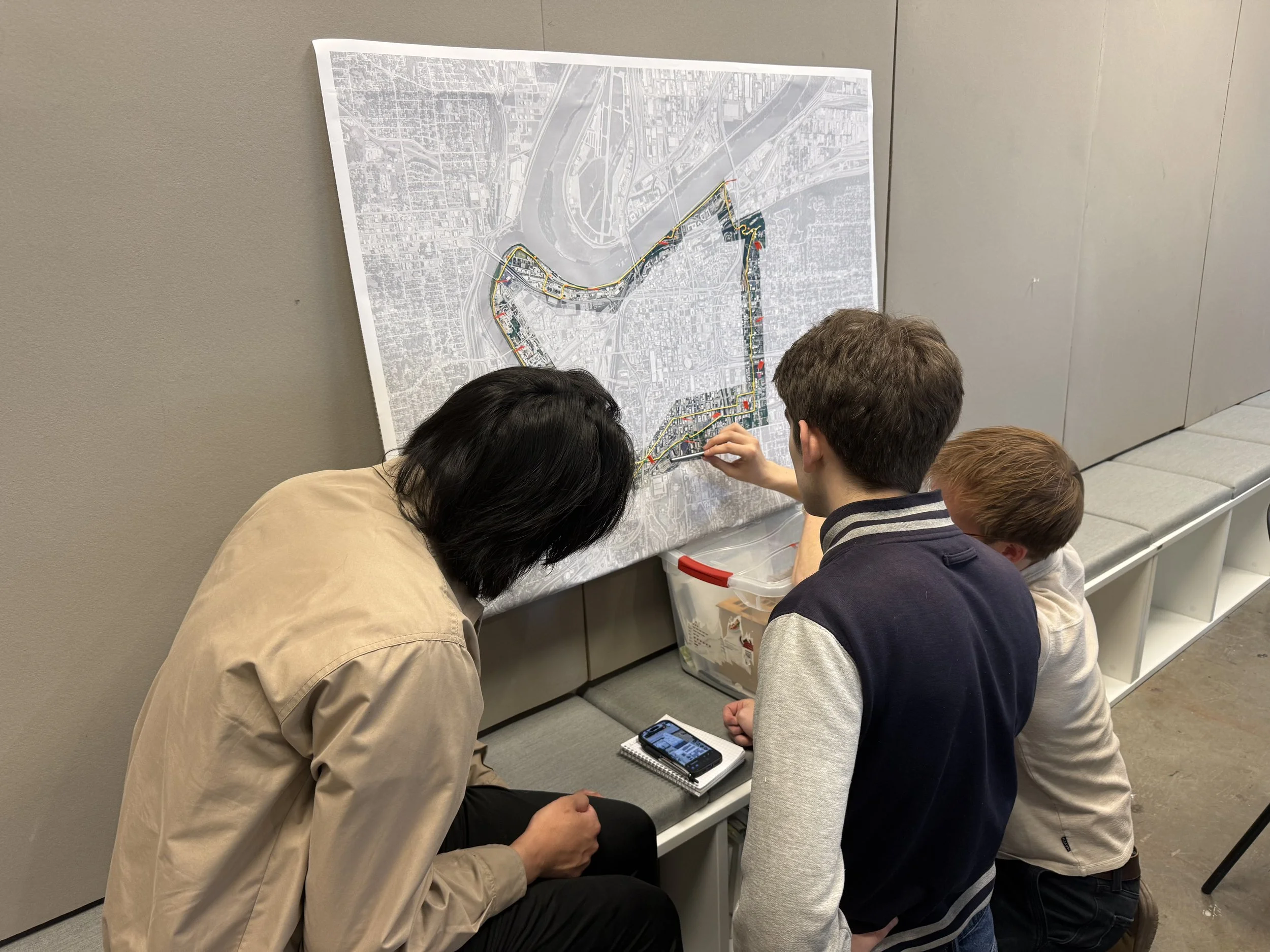
On Monday segment roles were assigned related to site furnishings, neighborhood connectivity, gateways, and destinations. Our destinations team created site plans highlighting student design proposals and other attractors along their segment of the Greenline in preparations to present our work to students and staff at the Kansas City Art Institute. We received very helpful feedback that shifted our thinking toward wayfinding along the Greenline through signage, symbols,color, and how it connects to the overall segment identity.

Trevor Acorn of Walter P. Moore

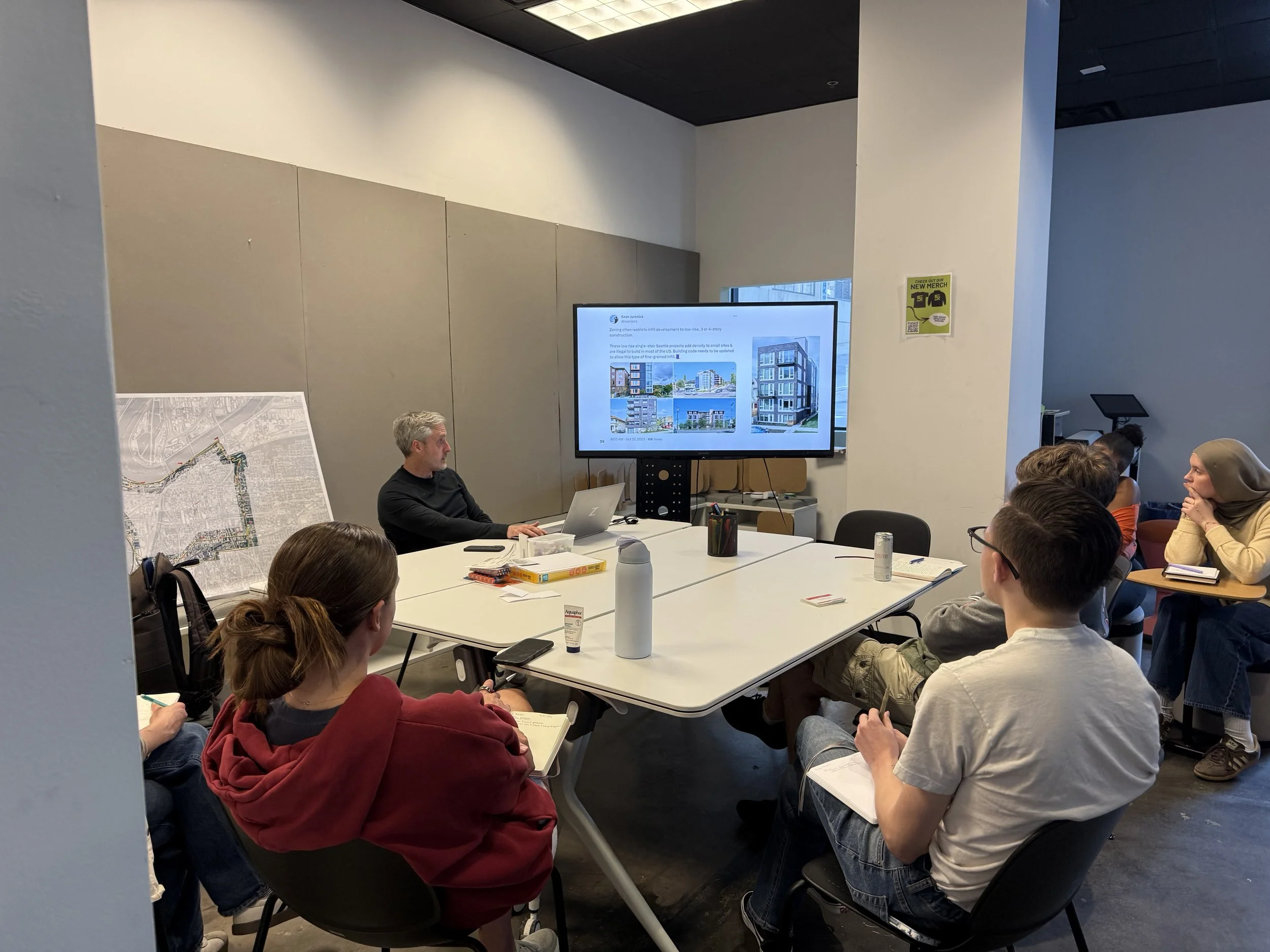
During our seminar centering around housing and the housing crisis across Kansas City,  we were able to hear from Trevor Acorn, a structural engineer at Walter P. Moore and a pivotal figure in passing single stair reform policy for multi-unit housing developments. He provided insight and optimism for safer, smaller, and more affordable housing options through changing building standards and zoning codes. Trevor got us to think critically in our approach to designing high density housing. 

Our community meeting had a good turnout; It was valuable to engage directly with community members and hear their perspectives on the future of the Greenline. The feedback we received will play a key role in refining our designs to better reflect the needs and identity of the surrounding neighborhoods. We especially appreciated the thoughtful conversations around connectivity, development concerns, and opportunities for inclusive, community-driven spaces.

My tasks this week were reflecting over mid-review feedback for my West Bottoms Levee Greenhouse design proposal and using my research to create questions to ask the community for Friday’s event. These questions are centered around desired activity, concerns about new development, and neighborhood identity among other topics. I am eager to receive input from the community to better understand and address their needs. My approach to this site in the West Bottoms considers the industrial history that put Kansas City on the map by allowing the existing industry and the Greenline’s pedestrian scale to coexist peacefully. The intent is to address local food access concerns first at a commercial scale while also creating a platform to foster community closeness, expand educational opportunities for neighboring low access areas, and connect urban food systems across Kansas City. 

Written by Cora Cole, Regional and Community Planning Student